
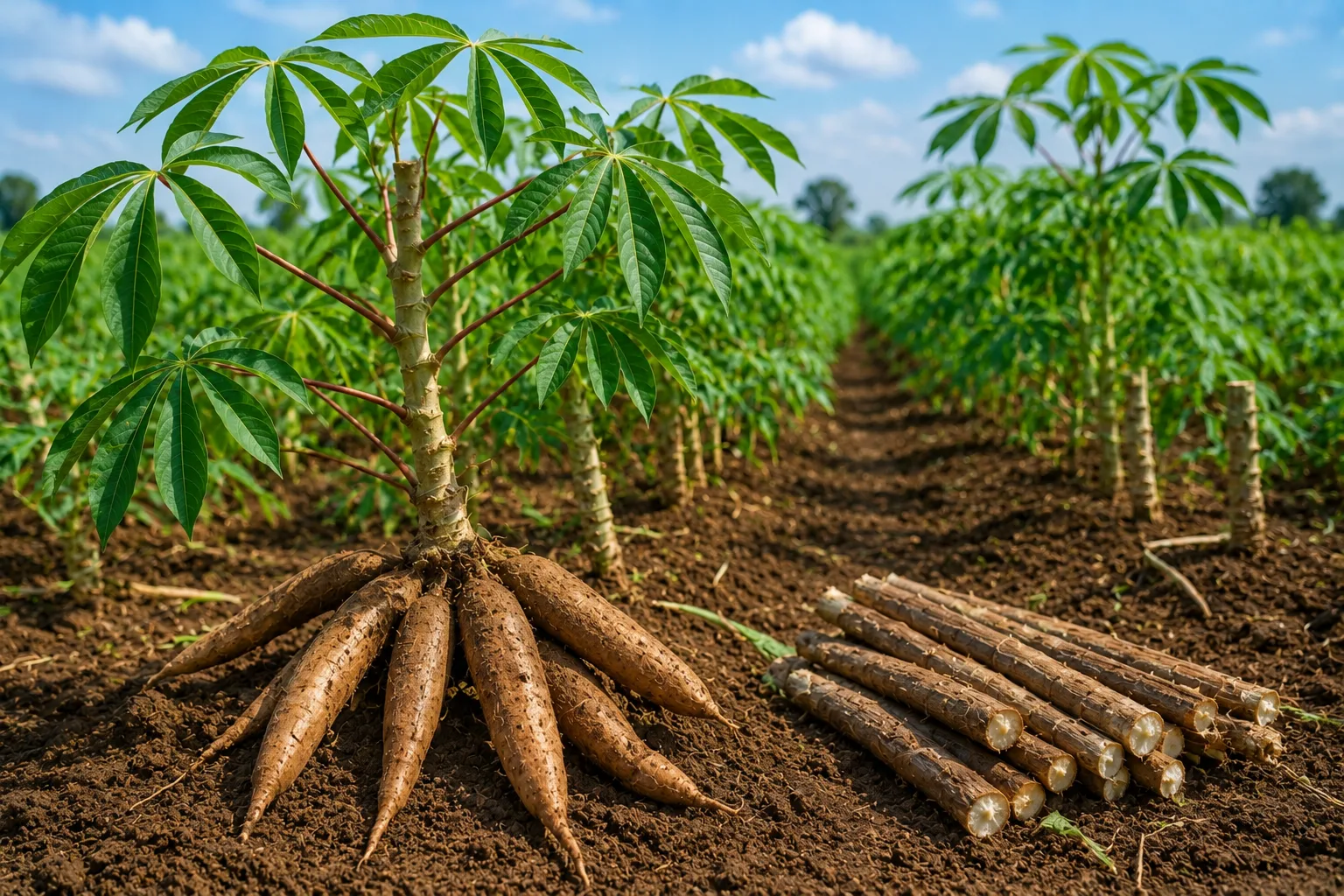
A detailed, informative, helpful, and easy-to-read guide to growing healthy cassava from stem cuttings to harvest.
Cassava is an important root crop grown in many tropical and subtropical regions. It is valued because it can grow in difficult conditions, tolerate dry periods better than many crops, and produce useful starchy roots for food, animal feed, and processing.
Cassava is commonly grown from stem cuttings, not from seeds. To plant cassava properly, farmers need healthy planting stems, well-prepared soil, correct spacing, good weed control, proper field care, and timely harvesting. With good practices, cassava can produce strong plants and better root yield.
1. Understand What Cassava Needs
Cassava is a hardy crop, but it still grows best when planted in the right conditions. It needs enough sunlight, warm weather, and soil that allows roots to expand.
Cassava generally prefers:
- Warm climate
- Full sunlight
- Loose, well-drained soil
- Moderate rainfall or moisture during early growth
- Good weed control during the first months
- Enough space for roots to develop
2. Choose the Right Cassava Variety
Different cassava varieties may grow differently. Some mature faster, some produce bigger roots, some are better for food, and some are better for processing into flour, starch, or animal feed.
When choosing a variety, consider:
- Yield potential
- Resistance to local pests and diseases
- Root quality and cooking quality
- Time to maturity
- Drought tolerance
- Market demand
- Local agricultural recommendations
If possible, use varieties recommended by local agricultural offices or experienced farmers in your area.
3. Select Healthy Stem Cuttings
Cassava is usually planted using stem cuttings taken from mature, healthy plants. Good planting material is one of the most important factors in cassava farming.
Good stem cuttings should be:
- From healthy, disease-free plants
- Mature but not too old and woody
- Free from pest damage
- Not dried out
- Cut from strong stems with visible nodes
- Handled carefully to avoid bruising or splitting
Avoid using stems from plants that show disease symptoms, poor growth, rotting, or heavy pest damage.
4. Prepare the Land Properly
Good land preparation helps cassava roots grow well. Cassava roots expand underground, so hard or compacted soil can reduce root size and shape.
Land preparation may include:
- Clearing weeds, bushes, and old crop residue
- Loosening the soil
- Breaking large soil clumps
- Improving drainage
- Preparing ridges or mounds if needed
- Removing large stones or obstacles
In areas with heavy rainfall or poorly drained soil, ridges or mounds can help prevent waterlogging and root rot.
5. Plant at the Right Time
Cassava should be planted when there is enough soil moisture to help cuttings sprout and establish roots. In many areas, planting is done near the beginning of the rainy season.
Planting too early in dry soil may cause cuttings to dry out. Planting in waterlogged soil may cause cuttings to rot. The best planting time depends on local rainfall and soil conditions.
6. Cut the Stems Correctly
Cassava stem cuttings are usually cut into pieces with several nodes. Nodes are the points on the stem where new shoots and roots can develop.
Good cutting practices include:
- Use a clean, sharp tool
- Cut stems into healthy pieces
- Make sure each cutting has several nodes
- Avoid crushing or splitting the stem
- Plant cuttings soon after cutting if possible
- Keep cuttings shaded and moist before planting
Poorly cut or dried-out stems may sprout weakly or fail to grow.
7. Use Proper Spacing
Proper spacing gives cassava plants enough room for roots and leaves to grow. If plants are too close together, they compete for sunlight, nutrients, and water. If they are too far apart, land may not be used efficiently.
Spacing can vary depending on variety, soil fertility, rainfall, and farming purpose. Local recommendations are best, but the goal is to provide enough space for healthy root development and easy field work.
Good spacing helps:
- Improve root development
- Reduce competition between plants
- Improve air movement
- Make weeding easier
- Support better yield
8. Plant the Cuttings Correctly
Cassava cuttings can be planted in different positions depending on soil condition, rainfall, and local practice.
- Vertical planting: Cuttings are placed upright in the soil. This is common in areas with good moisture.
- Slanted planting: Cuttings are planted at an angle. This is commonly used and makes harvesting easier.
- Horizontal planting: Cuttings are laid flat and covered with soil. This may produce more shoots but can be harder in some soils.
No matter the method, make sure the cutting is placed with good soil contact and enough of it covered to support sprouting and rooting.
9. Control Weeds Early
Weed control is very important during the first few months after planting. Young cassava plants grow slowly at first, and weeds can compete strongly for sunlight, nutrients, and water.
Good weed control practices include:
- Clear weeds before planting
- Weed regularly during early growth
- Use mulch where practical
- Avoid damaging young cassava roots when weeding
- Keep the field clean until cassava canopy covers the soil
Once cassava plants grow taller and shade the ground, they can compete better with weeds.
10. Water and Moisture Management
Cassava can tolerate dry periods after it is established, but it still needs moisture during early growth. Lack of water soon after planting can reduce sprouting and plant establishment.
Helpful water practices include:
- Plant when soil has enough moisture
- Avoid waterlogging
- Use ridges or mounds in wet areas
- Keep young plants from drying out severely
- Use mulch to conserve soil moisture when available
11. Fertilize Wisely
Cassava can grow in less fertile soils, but better soil nutrition can improve yield. Cassava needs nutrients such as potassium, nitrogen, phosphorus, and organic matter for strong growth and root formation.
Good fertilizer practices include:
- Use soil testing if available
- Add compost or organic matter to poor soil
- Use fertilizer based on local recommendations
- Avoid placing strong fertilizer directly against stem cuttings
- Do not overuse nitrogen, which may encourage leaves more than roots
Balanced nutrition is better than applying fertilizer without knowing what the soil needs.
12. Watch for Cassava Pests
Cassava can be affected by pests that damage leaves, stems, and roots. Regular field checking helps catch problems early.
Common cassava pests may include:
- Cassava mealybugs
- Cassava green mites
- Whiteflies
- Termites
- Grasshoppers
- Rodents and wild animals
Good pest management includes using healthy planting material, keeping fields clean, encouraging natural enemies, rotating crops, and following local pest-control advice when pests become serious.
13. Watch for Cassava Diseases
Diseases can reduce cassava yield and quality. Some diseases spread through infected stem cuttings, insects, or nearby infected plants.
Warning signs may include:
- Yellowing or mottled leaves
- Twisted or distorted leaves
- Stunted growth
- Stem rot
- Root rot
- Brown streaks or poor root quality
Prevention methods include:
- Use disease-free stem cuttings
- Choose resistant varieties when available
- Remove severely infected plants when necessary
- Control whiteflies and other disease-carrying insects
- Avoid planting cassava repeatedly in the same field without rotation
14. Intercropping With Cassava
Cassava is sometimes grown with other crops such as maize, beans, groundnuts, or vegetables. Intercropping can help farmers use land better and get food or income while waiting for cassava to mature.
However, intercrops should not compete too strongly with cassava. Choose crops carefully and maintain enough spacing so cassava roots and leaves can develop well.
15. Harvest Cassava at the Right Time
Cassava harvest time depends on the variety and purpose. Some varieties mature earlier, while others take longer. Harvesting too early may give small roots. Harvesting too late can make roots woody or reduce quality in some varieties.
Harvesting tips:
- Check the maturity period of the variety
- Loosen soil around the plant before pulling roots
- Lift roots carefully to reduce breaking
- Harvest only what you can process or sell soon if storage is limited
- Handle roots gently to prevent damage
16. Handle Cassava Safely After Harvest
Fresh cassava roots can spoil quickly after harvest, so they should be used, sold, processed, or stored properly. Cassava also must be prepared correctly before eating because raw cassava can contain natural compounds that may be harmful.
Safe handling practices include:
- Do not eat raw cassava
- Peel and cook cassava properly before eating
- Process roots soon after harvest when possible
- Keep harvested roots shaded and protected from damage
- Use proper methods for drying, fermenting, boiling, or processing based on local food practices
Common Mistakes to Avoid
- Using diseased or weak stem cuttings
- Planting in waterlogged soil
- Planting cuttings upside down or too shallow
- Ignoring weeds during early growth
- Planting too close together
- Using too much nitrogen fertilizer
- Ignoring pest and disease signs
- Harvesting too early before roots develop
- Eating cassava raw or preparing it improperly
Helpful Cassava Planting Routine
- Choose a suitable cassava variety
- Select healthy stem cuttings from disease-free plants
- Prepare loose, well-drained soil
- Plant when soil moisture is good
- Use proper spacing
- Control weeds early
- Watch for pests and diseases regularly
- Fertilize based on soil needs
- Harvest at the right maturity
- Cook or process cassava safely before eating
Conclusion
Planting cassava properly begins with healthy stem cuttings, suitable soil, correct planting time, proper spacing, weed control, pest and disease monitoring, and careful harvesting. Cassava is a strong and useful crop, but good management can greatly improve root yield and quality.
Farmers who use clean planting material, prepare land well, control weeds early, avoid waterlogging, and harvest at the right time can grow healthier cassava crops. Safe preparation after harvest is also important because cassava should always be properly processed or cooked before eating.