
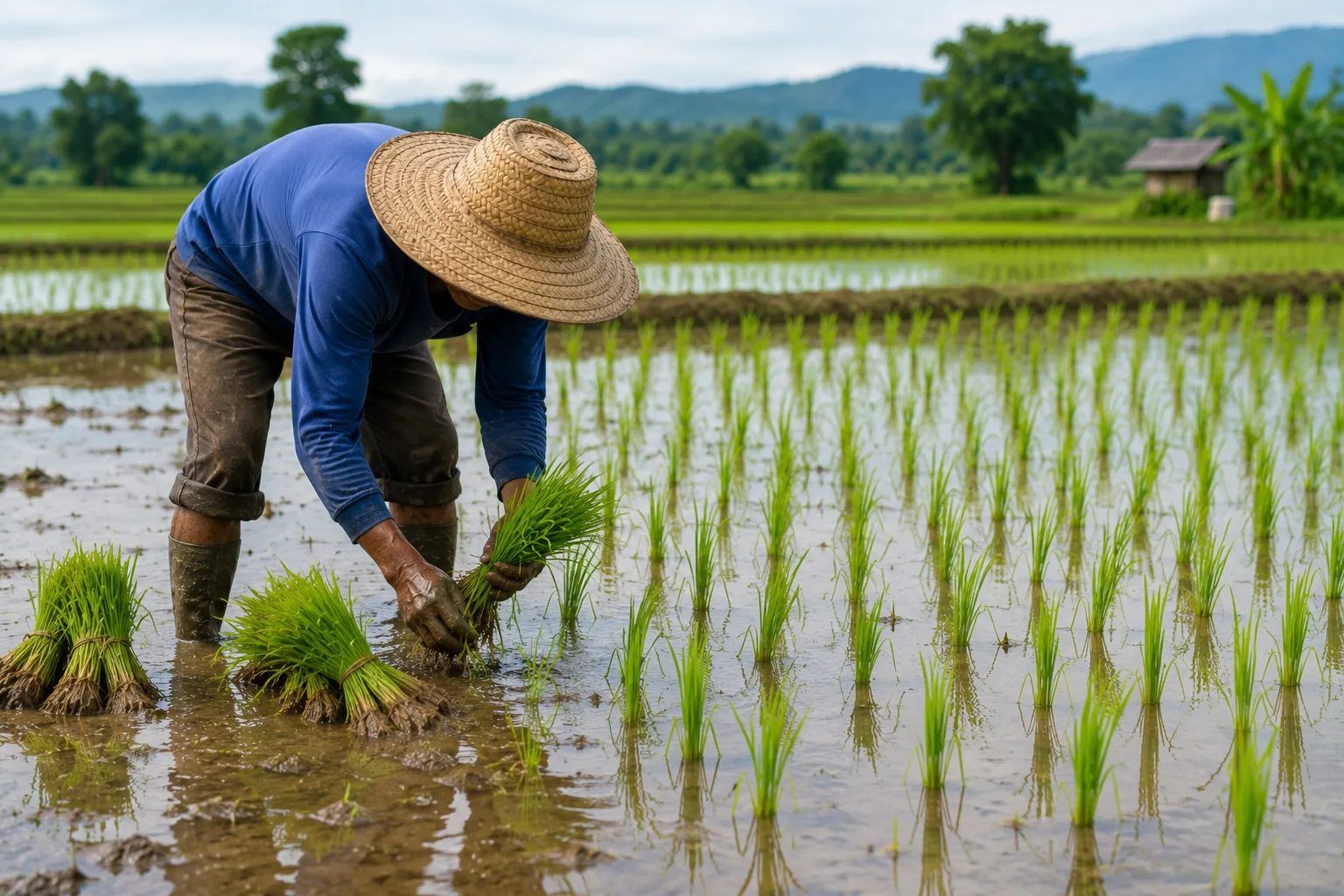
A detailed, informative, helpful, and easy-to-read guide to growing healthy rice crops from seed to harvest.
Rice is one of the most important food crops in the world. It feeds billions of people and supports many farming families. Planting rice properly is important because good planting methods can improve crop growth, reduce weeds, save water, increase yield, and lower production problems.
Rice farming is not only about putting seeds into the soil. A good rice crop starts with proper planning, good seed, prepared land, correct water control, healthy seedlings, proper spacing, fertilizer management, and regular field care. When each step is done well, the rice plants can grow stronger and produce better grain.
1. Understand the Rice Growing System
Rice can be grown in different ways depending on the land, water availability, climate, tools, and farming tradition. Before planting, it is important to choose the best system for your area.
- Transplanted rice: Seeds are first grown in a nursery, then young seedlings are moved to the field.
- Direct-seeded rice: Seeds are planted directly into the field by hand, machine, or broadcasting.
- Rainfed rice: Rice depends mostly on rainfall.
- Irrigated rice: Water is controlled through irrigation systems.
- Upland rice: Rice is grown in non-flooded fields, usually depending on rain.
The best method depends on your local conditions. In many areas, transplanted rice gives better weed control, while direct seeding can save labor and time.
2. Choose Good Rice Seeds
Good seed is one of the most important parts of successful rice farming. Poor seed can lead to weak plants, uneven growth, low yield, and more disease problems.
Good rice seed should be:
- Clean and free from dirt or weed seeds
- Healthy and not damaged
- High in germination rate
- Suitable for the local climate and soil
- Resistant or tolerant to common local pests and diseases when possible
- Matched to the market demand, such as grain size, aroma, or cooking quality
Farmers should buy seed from trusted sources or save seed carefully from healthy crops.
3. Test Seed Germination
Before planting, it is helpful to test whether the seeds will sprout well. This can prevent wasting time and land on poor-quality seed.
Simple germination test:
- Take a sample of 100 seeds.
- Place them on a moist cloth or paper.
- Keep them moist but not flooded.
- Wait several days for sprouting.
- Count how many seeds germinate.
If only a small number sprout, the seed quality may be poor and should be replaced if possible.
4. Prepare the Land Properly
Land preparation helps create a good growing environment for rice. Proper land preparation improves water control, reduces weeds, and makes planting easier.
Common land preparation steps include:
- Clearing old crop residue and weeds
- Plowing or tilling the field
- Breaking large soil clumps
- Leveling the field
- Repairing field bunds or borders
- Preparing irrigation and drainage paths
A well-leveled field is especially important. Uneven land causes some areas to have too much water and other areas to become too dry. This can lead to uneven growth and lower yield.
5. Manage Water Before Planting
Rice grows well with good water management, but too much or too little water at the wrong time can cause problems. Before planting, make sure the field can hold water and drain water when needed.
Good water control helps:
- Reduce weeds
- Support seedling establishment
- Improve nutrient availability
- Prevent drought stress
- Reduce damage from flooding or stagnant water
6. Prepare a Healthy Nursery for Transplanted Rice
If using the transplanting method, rice seedlings are first grown in a nursery. A healthy nursery produces strong seedlings that can recover quickly after transplanting.
Good nursery practices include:
- Choose a clean, fertile, and well-drained nursery area
- Use good-quality seed
- Soak and pre-germinate seed if recommended locally
- Sow seed evenly
- Keep the nursery moist but not overly flooded
- Protect seedlings from birds, insects, and disease
Seedlings should not be too old when transplanted. Very old seedlings may grow slowly and produce fewer tillers.
7. Transplant Seedlings at the Right Age
Transplanting means moving young rice seedlings from the nursery into the main field. The right seedling age depends on the rice variety and local practice, but young, healthy seedlings usually establish better.
Good transplanting practices include:
- Transplant only healthy seedlings
- Handle roots gently
- Do not bury seedlings too deep
- Plant at proper spacing
- Keep the field moist during transplanting
- Avoid transplanting during extreme heat when possible
Planting too deep can slow growth. Planting too shallow can make seedlings float away or dry out.
8. Use Proper Spacing
Spacing affects plant growth, sunlight, air movement, tillering, weed control, and yield. If rice is planted too close, plants compete for nutrients and light. If planted too far apart, land may not be used efficiently.
Common spacing varies by variety and farming system, but many farmers use spacing that allows enough room for plants to grow and produce tillers. Local agricultural extension advice is useful because the best spacing can differ by region.
Benefits of proper spacing include:
- Better root growth
- More healthy tillers
- Improved airflow
- Less disease pressure
- Easier weeding and field inspection
9. Direct Seeding Rice Properly
Direct seeding can save labor and time, but it requires good field preparation and weed management. Seeds can be broadcast by hand, drilled with equipment, or planted in rows.
Good direct seeding practices include:
- Use clean and high-germination seed
- Prepare a level field
- Sow seed evenly
- Avoid planting too deep
- Control weeds early
- Manage water carefully after seeding
In direct-seeded rice, weeds can become a major problem if not controlled early.
10. Apply Fertilizer Wisely
Rice needs nutrients to grow strong and produce good grain. The main nutrients are nitrogen, phosphorus, and potassium. Other nutrients may also be needed depending on the soil.
Good fertilizer practices include:
- Use soil testing if available
- Apply the right type and amount of fertilizer
- Do not apply too much nitrogen
- Split nitrogen applications instead of applying all at once
- Use organic matter or compost when suitable
- Follow local recommendations for timing and quantity
Too much fertilizer can waste money, cause weak plants, increase pests and diseases, and harm the environment. Too little fertilizer can reduce yield.
11. Control Weeds Early
Weeds compete with rice for sunlight, nutrients, water, and space. Early weed control is especially important because young rice plants can be easily affected.
Weed control methods include:
- Good land preparation
- Proper water management
- Hand weeding
- Mechanical weeding
- Mulching in some systems
- Safe and correct herbicide use when appropriate
If using herbicides, always follow label directions and local safety guidance.
12. Watch for Pests and Diseases
Rice can be affected by insects, rodents, birds, fungal diseases, bacterial diseases, and nutrient problems. Regular field checking helps catch problems early before they spread.
Common field warning signs include:
- Yellowing leaves
- Brown spots on leaves
- Dead or drying patches
- Chewed leaves or stems
- Empty grains
- Stunted plants
- Too many insects in the field
Good pest management includes healthy seed, resistant varieties, clean fields, balanced fertilizer, proper spacing, and using pest control only when necessary.
13. Manage Water During Growth
Water needs change as rice grows. Young plants need enough moisture to establish. During active growth and flowering, water stress can reduce yield. Near harvest, fields are often drained to help grain mature and make harvesting easier.
Good water management includes:
- Keep fields moist after planting
- Avoid long dry periods during important growth stages
- Prevent deep stagnant water for too long
- Drain excess water after heavy rain if needed
- Drain the field before harvest according to local practice
14. Protect the Crop Before Harvest
As rice grains mature, birds, rats, lodging, storms, and disease can reduce yield. Farmers should continue checking fields until harvest.
Helpful practices include:
- Control rats and field pests
- Watch for lodging or falling plants
- Keep drainage ready for heavy rain
- Harvest at the right maturity
- Prepare labor, tools, or machines ahead of time
15. Harvest at the Right Time
Harvesting too early can lead to low grain weight and poor quality. Harvesting too late can cause grain shattering, bird damage, lodging, and losses.
Rice is usually ready to harvest when most grains have turned golden yellow and the grain moisture has decreased. The exact timing depends on the variety and local conditions.
After harvest, rice should be:
- Threshed carefully
- Dried properly
- Stored in clean, dry conditions
- Protected from insects, rats, and moisture
Common Mistakes to Avoid
- Using poor-quality seed
- Planting in poorly prepared land
- Ignoring field leveling
- Planting seedlings too deep
- Overcrowding plants
- Applying too much or too little fertilizer
- Ignoring weeds early
- Poor water control
- Harvesting too early or too late
Helpful Daily and Weekly Rice Field Routine
- Check water level and drainage
- Inspect plants for pests and diseases
- Look for yellowing, wilting, or uneven growth
- Remove weeds early
- Check bunds and field borders for leaks
- Record fertilizer, planting date, and field observations
- Prepare ahead for transplanting, weeding, and harvest dates
Conclusion
Planting rice properly begins with good seed, prepared land, healthy seedlings, correct spacing, careful water control, balanced fertilizer, and regular field management. Each step affects the final harvest.
A rice field needs attention from planting to harvest. Farmers who plan carefully, observe their fields regularly, control weeds early, manage water wisely, and respond quickly to problems can grow healthier rice plants and improve yield quality.