
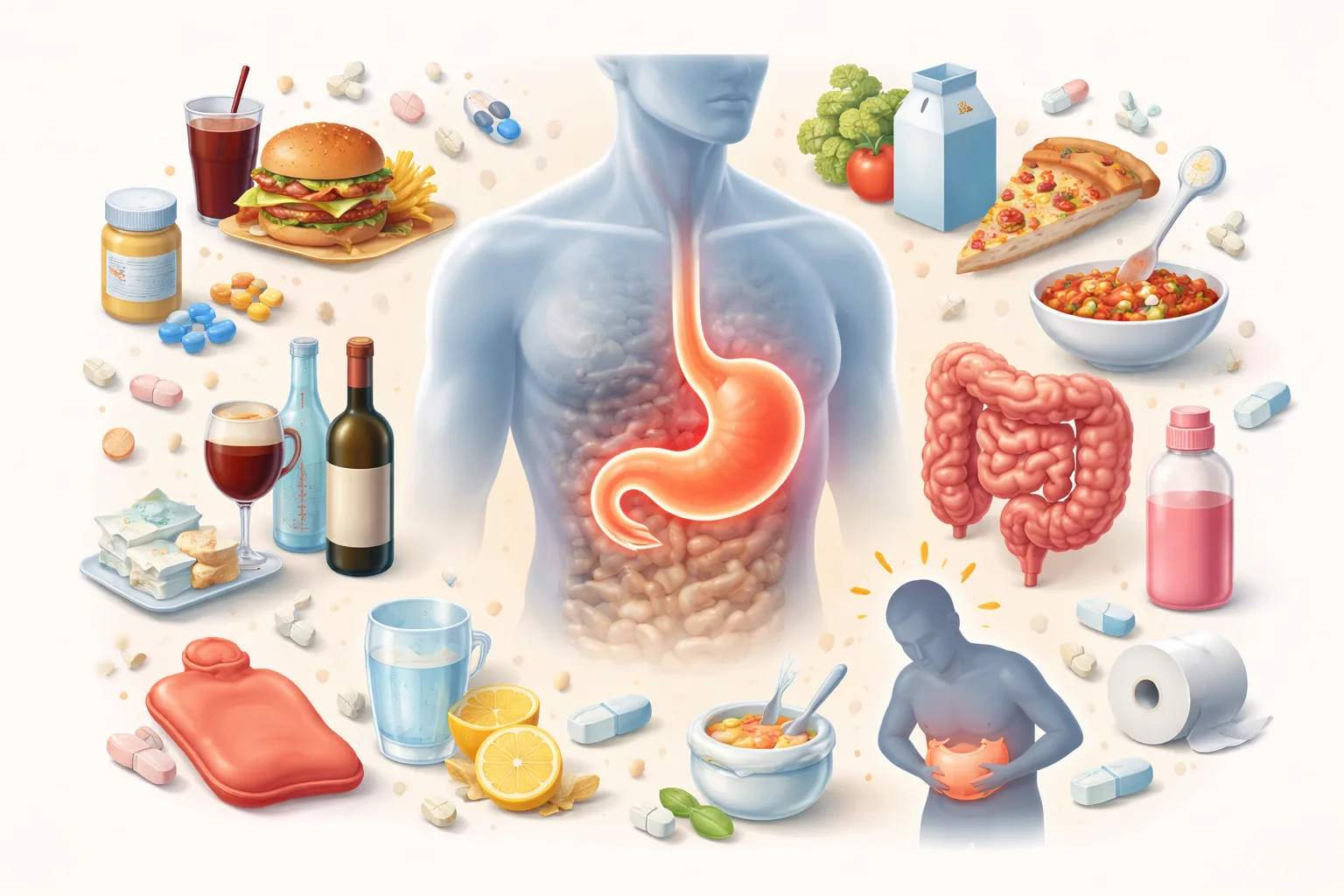
What People Usually Mean by “Stomach Problems”
Many people say “stomach problems” when they actually mean discomfort anywhere in the upper or lower belly. The cause may come from the stomach itself, the intestines, acid reflux, gas, infection, food intolerance, or a longer-term digestive condition.
- Upper belly burning or discomfort may be indigestion, gastritis, or reflux.
- Gas, bloating, and cramping may come from diet, constipation, IBS, or food intolerance.
- Watery stools and cramps may be related to infection or irritation in the intestines.
Stomach symptoms are common, but severe pain, blood, trouble swallowing, weight loss, or ongoing symptoms should not be ignored.
Common Stomach Problems
1. Indigestion (Dyspepsia)
Indigestion often feels like upper belly discomfort, burning, fullness after eating, burping, or nausea. It may happen after large meals, spicy food, alcohol, some medicines, or stress.
2. Gas and Bloating
Gas can cause belching, bloating, passing gas, and a swollen feeling in the abdomen. This may happen after meals, with certain carbohydrates, or with constipation.
3. Acid Reflux and GERD
Acid reflux happens when stomach contents move upward into the esophagus. It can cause heartburn, sour taste, chest discomfort, or symptoms after lying down. When reflux happens often over time, it may be GERD.
4. Gastritis
Gastritis means irritation or inflammation of the stomach lining. It can cause upper belly pain, nausea, bloating, poor appetite, and indigestion-like symptoms.
5. Diarrhea or “Stomach Flu”
Viral stomach infections can cause watery diarrhea, cramps, nausea, vomiting, and sometimes fever. Diarrhea can also come from food intolerance, medicines, or digestive conditions.
6. Constipation
Constipation can cause belly pressure, bloating, hard stools, and discomfort that feels like a stomach problem. Low fiber, low fluids, reduced activity, and some medicines can contribute.
7. Irritable Bowel Syndrome (IBS)
IBS is a long-term digestive condition that may cause cramping, belly pain, bloating, diarrhea, constipation, or both. Symptoms often come and go.
8. Stomach Ulcers
Ulcers are sores in the lining of the stomach or upper small intestine. They may cause burning pain, nausea, early fullness, or symptoms that get worse when the stomach is empty.
Common Causes of Stomach Problems
- Eating too much or too quickly
- Fatty, spicy, acidic, or highly processed foods
- Alcohol, smoking, and excess caffeine
- Food intolerance, such as lactose intolerance in some people
- Viral or bacterial infection
- Stress and anxiety
- Pain relievers such as NSAIDs in some people
- Constipation or irregular bowel habits
- Ongoing conditions such as GERD, gastritis, or IBS
Sometimes the cause is simple and temporary. Sometimes stomach symptoms are a signal that the digestive tract needs medical evaluation.
Common Symptoms to Watch For
- Upper belly pain or burning
- Bloating or swelling in the abdomen
- Heartburn or sour taste in the mouth
- Nausea or vomiting
- Diarrhea or constipation
- Burping, gas, or early fullness after meals
- Cramping that comes and goes
- Reduced appetite
Simple Self-Care Tips That Often Help
For indigestion or reflux
- Eat smaller meals instead of very large meals.
- Avoid lying down right after eating.
- Reduce trigger foods if you notice a pattern.
- Limit alcohol and smoking.
For gas and bloating
- Eat more slowly.
- Notice whether dairy, beans, carbonated drinks, or certain foods make symptoms worse.
- Walk after meals if possible.
For diarrhea
- Drink fluids regularly to avoid dehydration.
- Eat bland, simple foods until the stomach settles.
- Rest and avoid heavy, greasy meals.
For constipation
- Increase fluids.
- Add fiber gradually.
- Stay active with regular walking or movement.
If symptoms are frequent, severe, or keep returning, self-care alone may not be enough.
Foods That May Be Easier on the Stomach
- Rice, toast, oatmeal, crackers
- Bananas and applesauce
- Soup and simple broths
- Plain yogurt if tolerated
- Boiled potatoes
- Lean protein such as chicken, eggs, or fish
Foods that commonly bother some people include greasy meals, very spicy food, excess alcohol, large late-night meals, and foods that trigger gas or reflux for that individual.
Daily Habits That Support Better Digestion
- Eat at regular times
- Chew food slowly
- Stay hydrated
- Walk or move daily
- Sleep enough
- Reduce stress where possible
- Notice personal trigger foods instead of copying someone else’s list
Warning Signs: When to Get Medical Help
Get prompt medical advice if you have any of these:
- Severe or worsening stomach pain
- Symptoms that do not go away or keep coming back
- Unexplained weight loss
- Trouble swallowing
- Blood in vomit, stool, or black/tarry stool
- Persistent vomiting
- Signs of dehydration
- Fever with severe belly pain
- Pain spreading to the back, chest, or shoulder
Severe sudden belly pain, trouble breathing, or signs of bleeding need urgent evaluation.
Example Weekly Routine for Better Stomach Health
| Habit | Simple Goal |
|---|---|
| Meals | Eat smaller, regular meals and avoid overeating |
| Hydration | Drink water through the day |
| Movement | Walk 20–30 minutes most days |
| Trigger tracking | Write down foods that seem to trigger pain, reflux, or bloating |
| Sleep | Aim for a regular sleep schedule |
| Stress care | Use simple breathing, stretching, or quiet time daily |
Conclusion
Stomach problems can come from many different causes, from simple indigestion and gas to reflux, gastritis, diarrhea, constipation, or IBS. Mild symptoms often improve with smart eating habits, hydration, and better daily routines.
But recurring pain, weight loss, trouble swallowing, bleeding, or severe symptoms should be checked by a healthcare professional. The earlier you find the cause, the easier it is to treat and manage.