
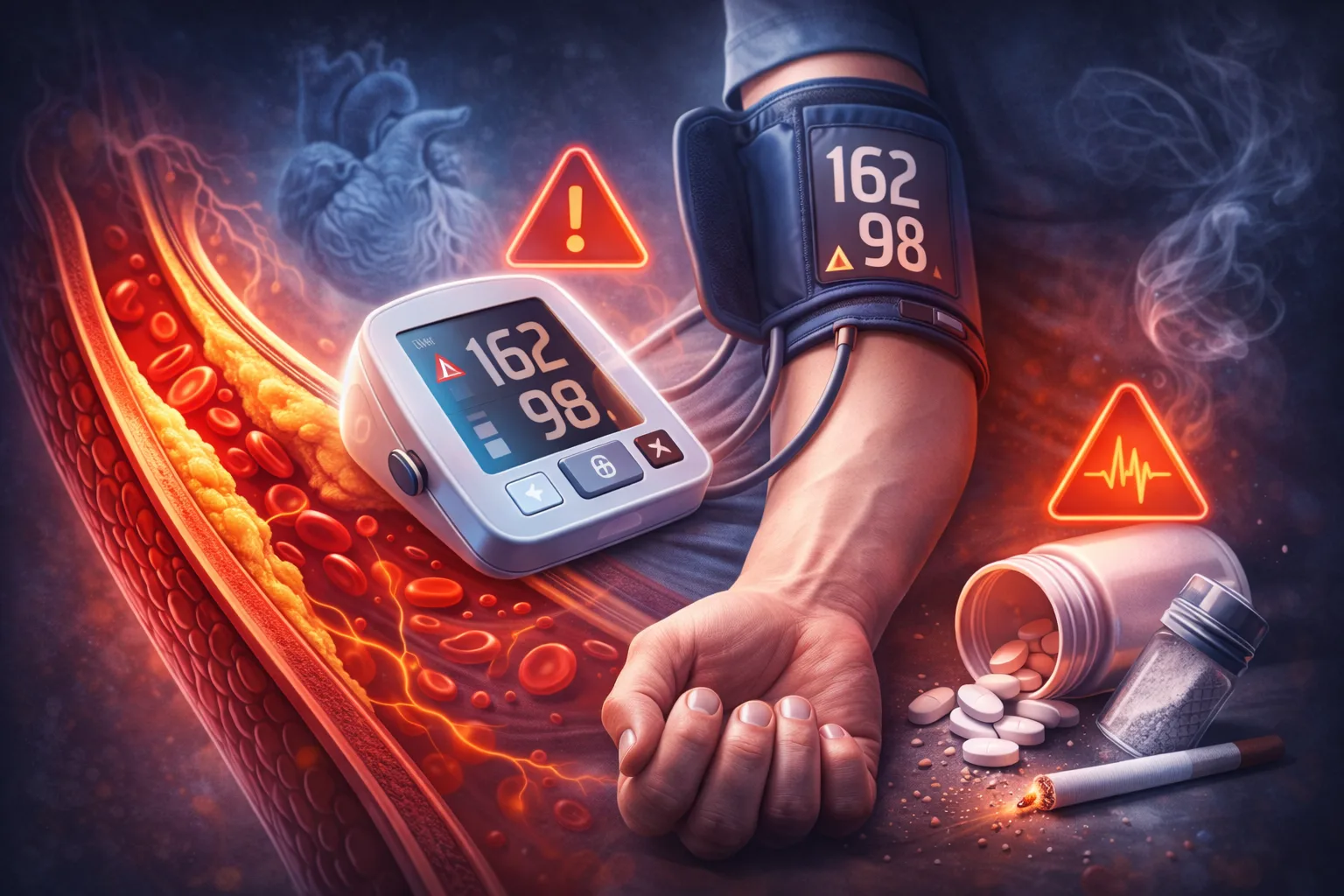
A practical guide to understanding blood pressure numbers, health risks, and steps you can take.
Introduction
Blood pressure problems usually mean your blood pressure is consistently too high (hypertension) or sometimes too low (hypotension). High blood pressure is far more common and is a major risk factor for heart disease, stroke, kidney disease, and vision problems.
Many people don’t feel any symptoms—even when blood pressure is dangerously high—so understanding your numbers and monitoring them is important.
What Is Blood Pressure?
Blood pressure is the force of blood pushing against your artery walls. It is written as two numbers, like 120/80.
- Systolic (top number): pressure when the heart beats and pumps blood.
- Diastolic (bottom number): pressure when the heart relaxes between beats.
Blood pressure changes throughout the day depending on stress, activity, sleep, hydration, and medication. A single high reading doesn’t always mean you have hypertension—patterns matter.
Common Blood Pressure Categories (General Guide)
Categories can vary slightly by country and guideline, but these are commonly used reference ranges for adults:
| Category | Systolic (Top) | Diastolic (Bottom) | What It Often Means |
|---|---|---|---|
| Normal | Below ~120 | Below ~80 | Generally healthy range for many people |
| Elevated | ~120–129 | Below ~80 | Higher than ideal; lifestyle changes often recommended |
| High (Hypertension) | ~130 or higher | ~80 or higher | May need lifestyle changes and sometimes medication |
| Very High / Crisis | ~180 or higher | ~120 or higher | May require urgent medical evaluation, especially with symptoms |
High Blood Pressure (Hypertension): Why It Happens
Hypertension can be “primary” (develops over time with no single cause) or “secondary” (caused by another condition). Common contributors include:
Lifestyle Factors
- High salt/sodium intake
- Low activity and long sitting time
- Excess body weight
- High alcohol intake
- Smoking or nicotine use
- Chronic stress and poor sleep
Medical & Biological Factors
- Family history/genetics
- Age-related artery changes
- Diabetes or insulin resistance
- Kidney disease
- Thyroid or hormonal disorders
- Sleep apnea
Medications/Substances That Can Raise BP
- Some decongestants
- NSAIDs (in some people)
- Stimulants
- Some steroids
- Excess caffeine (varies by person)
Secondary Hypertension (Examples)
- Kidney problems
- Hormonal conditions
- Sleep apnea
- Certain rare vascular conditions
Do Blood Pressure Problems Have Symptoms?
Many people with high blood pressure have no symptoms. That’s why it’s often called a “silent” condition. When symptoms happen, they may include:
- Headaches (not always)
- Dizziness or lightheadedness
- Shortness of breath
- Chest discomfort
- Blurred vision
- Nosebleeds (less common as a reliable sign)
Low Blood Pressure (Hypotension): When It’s a Problem
Low blood pressure is not always bad—some people naturally run low and feel fine. It becomes a concern when it causes symptoms like:
- Dizziness, fainting, or near-fainting
- Weakness, blurred vision
- Nausea
- Confusion (especially in older adults)
- Cold, clammy skin
Common causes include dehydration, blood loss, certain medications, standing up too quickly (orthostatic hypotension), heart issues, or endocrine problems.
How to Measure Blood Pressure Correctly at Home
Home monitoring can give more accurate “real life” data than a single clinic reading. For best results:
- Use the right cuff size (important for accuracy).
- Rest 5 minutes before measuring.
- Sit properly: back supported, feet flat, arm supported at heart level.
- Avoid caffeine, smoking, and exercise for at least 30 minutes beforehand.
- Take 2 readings one minute apart and record the average.
- Measure at consistent times: often morning and evening for a few days.
How to Improve High Blood Pressure: Lifestyle Changes That Work
Lifestyle changes can have a strong effect—especially in early or moderate hypertension. Even if you need medication, these changes improve overall heart health.
1) Reduce Sodium (Salt)
- Most sodium comes from processed and restaurant foods.
- Try cooking more at home and reading labels.
- Flavor with herbs, spices, lemon, and garlic instead of salt.
2) Eat More Potassium-Rich Foods (If Appropriate)
- Fruits and vegetables often support healthy BP.
- Examples: bananas, oranges, leafy greens, beans, potatoes.
Note: Some people with kidney disease must limit potassium—ask your clinician if unsure.
3) Move Regularly
- Brisk walking, cycling, swimming, or any consistent activity helps.
- Start small: 10–20 minutes a day, then build up.
- Add strength training 2 days per week if possible.
4) Weight Management (If Needed)
- Even modest weight loss can improve blood pressure.
- Focus on sustainable changes, not extreme diets.
5) Limit Alcohol
- Alcohol can raise blood pressure in some people.
- Reducing intake can improve readings quickly.
6) Improve Sleep and Screen for Sleep Apnea
- Poor sleep can raise BP and stress hormones.
- Loud snoring, gasping, and daytime sleepiness can suggest sleep apnea.
7) Manage Stress
- Short breathing exercises, walking, prayer/meditation, journaling.
- Reduce “constant alert” habits (too much caffeine, poor sleep, nonstop screen time).
8) Quit Smoking/Nicotine
- Nicotine raises BP and damages blood vessels.
- Quitting improves overall cardiovascular health significantly.
When Medication May Be Needed
Some people can’t reach healthy blood pressure levels with lifestyle alone—especially when hypertension is more severe or overall cardiovascular risk is higher. Medication can reduce long-term risk and protect organs like the heart, brain, and kidneys.
If medication is prescribed, it’s usually paired with lifestyle changes for the best results.
Urgent Warning Signs (Possible Heart Attack or Stroke)
Seek emergency care immediately if you have:
- Chest pain/pressure, shortness of breath, sweating, nausea
- Sudden weakness/numbness on one side of the body
- Sudden speech trouble, facial droop, confusion
- Sudden severe headache or vision changes
- Fainting or severe dizziness with very high readings
A Simple 6-Week Blood Pressure Improvement Plan
- Week 1: Measure BP correctly at home for 5–7 days and record results.
- Week 2: Reduce sodium by replacing processed meals with simple home meals a few times per week.
- Week 3: Walk 20 minutes after dinner at least 4 days this week.
- Week 4: Add a fruit/vegetable to two meals per day.
- Week 5: Improve sleep schedule (consistent bedtime/wake time) and reduce late-night screens.
- Week 6: Review your average readings and discuss next steps with your clinician if still elevated.
Quick Summary
- Blood pressure is measured as systolic/diastolic (top/bottom numbers).
- High blood pressure often has no symptoms but increases long-term health risks.
- Home monitoring and lifestyle changes can make a major difference.
- Medication may be needed depending on your readings and overall cardiovascular risk.
- Very high readings with symptoms require urgent care.