
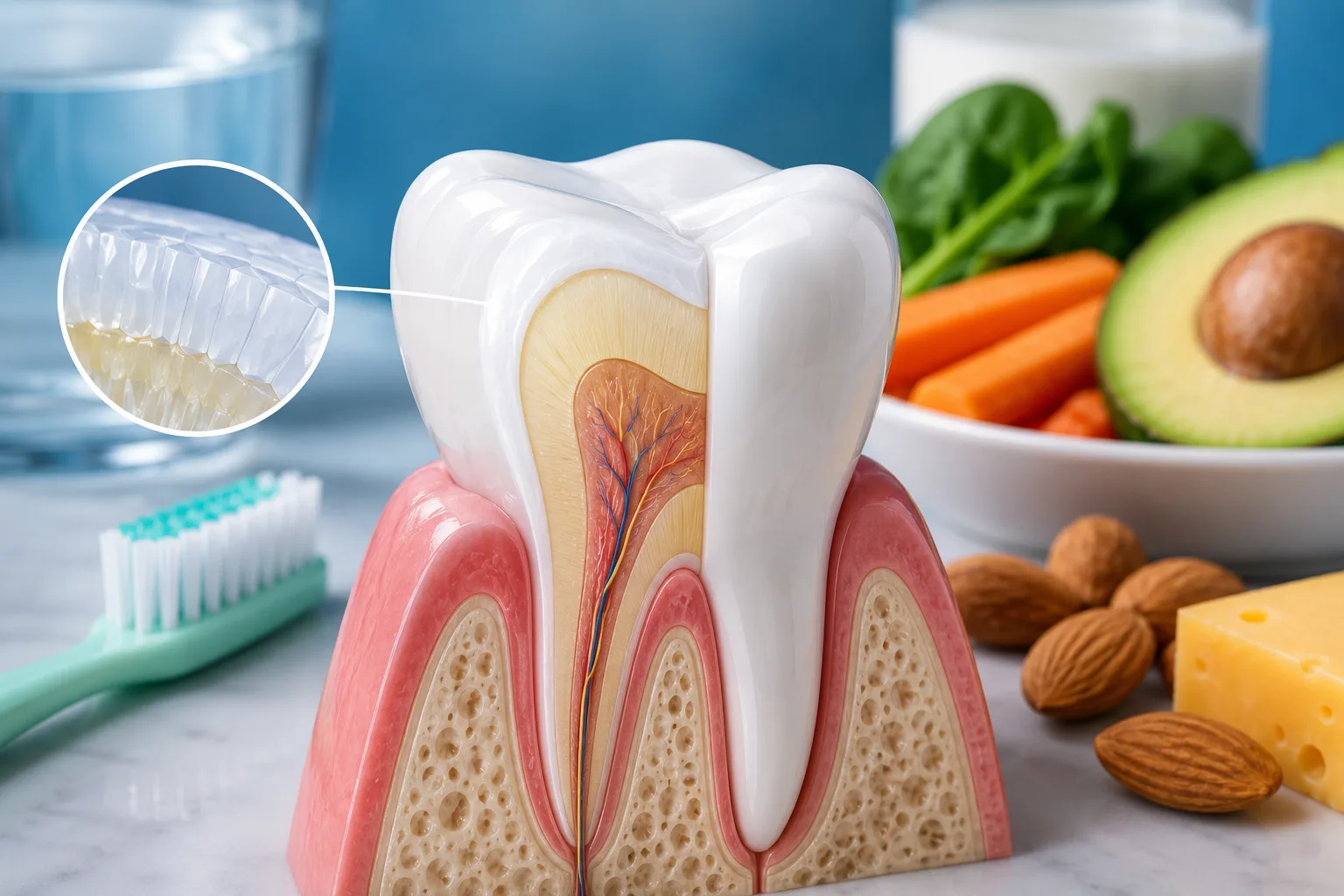
Enamel is the hard outer layer of the teeth. It protects the softer parts inside the tooth and helps your teeth handle daily activities such as biting, chewing, and drinking hot or cold beverages. Even though enamel is very strong, it can still wear down over time if it is not protected properly.
Understanding enamel is important because once it is badly damaged or lost, the body cannot naturally grow it back. Good daily habits can help protect enamel and keep teeth stronger for many years.
1. What Is Enamel?
Tooth enamel is the thin, strong, outer covering of each tooth. It is mostly made of minerals, especially calcium and phosphate. Enamel is the hardest substance in the human body, even harder than bone.
Its main job is to protect the tooth from damage, bacteria, acid, temperature changes, and normal chewing pressure.
2. Why Enamel Matters
Enamel acts like a shield for your teeth. Under the enamel is dentin, a softer layer that can become sensitive when exposed. When enamel is healthy, teeth are usually better protected from cavities, sensitivity, cracks, and stains.
- Protection: Enamel protects teeth from daily wear and tear.
- Strength: It helps teeth bite and chew food properly.
- Sensitivity control: It helps block hot, cold, sweet, and acidic sensations.
- Cavity prevention: Strong enamel makes it harder for decay to reach deeper layers.
- Appearance: Healthy enamel helps teeth look smooth and bright.
3. What Can Damage Enamel?
Enamel can be damaged by acids, grinding, poor brushing habits, dry mouth, and frequent snacking. Acid is one of the biggest causes of enamel erosion. Acid can come from foods, drinks, and bacteria in the mouth.
Common causes of enamel damage include:
- Soda, energy drinks, sports drinks, and sugary drinks
- Citrus fruits and acidic juices
- Frequent candy or sweet snacks
- Brushing too hard
- Using a hard-bristled toothbrush
- Teeth grinding or clenching
- Dry mouth
- Acid reflux or frequent vomiting
- Poor oral hygiene
4. Signs of Weak or Damaged Enamel
Enamel damage can happen slowly, so many people do not notice it right away. However, there are some signs that may show enamel is wearing down.
- Tooth sensitivity to cold, hot, sweet, or sour foods
- Yellow-looking teeth because dentin is showing through
- Rough or uneven tooth edges
- Small chips or cracks
- Shiny spots on the teeth
- More cavities than usual
- Teeth that look thinner or more transparent near the edges
5. Can Enamel Grow Back?
Enamel does not grow back once it is lost because it does not contain living cells. However, early mineral loss can sometimes be repaired through a process called remineralization. This means minerals such as calcium, phosphate, and fluoride can help strengthen weakened enamel before a cavity becomes serious.
This is why fluoride toothpaste, good brushing habits, and regular dental care are important.
6. How Fluoride Helps Enamel
Fluoride is a mineral that helps protect teeth from decay. It can strengthen enamel, make teeth more resistant to acid, and support remineralization. Many toothpastes contain fluoride because it is one of the most helpful ingredients for protecting enamel.
Dentists may also apply fluoride treatments for people who have higher risk of cavities or enamel weakness.
7. Foods That Support Strong Enamel
Food choices can affect enamel health. Some foods help support strong teeth by providing minerals, while others can increase acid and sugar exposure.
Helpful foods for enamel include:
- Milk, cheese, and yogurt
- Leafy green vegetables
- Eggs
- Fish with soft edible bones, such as sardines
- Nuts and seeds
- Water
- Crunchy vegetables like carrots and celery
Dairy foods can be helpful because they contain calcium and phosphate. Water is also important because it helps rinse the mouth and supports saliva production.
8. Drinks That May Harm Enamel
Some drinks are very acidic or high in sugar. Drinking them often can weaken enamel over time, especially when they are sipped slowly throughout the day.
- Soda
- Energy drinks
- Sports drinks
- Lemon water consumed too often
- Fruit juice
- Sweetened coffee or tea
You do not always have to completely avoid these drinks, but it is better to limit them, drink water afterward, and avoid brushing immediately after acidic drinks. Waiting about 30 minutes before brushing can help protect softened enamel.
9. Daily Habits to Protect Enamel
Small daily habits can make a big difference in protecting enamel. The goal is to reduce acid, support saliva, clean the teeth gently, and give minerals time to strengthen the enamel.
- Brush teeth twice a day with fluoride toothpaste.
- Use a soft-bristled toothbrush.
- Brush gently instead of scrubbing hard.
- Floss daily to clean between teeth.
- Drink plenty of water.
- Limit sugary and acidic foods and drinks.
- Do not sip soda or juice all day.
- Chew sugar-free gum to help saliva flow.
- Visit the dentist regularly for checkups and cleanings.
10. Enamel and Tooth Sensitivity
When enamel wears down, the dentin underneath can become exposed. Dentin contains tiny channels that connect to the nerve inside the tooth. This can cause pain or sensitivity when eating or drinking something cold, hot, sweet, or acidic.
Toothpaste made for sensitive teeth may help, but it is still important to find the cause of the sensitivity. A dentist can check for enamel erosion, cavities, gum recession, cracks, or grinding.
11. Enamel and Teeth Grinding
Grinding or clenching the teeth can wear down enamel over time. This may happen during sleep or during stressful moments. Signs can include jaw pain, headaches, flat tooth edges, tooth sensitivity, or cracked teeth.
If grinding is a problem, a dentist may recommend a night guard to help protect the teeth.
12. When to See a Dentist
You should see a dentist if you notice tooth sensitivity, pain, chips, cracks, yellowing, transparent edges, or frequent cavities. Early care can help prevent more serious problems and protect the teeth before damage becomes worse.
Conclusion
Enamel is the strong outer shield of your teeth. It protects against decay, sensitivity, stains, and daily chewing pressure. Although enamel is very strong, it can be damaged by acid, sugar, grinding, and harsh brushing.
The best way to protect enamel is to brush gently with fluoride toothpaste, drink water, limit acidic and sugary foods, eat mineral-rich foods, and visit the dentist regularly. With good habits, you can help keep your enamel strong and your smile healthier for many years.