
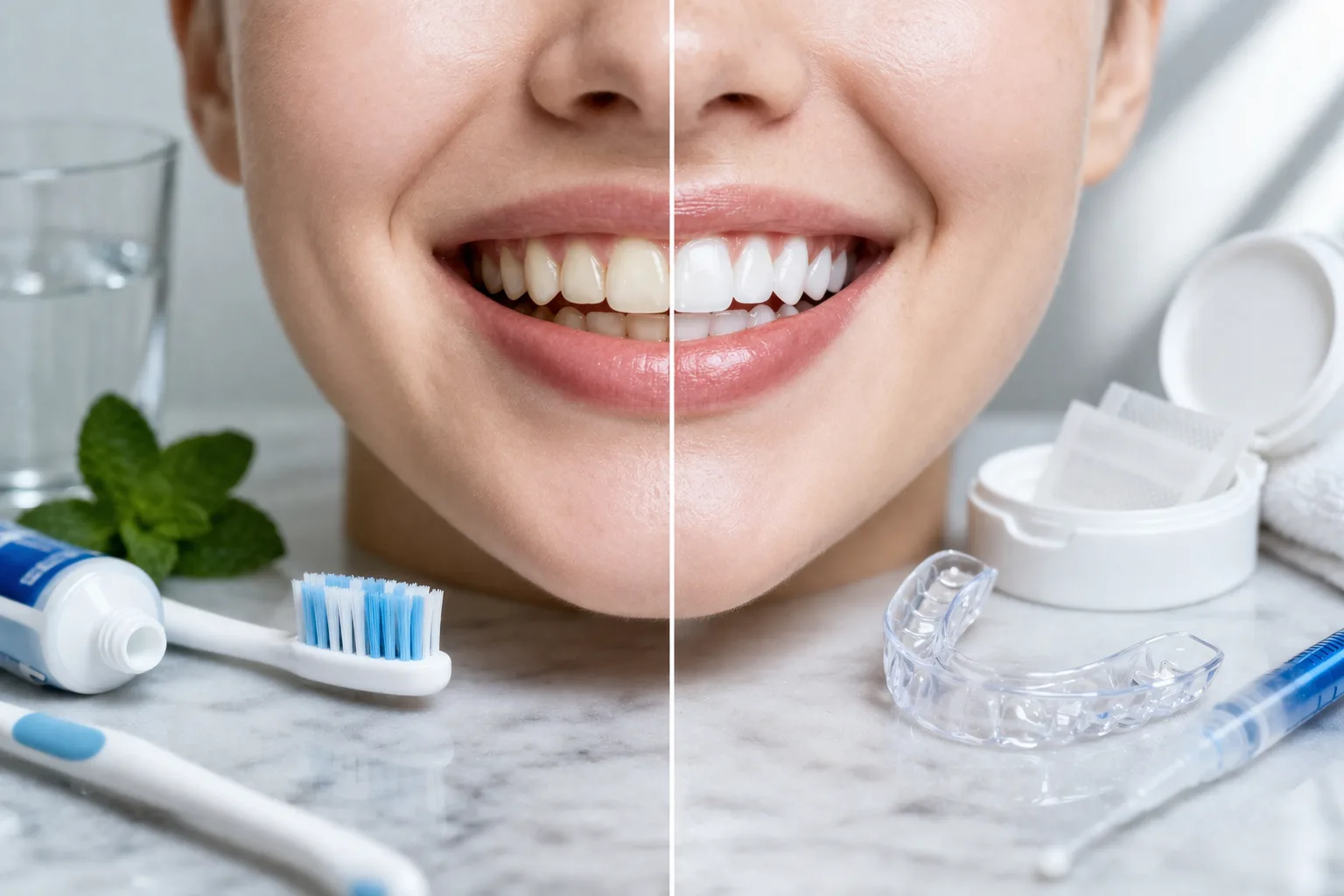
A detailed, informative, and easy-to-read guide to safe teeth whitening, daily care, and what to expect from different methods.
Many people want whiter teeth because a brighter smile can make them feel more confident. Teeth can become stained over time from coffee, tea, red wine, tobacco, aging, poor oral hygiene, certain medicines, and natural changes in the tooth itself. Whitening can help in many cases, but the safest and most effective approach depends on the cause of the discoloration. Professional dental organizations note that whitening works on many stains, but it does not whiten crowns, veneers, fillings, or other tooth-colored dental work.
Why Teeth Stop Looking White
Teeth do not always become darker for the same reason. Some stains are on the surface of the teeth, while others are deeper inside. Surface staining is often linked to foods, drinks, and smoking. Deeper discoloration can be related to aging, injury, medications, or changes inside the tooth. This matters because some whitening methods work better for surface stains, while others need a dentist’s help.
1. Brush Properly Every Day
One of the simplest ways to help teeth look cleaner and brighter is to brush properly twice a day with fluoride toothpaste for about 2 minutes. Good brushing helps remove plaque and surface stains before they build up. It will not dramatically bleach teeth, but it can make a noticeable difference in how fresh and clean they look.
2. Clean Between Your Teeth
Whitening is not only about the front surface of the teeth. Cleaning between the teeth with floss or other interdental cleaners helps remove plaque and trapped debris in places a toothbrush cannot reach. This improves the overall appearance of your smile and supports healthier gums too.
3. Reduce Foods and Drinks That Stain Teeth
Dark drinks and foods can stain teeth over time. Coffee, tea, red wine, and tobacco are common examples. Cutting down on these, rinsing your mouth with water after having them, and not letting stains sit on your teeth for long can help preserve a whiter look. Smoking is especially important to avoid because it stains teeth and also harms gums and overall oral health.
4. Get a Professional Cleaning
Sometimes teeth do not need bleaching first. They may simply need a professional cleaning to remove tartar and surface stains. A dental cleaning can make teeth look noticeably better and can also help a dentist determine whether whitening is likely to work well for you.
5. Use Dentist-Supervised Whitening
Dentist-supervised whitening is one of the most effective and safest ways to whiten teeth. According to the American Dental Association, whitening options include in-office procedures and dentist-supplied products for home use. These treatments commonly use hydrogen peroxide or carbamide peroxide. A dentist can check whether your teeth and gums are healthy enough first, choose the right approach, and help reduce the risk of problems.
6. In-Office Whitening
In-office whitening is usually the fastest option. The NHS notes that whitening done at a dental surgery can be faster and more effective than many home methods. Standard treatment may involve whitening gel, protection for the gums, and one or more dental visits depending on the method used. This option is often chosen by people who want quicker results.
7. Custom At-Home Trays From a Dentist
Another common option is dentist-provided whitening trays used at home over a period of days or weeks. This method can be very effective because the trays are made to fit your teeth more closely, which helps the whitening gel stay where it should be. It is slower than a single in-office session, but many people like the balance between cost, control, and results.
8. Over-the-Counter Whitening Products
Over-the-counter whitening strips, gels, and similar products can help some people, especially for mild surface staining. The ADA says over-the-counter whiteners are one of the available whitening categories, but choosing products with the ADA Seal of Acceptance adds an extra layer of confidence about safety and effectiveness.
9. Know the Limits of Whitening
Whitening does not work the same way on everything. It can lighten natural teeth by several shades, but it cannot make teeth “perfectly white,” and it does not whiten restorations such as crowns, veneers, or fillings. If you have visible dental work, whitening can create a color mismatch, so it is smart to ask a dentist before starting.
10. Be Careful With “DIY” Whitening Hacks
Many home remedies are promoted online, but not all of them are safe or effective. Overusing abrasive products or strong whitening substances can irritate the gums, increase tooth sensitivity, and potentially damage enamel or the tooth surface. The ADA has warned that frequent or aggressive whitening can harm enamel and gums and may make teeth appear more translucent over time.
11. Expect Some Sensitivity
Temporary tooth sensitivity and gum irritation are among the most common side effects of whitening. These effects are often mild and short-lived, but they can be uncomfortable. This is one reason many experts recommend dentist guidance, especially if you already have sensitive teeth, gum recession, cavities, or dental restorations.
12. Fix the Cause, Not Only the Color
Whitening is not always the first answer. If your teeth look dark because of plaque buildup, gum disease, tooth decay, injury, or an internal problem in the tooth, those issues should be checked first. In some cases, discoloration may be a sign that a tooth needs treatment rather than bleaching.
Helpful Everyday Habits for a Whiter Smile
- Brush twice a day with fluoride toothpaste
- Clean between your teeth daily
- Cut down on stain-causing drinks and tobacco
- Rinse with water after coffee, tea, or wine
- Get regular dental checkups and cleanings
- Use whitening products carefully and follow directions exactly
- Choose dentist-supervised whitening if you want stronger or safer results
When to Talk to a Dentist
It is a good idea to speak with a dentist before whitening if you have sensitive teeth, gum problems, fillings or crowns on visible teeth, dark spots that appeared suddenly, or pain. A dentist can tell you whether whitening is a good option, what kind of results are realistic, and whether another treatment would be better.
Conclusion
The best way to make teeth look whiter is usually a combination of good daily cleaning, reducing stains, regular dental care, and choosing safe whitening methods. For many people, a professional cleaning and dentist-supervised whitening provide the best balance of safety and results. Teeth can often be lightened by several shades, but healthy, clean teeth and realistic expectations matter just as much as the color itself.
Sources
- American Dental Association, Whitening.
- NHS, Teeth whitening.
- NIDCR, Oral Hygiene.
- ADA News, Experts weigh in on teeth whitening.
- American Dental Association, ADA Seal of Acceptance.
- ADA News, Risks of frequent teeth whitening.
- NHS, Dental treatments.
- NHS, Take care of your teeth and gums.
- American Dental Association, Home-Use Tooth Bleaching Products requirements.
- NHS, How to keep your teeth clean.
- NIDCR, Tooth Decay.
- ADA News, Managing expectations with teeth whitening.