
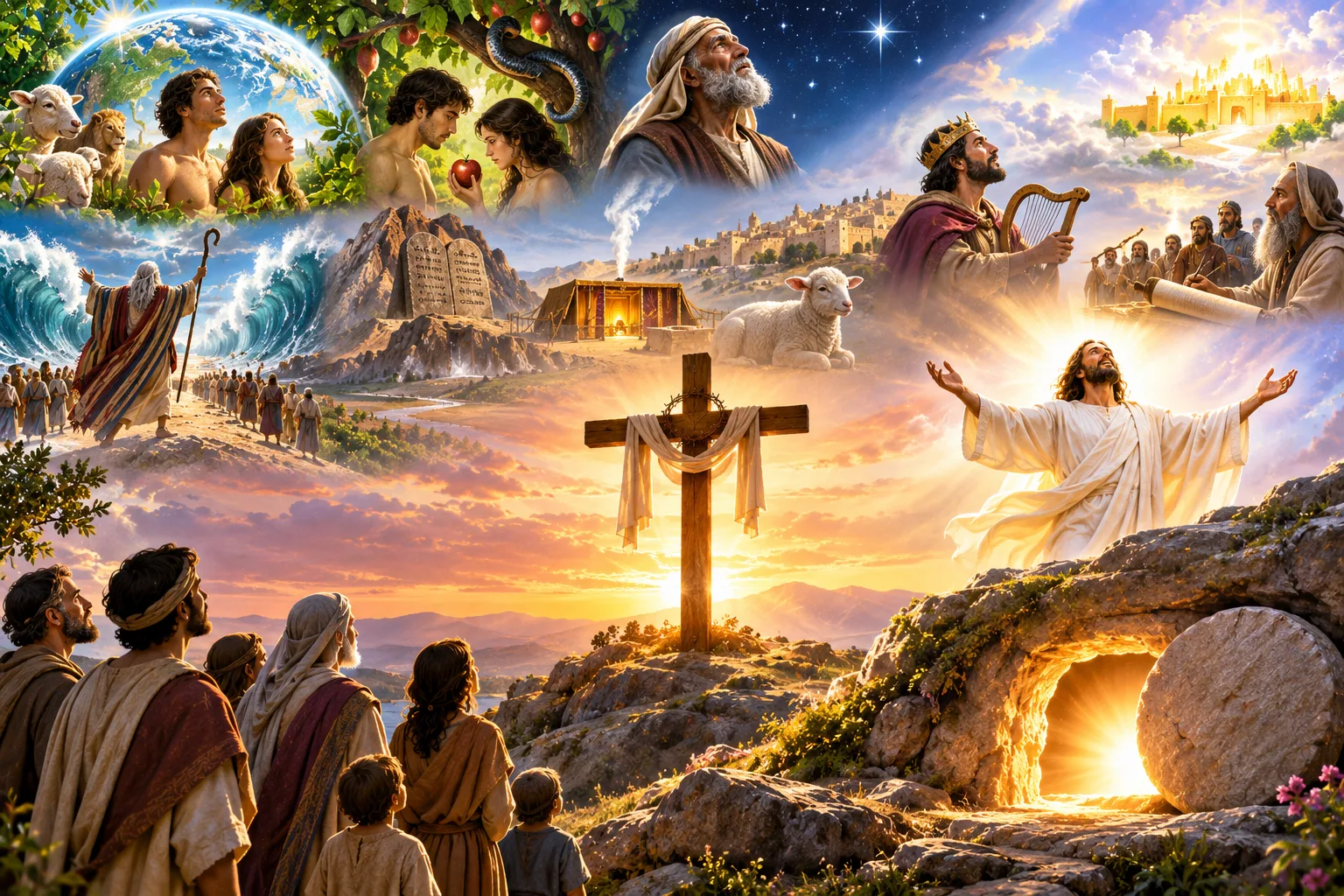
From the beginning of human history, YAHWEH Elohim has revealed Himself as the Creator of life, the source of righteousness, and the One who desires humanity to know Him. Yet the Bible also tells a painful story of human rebellion, sin, suffering, and separation from the One who created us.
Human beings were created for a relationship with Elohim, but sin entered the world and brought devastating consequences. Instead of abandoning humanity, YAHWEH revealed a mission of salvation—a plan that unfolds throughout Scripture and reaches its fulfillment in YESHUA the MESSIAH.
The mission of salvation is not merely about escaping punishment or receiving blessings. It concerns the restoration of humanity's relationship with Elohim, the forgiveness of sins, the transformation of human hearts, victory over death, and the promise of eternal life.
Throughout the Bible, we discover that Elohim's saving purpose is rooted in His love, holiness, justice, mercy, and faithfulness. His mission reaches beyond one nation or generation and extends an invitation to people from every nation and background.
"For Elohim so loved the world that He gave His only begotten Son, that whoever believes in Him should not perish but have everlasting life."
This article examines the mission of salvation from Genesis to Revelation, explaining why salvation is necessary, how YAHWEH prepared the way, what YESHUA accomplished, and how believers are called to live as people who have received His grace.
1. What Is Salvation?
In the Bible, salvation refers to deliverance, rescue, and restoration. Depending on the passage, it may describe rescue from physical danger, oppression, enemies, or other forms of suffering.
In the central message of the Gospel, salvation includes deliverance from sin and its ultimate consequences, reconciliation with Elohim, and the gift of eternal life through YESHUA the MESSIAH.
Salvation is not simply becoming a better person through human effort. It begins with the gracious action of Elohim toward humanity.
Through salvation, sinners are invited to turn from rebellion, receive forgiveness, become reconciled to their Creator, and begin a new life guided by His Spirit.
2. Why Does Humanity Need Salvation?
To understand Elohim's mission of salvation, we must first understand the human problem that salvation addresses.
According to Scripture, human beings were created good, but sin entered human experience through disobedience.
Sin includes actions, desires, and attitudes that contradict the righteous will of YAHWEH.
It appears through pride, dishonesty, hatred, injustice, selfishness, idolatry, violence, and countless other forms of wrongdoing.
Because Elohim is holy and righteous, sin is not a small or meaningless matter.
Humanity needs salvation because sin damages our relationship with Elohim, harms other people, corrupts our hearts, and leads ultimately to death.
3. Humanity Was Created in the Image of Elohim
Genesis 1:26–27 teaches that human beings were created in the image of Elohim.
This means that human life possesses dignity and value because of its relationship to the Creator.
Human beings were entrusted with responsibilities within creation and called to live according to Elohim's purposes.
Every human being possesses worth that does not depend upon wealth, nationality, social status, physical ability, or personal achievements.
Understanding humanity's original dignity helps us appreciate the purpose of salvation.
Elohim's mission is not to rescue something worthless, but to redeem human beings whom He created and loves.
4. The Garden of Eden and the First Human Disobedience
Genesis 2–3 describes Adam and Eve living in the garden prepared by Elohim.
They were given freedom and responsibility, together with a command concerning the tree of the knowledge of good and evil.
When they disobeyed, the relationship between humanity and Elohim was disrupted.
The account describes shame, fear, blame, suffering, and exclusion from the garden.
Their actions illustrate the destructive consequences of rejecting the Creator's instruction and attempting to define good and evil independently of Him.
5. Sin Entered the World and Death Followed
Romans 5:12 connects the entrance of sin into the world with Adam and explains that death spread to humanity.
The Bible presents death as one of the tragic consequences associated with the fallen human condition.
Human beings experience physical death, moral corruption, and estrangement from Elohim.
Yet Scripture does not end its account with the fall.
Even within the earliest chapters of Genesis, the story begins moving toward the possibility of redemption.
6. The First Promise of Victory Over Evil
Genesis 3:15 records YAHWEH's words concerning conflict between the serpent and the woman's offspring.
Within Christian interpretation, this passage has often been understood as an early anticipation of the MESSIAH's victory over evil.
Although the immediate text speaks through the imagery of the serpent and human offspring, Christians traditionally see its ultimate significance fulfilled through YESHUA.
This interpretation is sometimes called the protoevangelium, meaning the first announcement of the Gospel.
The larger biblical story reveals that evil and death will not have the final victory.
7. YAHWEH's Mercy Appeared Even After the Fall
After Adam and Eve sinned, YAHWEH pronounced consequences for their disobedience.
Yet Genesis also describes Elohim providing garments for them.
This detail has often been understood as a sign of His continuing care even in the presence of judgment.
Divine holiness and mercy are not contradictory qualities.
YAHWEH judges wrongdoing while continuing to act according to His wise and gracious purposes.
8. Humanity's Sin Continued to Spread
The chapters following the fall describe jealousy, murder, violence, corruption, and human pride.
Cain kills Abel. The world before the flood becomes filled with wickedness. Later, the people at Babel seek to establish their own greatness.
These stories demonstrate that the problem of sin extends beyond one individual or one family.
Humanity cannot solve its deepest spiritual problem merely through greater knowledge, stronger governments, or material prosperity.
The biblical story points toward the need for divine intervention and transformation.
9. Noah and the Preservation of Humanity
Genesis 6–9 describes a world corrupted by wickedness and violence.
YAHWEH brings judgment through the flood, while Noah and his household are preserved through the ark.
The account reveals both the seriousness of human evil and the mercy of Elohim in preserving life.
After the flood, YAHWEH establishes a covenant with Noah, his descendants, and living creatures, promising not to destroy all flesh again by a flood.
The preservation of humanity allows the biblical story of redemption to continue.
10. YAHWEH Called Abraham for a Greater Purpose
In Genesis 12, YAHWEH calls Abram, later named Abraham, to leave his homeland and follow Him.
He promises to make Abraham into a great nation, bless him, and make him a blessing.
Importantly, the promise includes a blessing that extends beyond Abraham's immediate descendants.
Through Abraham, all the families of the earth would be blessed.
This promise becomes a foundational part of the biblical story of salvation.
11. Salvation Was Always Intended to Reach the Nations
Although YAHWEH established a special covenant relationship with Israel, His saving purpose was never limited to one ethnic group.
The promise to Abraham looked toward blessing for the nations.
Later prophets anticipated a time when people from many nations would seek YAHWEH and recognize His righteousness.
The New Testament presents the Gospel of YESHUA as the fulfillment of this worldwide purpose.
Through the MESSIAH, people from different backgrounds are invited into a restored relationship with Elohim.
12. The Covenant with Abraham
YAHWEH's covenant with Abraham included promises concerning descendants, land, and blessing.
Abraham responded in faith, trusting the promises of Elohim even when their fulfillment appeared impossible.
Genesis 15:6 describes Abraham's faith being counted to him as righteousness.
Paul later uses Abraham as an important example when explaining justification by faith.
Abraham's story teaches that a right relationship with Elohim is grounded in trust in His promises rather than confidence in human perfection.
13. Isaac, Jacob, and the Twelve Tribes of Israel
The covenant promises continued through Isaac and Jacob.
Jacob, who was also called Israel, became the father of twelve sons whose descendants formed the tribes of Israel.
Through this family, YAHWEH continued to unfold His covenant purposes.
The biblical narrative does not portray the patriarchs as flawless individuals.
Their lives include fear, deception, conflict, and weakness.
Nevertheless, Elohim remained faithful to His promises.
14. Joseph and the Preservation of Israel
Joseph was betrayed by his brothers and sold into slavery in Egypt.
Through a series of difficult events, he eventually rose to a position of authority.
During a severe famine, Joseph's position allowed him to preserve many lives, including those of his own family.
His story illustrates how Elohim can work through human suffering and wrongdoing without approving the evil that people commit.
The family of Israel eventually settled in Egypt, setting the stage for the Exodus.
15. Israel's Slavery in Egypt
Over time, the Israelites experienced oppression and forced labor under Egyptian rule.
Exodus describes their suffering and their cries for deliverance.
YAHWEH heard their cries and remembered His covenant with Abraham, Isaac, and Jacob.
The Exodus reveals Elohim as a deliverer who acts against oppression and remains faithful to His promises.
It also becomes an important biblical pattern for understanding salvation.
16. Moses Was Chosen to Lead the Deliverance
YAHWEH called Moses through the burning bush and instructed him to confront Pharaoh.
Moses initially expressed uncertainty about his ability to carry out the mission.
Yet YAHWEH promised to be with him.
This calling teaches that Elohim's saving work depends ultimately upon His own power and faithfulness.
Human servants may be weak, hesitant, or imperfect, but YAHWEH can use them to accomplish His purposes.
17. The Ten Plagues and the Judgment of Egypt
Exodus describes ten plagues that confronted Pharaoh's refusal to release the Israelites.
These events demonstrated YAHWEH's authority and the seriousness of resisting His command.
The plagues culminated in the death of the firstborn, a devastating judgment described in Exodus 11–12.
The story combines the themes of judgment, deliverance, and the revelation of Elohim's power.
18. The First Passover
Before the final plague, YAHWEH instructed the Israelites to prepare the Passover meal and mark their doorposts with the blood of a lamb.
The Passover became a lasting remembrance of their deliverance from Egypt.
Within the New Testament, Passover imagery becomes closely associated with the saving work of YESHUA.
Paul refers to the MESSIAH as our Passover sacrifice in 1 Corinthians 5:7.
The connection highlights deliverance through the sacrificial work of the MESSIAH.
19. The Crossing of the Sea
After leaving Egypt, the Israelites found themselves trapped between Pharaoh's pursuing forces and the sea.
Exodus 14 describes YAHWEH opening a way through the waters so that Israel could escape.
The event became one of the defining memories of Israel's salvation history.
It reminds readers that deliverance ultimately came from YAHWEH rather than Israel's military strength.
The crossing also became a powerful biblical image of leaving bondage behind and entering a new life under Elohim's guidance.
20. The Wilderness Revealed Humanity's Need for Faith
After their deliverance, the Israelites traveled through the wilderness.
They experienced hunger, thirst, uncertainty, and fear.
Despite witnessing extraordinary acts of deliverance, they often complained and struggled to trust YAHWEH.
The wilderness revealed that freedom from external slavery did not automatically remove unbelief from the human heart.
Salvation involves more than a change of circumstances; it also calls for a transformed relationship with Elohim.
21. YAHWEH Provided Manna and Water
During the wilderness journey, YAHWEH provided manna for food and water in places where provision seemed impossible.
These events demonstrated His care for His people.
Later, YESHUA identified Himself as the bread of life in John 6.
He used the wilderness provision as part of His teaching about the deeper spiritual life that comes through Him.
Physical food sustains the body temporarily, but the life YESHUA gives reaches beyond physical survival.
22. The Covenant at Mount Sinai
At Mount Sinai, YAHWEH established His covenant with Israel and gave His commandments.
The law revealed important truths about holiness, justice, worship, family responsibilities, and community life.
The commandments were given to a people whom YAHWEH had already delivered from Egypt.
This sequence is significant: deliverance came before the giving of the law.
Obedience was to characterize the covenant relationship, not serve as the means by which Israel first escaped slavery.
23. The Law Revealed the Holiness of Elohim
The law taught Israel how to live as a people belonging to YAHWEH.
It prohibited idolatry, murder, theft, false testimony, and other forms of wrongdoing.
It also included instructions concerning justice, care for vulnerable people, worship, and ritual purity.
The law revealed the righteousness of Elohim and the seriousness of sin.
However, the biblical story also shows that external commandments alone cannot create a permanently faithful heart.
24. The Tabernacle and the Presence of Elohim
YAHWEH instructed Israel to build the tabernacle, a sacred place associated with His presence among the people.
Its structure, priesthood, and sacrifices emphasized both the holiness of Elohim and the need for proper approach to Him.
The tabernacle demonstrated that YAHWEH desired to dwell among His people.
Yet the restrictions surrounding the sanctuary also reminded Israel of the seriousness of sin and the distinction between the holy Creator and sinful humanity.
25. The Sacrificial System and the Problem of Sin
The Mosaic law included sacrifices associated with atonement, purification, thanksgiving, and covenant worship.
These sacrifices played an important role in Israel's relationship with YAHWEH.
The book of Hebrews later explains how the sacrificial system pointed toward the greater and decisive work of YESHUA.
According to Hebrews, the repeated sacrifices could not accomplish the final removal of sin in the way the MESSIAH's sacrifice does.
His offering is presented as sufficient and decisive.
26. The Day of Atonement
Leviticus 16 describes the Day of Atonement, an important occasion in Israel's worship.
The high priest performed rituals associated with cleansing the sanctuary and making atonement for the people.
Two goats played distinct roles in the ceremony, expressing themes of purification and the removal of sin.
Hebrews draws upon the imagery of the high priest entering the holy place to explain the heavenly priestly ministry of YESHUA.
The MESSIAH is presented as the greater High Priest who accomplishes what the earlier system anticipated.
27. Israel's Rebellion Demonstrated the Need for a New Heart
Throughout the wilderness journey and later history, Israel repeatedly struggled with idolatry, disobedience, and distrust.
The golden calf incident in Exodus 32 is one of the clearest examples.
Even after receiving YAHWEH's commandments, the people turned toward false worship.
This pattern revealed a deeper problem within the human heart.
True restoration would require more than external instruction. It would require inner transformation.
28. The Promised Land and the Faithfulness of YAHWEH
After the wilderness generation, Joshua led Israel across the Jordan River into Canaan.
The biblical account presents the land as part of YAHWEH's covenant promise to the patriarchs.
Israel's entrance into the land demonstrated His faithfulness, even though the people continued to face spiritual and moral challenges.
Possession of the land did not eliminate sin, suffering, or the need for continued obedience.
The story therefore points beyond geographical inheritance toward a greater and lasting rest in Elohim.
29. The Judges and the Cycle of Rebellion
The book of Judges describes repeated cycles of disobedience, oppression, distress, and deliverance.
When the Israelites turned away from YAHWEH, they often experienced severe consequences.
When they cried out, Elohim raised deliverers to rescue them.
Yet the cycle continued.
This pattern revealed the instability of a people who lacked enduring faithfulness.
Humanity needed a greater Deliverer and a deeper transformation than temporary political or military rescue could provide.
30. The Promise to King David
YAHWEH made a significant covenant promise to David in 2 Samuel 7.
David was promised a continuing royal line, and the expectation of a future righteous ruler became central to Israel's hope.
The prophets later developed this expectation, speaking of a coming king who would establish righteousness, justice, and peace.
The New Testament identifies YESHUA as the promised MESSIAH from David's line.
31. The Prophets Announced a Coming Savior
The prophetic books contain promises of restoration, forgiveness, justice, and future blessing.
Isaiah speaks of a coming ruler associated with righteousness and peace.
Micah 5:2 connects a future ruler with Bethlehem.
Jeremiah promises a new covenant.
Ezekiel describes the gift of a new heart and spirit.
Christians understand these prophetic themes as finding their fulfillment in the person and work of YESHUA.
32. The Suffering Servant in Isaiah 53
Isaiah 52:13–53:12 describes a servant who suffers, is rejected, and bears the consequences associated with the sins of others.
Within Christian interpretation, this passage is understood as a powerful anticipation of the suffering and saving work of YESHUA.
Jewish interpretations of the servant passages differ, including readings that understand the servant in relation to Israel.
The New Testament explicitly applies themes from Isaiah 53 to YESHUA's suffering and death.
The passage is therefore central to Christian understanding of the MESSIAH's sacrificial mission.
33. YAHWEH Promised a New Covenant
Jeremiah 31:31–34 announces a new covenant with the house of Israel and the house of Judah.
This covenant includes the promise that Elohim's instruction will be written upon the hearts of His people.
It also includes the promise of forgiveness.
The New Testament connects this promise with the saving work of YESHUA.
The new covenant emphasizes an inward relationship with Elohim and the decisive forgiveness accomplished through the MESSIAH.
34. A New Heart and a New Spirit
Ezekiel 36:26–27 promises that YAHWEH will give His people a new heart and place His Spirit within them.
The imagery of a heart of stone being replaced with a heart of flesh describes a profound inward transformation.
Humanity's problem is not merely ignorance of religious rules.
People need renewed desires, transformed attitudes, and the enabling presence of Elohim's Spirit.
Salvation therefore includes the promise of spiritual renewal.
35. The Fullness of Time and the Coming of YESHUA
Galatians 4:4–5 describes Elohim sending His Son when the fullness of time had come.
The birth of YESHUA was not presented as an isolated event without connection to earlier Scripture.
It occurred within the continuing story of YAHWEH's covenant promises and saving purpose.
YESHUA came as the MESSIAH, the promised descendant of David, and the One through whom the blessing promised to Abraham would reach the nations.
36. Why Did YESHUA Come into the World?
YESHUA described His mission in terms of seeking and saving those who were lost.
"For the Son of Man has come to seek and to save that which was lost."
His mission involved revealing the Father, proclaiming the Kingdom, calling sinners to repentance, demonstrating mercy, and accomplishing redemption.
He did not come merely to establish a new philosophy or provide inspirational teachings.
He came to address humanity's deepest need: reconciliation with Elohim.
37. The Birth of YESHUA and the Promise of Salvation
The Gospels of Matthew and Luke describe the birth of YESHUA within the history of Israel.
Matthew 1:21 connects His name with His mission to save His people from their sins.
Luke 2 announces good news of great joy and identifies the newborn child as Savior and MESSIAH.
His birth marks the arrival of the One through whom the promises of Elohim would be fulfilled.
38. YESHUA Revealed the Love of the Father
One of the central purposes of YESHUA's ministry was to reveal the character of the Father.
He welcomed those who were rejected, showed compassion toward the suffering, and called sinners to repentance.
His life demonstrated that the holiness of Elohim is not opposed to mercy.
Instead, the Gospel reveals divine love acting to rescue people from sin rather than leaving them trapped in it.
39. YESHUA Proclaimed the Kingdom of Elohim
YESHUA began His public ministry by announcing the Kingdom of Elohim and calling people to repent and believe the good news.
The Kingdom concerns the reign and authority of Elohim.
YESHUA's teachings describe a life characterized by righteousness, mercy, humility, love, faithfulness, and obedience to the Father.
Salvation brings believers into a new relationship with the King and calls them to live according to the values of His Kingdom.
40. YESHUA Called Sinners to Repentance
YESHUA did not teach that sin was harmless or unimportant.
He called people to repent, meaning to turn away from wrongdoing and toward Elohim.
Repentance includes recognizing sin, acknowledging our need for mercy, and beginning a changed direction of life.
It is not simply feeling guilty or fearing punishment.
Genuine repentance involves a sincere response to the truth and grace of Elohim.
41. YESHUA Showed Compassion to the Rejected
The Gospels frequently describe YESHUA interacting with people who were marginalized or despised.
He ate with tax collectors and sinners, healed those who suffered, and showed concern for the poor.
His compassion did not mean approving every action people had committed.
Rather, He offered them the opportunity to turn toward Elohim and receive new life.
His example reminds believers that the mission of salvation must be communicated with compassion rather than arrogance.
42. The Miracles of YESHUA Revealed His Authority
YESHUA healed the sick, restored sight to the blind, cleansed lepers, calmed storms, and raised the dead.
These miracles demonstrated compassion and revealed His extraordinary authority.
They also served as signs of the Kingdom of Elohim breaking into human history.
His works pointed toward the greater restoration that salvation promises.
The ultimate hope of the Gospel includes not only spiritual forgiveness but also the defeat of death and the renewal of creation.
43. YESHUA Forgave Sins
In Mark 2, YESHUA told a paralyzed man that his sins were forgiven.
Some religious teachers questioned His authority to make such a declaration.
YESHUA then healed the man, demonstrating His authority in connection with the forgiveness of sins.
This event reveals that His mission was greater than physical healing alone.
He came to address the spiritual condition of humanity.
44. YESHUA Is the Good Shepherd
In John 10, YESHUA describes Himself as the Good Shepherd.
A good shepherd cares for the sheep, protects them, and knows them.
YESHUA declares that the Good Shepherd lays down His life for the sheep.
This imagery connects His love with His coming sacrifice.
Salvation is not presented as an impersonal transaction. It arises from the loving mission of the One who seeks and cares for His people.
45. Why Was the Death of YESHUA Necessary?
The New Testament teaches that the death of YESHUA was central to Elohim's saving purpose.
Sin is serious because it violates the righteousness of the Creator and brings destruction into human life.
Human beings cannot erase their wrongdoing simply by performing enough good deeds.
Through the cross, the New Testament presents YESHUA as bearing sin, accomplishing atonement, and opening the way for reconciliation with Elohim.
Different Christian traditions explain aspects of the atonement in different ways, including sacrifice, substitution, victory over evil, and reconciliation.
They share the central conviction that salvation comes through the death and resurrection of the MESSIAH.
46. The Lamb of Elohim
John the Baptist identified YESHUA as the Lamb of Elohim who takes away the sin of the world.
The image recalls the sacrificial language of Israel's Scriptures.
It also connects with the Passover and other biblical themes of deliverance and atonement.
YESHUA is presented as the One whose sacrifice accomplishes what humanity could not achieve through its own efforts.
47. YESHUA Willingly Gave His Life
The Gospels do not portray YESHUA merely as a helpless victim of circumstances.
He understood that suffering and death lay ahead and continued His mission in obedience to the Father.
John 10 emphasizes His willingness to lay down His life.
His sacrifice is presented as an expression of love and obedience rather than a defeat of Elohim's purpose.
48. The Last Supper and the New Covenant
During His final meal with the disciples, YESHUA spoke of His body and blood in connection with the covenant.
Luke 22:20 associates His blood with the new covenant.
His approaching death would become central to the fulfillment of the promises announced through the prophets.
Christian observance of the Lord's Supper remembers His sacrifice and proclaims its significance.
49. The Crucifixion of YESHUA
YESHUA was arrested, condemned, and crucified under Roman authority.
Crucifixion was a brutal form of execution intended to inflict suffering and public humiliation.
Yet the New Testament presents the cross as central to Elohim's saving work.
Through His suffering, YESHUA demonstrated sacrificial love and fulfilled His mission of redemption.
The cross reveals both the seriousness of sin and the extraordinary mercy of Elohim.
50. The Meaning of the Cross
The cross is central to Christian faith because it represents the sacrificial death of YESHUA for sinners.
Romans 5:8 teaches that Elohim demonstrates His love through the MESSIAH's death while humanity is still sinful.
The cross therefore challenges the idea that people must first make themselves perfect before Elohim will love them.
His saving love takes the initiative.
At the same time, that love calls people to repentance and transformation rather than continued rebellion.
51. YESHUA Bore Our Sins
First Peter 2:24 describes YESHUA bearing sins in His body on the tree.
The passage connects His suffering with the purpose that believers might die to sin and live for righteousness.
Salvation is therefore not merely permission to continue sinning without concern.
The MESSIAH's sacrifice calls His followers into a transformed way of life.
52. Salvation Reveals Both Justice and Mercy
YAHWEH is perfectly righteous and does not treat evil as meaningless.
Yet He is also merciful and desires the restoration of sinners.
Romans 3:21–26 connects the saving work of YESHUA with the righteousness of Elohim.
The Gospel presents salvation as an expression of divine grace that does not deny the seriousness of sin.
Justice and mercy meet within the saving purpose of Elohim.
53. The Resurrection of YESHUA
The Gospel does not end with the crucifixion.
The New Testament proclaims that YAHWEH raised YESHUA from the dead.
The resurrection is foundational to Christian faith.
It demonstrates that death did not have the final victory over the MESSIAH.
Paul explains in 1 Corinthians 15 that without the resurrection, Christian preaching and faith would be empty.
The resurrection establishes the hope of future resurrection and eternal life for those who belong to YESHUA.
54. Victory Over Sin and Death
Through His death and resurrection, YESHUA is proclaimed victorious over sin and death.
First Corinthians 15 describes death as an enemy that will ultimately be destroyed.
Salvation therefore reaches beyond the forgiveness of past wrongdoing.
It includes the promise that death itself will not have the final word over Elohim's redeemed people.
55. YESHUA Ascended and Was Exalted
After His resurrection, the New Testament describes YESHUA ascending and being exalted.
Acts 1 records His ascension, while Philippians 2 emphasizes His exaltation and universal lordship.
The MESSIAH's saving work continues to have significance beyond His earthly ministry.
He is presented as the risen Lord through whom believers approach the Father.
56. YESHUA Is Our High Priest and Mediator
The book of Hebrews describes YESHUA as the great High Priest.
He understands human weakness because He experienced genuine human life and suffering, yet without sin.
His priestly work provides believers with confidence to approach Elohim for mercy and grace.
First Timothy 2:5 also identifies the MESSIAH as the mediator between Elohim and humanity.
Our hope rests in His saving work rather than our ability to achieve perfection independently.
57. Salvation Is a Gift of Grace
One of the most important teachings of the New Testament is that salvation comes through the grace of Elohim.
"For by grace you have been saved through faith, and that not of yourselves; it is the gift of Elohim."
Grace means that salvation is given through divine generosity rather than earned as wages for perfect human performance.
No person can purchase forgiveness through money, status, religious achievements, or moral pride.
Salvation is grounded in what Elohim has accomplished through YESHUA.
58. What Is Faith in YESHUA?
Biblical faith involves more than agreeing that YESHUA existed.
It includes trusting Him, receiving the Gospel, acknowledging His lordship, and relying upon His saving work.
Faith is not simply confidence in our own ability to become righteous.
It is dependence upon the grace and faithfulness of Elohim.
Genuine faith also produces a desire to follow the teachings of the MESSIAH.
59. Repentance and Faith Belong Together
YESHUA called people to repent and believe the Gospel.
Repentance means turning away from sin and toward Elohim.
Faith means trusting the saving message concerning YESHUA.
These responses belong together because receiving salvation involves a new direction of life.
Repentance does not mean becoming morally perfect before approaching Elohim.
It means honestly turning toward Him and accepting His call to transformation.
60. What Does It Mean to Be Born Again?
In John 3, YESHUA teaches Nicodemus about the necessity of being born again, or born from above.
This expression points toward spiritual renewal brought about by Elohim.
Human beings need more than outward religious identity.
They need new life through the work of the Spirit.
Being born again involves entering a new relationship with Elohim that transforms the direction of one's life.
61. The Holy Spirit and the Work of Salvation
The Holy Spirit plays an essential role in the life of believers.
The New Testament connects the Spirit with spiritual rebirth, sanctification, guidance, assurance, and transformation.
Romans 8 describes life according to the Spirit in contrast with life controlled by sinful desires.
The Spirit helps believers grow in holiness and develop the character that reflects Elohim.
Salvation is not merely a past event; it begins a continuing life of spiritual growth.
62. The Meaning of Baptism
Baptism is closely associated with repentance, faith, identification with YESHUA, and entrance into the community of believers.
Romans 6 uses baptismal imagery to describe participation in the MESSIAH's death and resurrection.
The believer is called to leave the old life of sin and walk in newness of life.
Christian traditions differ on the precise relationship between baptism and the reception of salvation, including questions of timing, mode, and recipients.
Nevertheless, baptism remains an important practice commanded by YESHUA and associated with discipleship.
63. Is Salvation Earned by Good Works?
Ephesians 2:8–9 teaches that salvation is by grace through faith, not as a result of works that would give people grounds for boasting.
Yet the following verse explains that believers are created in the MESSIAH for good works.
This distinction is important.
Good works are not a way to force Elohim to grant salvation.
They are the appropriate fruit of a life transformed by His grace.
Faith that genuinely trusts Elohim should influence behavior.
64. Faith Without Works Is Dead
James 2 teaches that faith without works is dead.
James challenges the idea that someone can claim faith while refusing to respond to people in need.
His teaching emphasizes that genuine faith becomes visible through action.
Paul and James address different errors: Paul rejects boasting in human works as the basis of salvation, while James rejects an empty profession that produces no obedience or compassion.
Living faith should express itself through love.
65. Salvation Produces a New Life
Second Corinthians 5:17 describes those who are in the MESSIAH as a new creation.
This does not mean that believers instantly become incapable of mistakes.
It means that their relationship with Elohim and direction of life have fundamentally changed.
Old patterns of selfishness, dishonesty, hatred, and rebellion should increasingly give way to righteousness, humility, love, and self-control.
Spiritual transformation continues throughout the believer's life.
66. Sanctification: Growing in Holiness
Sanctification refers to being set apart for Elohim and growing in holiness.
The New Testament describes believers as people called to reflect the character of the One who saved them.
This growth involves prayer, Scripture, repentance, fellowship, obedience, and dependence upon the Holy Spirit.
Spiritual maturity is not measured merely by religious knowledge or public reputation.
It is also demonstrated through love, patience, faithfulness, gentleness, and integrity.
67. Salvation Calls Us to Love Elohim
YESHUA identified the command to love YAHWEH with all our heart, soul, mind, and strength as the greatest commandment.
Salvation restores the possibility of living in a loving relationship with our Creator.
Our response should not be limited to fear of punishment or desire for rewards.
We are called to love Elohim because of who He is and because of the mercy He has shown us.
68. Salvation Calls Us to Love Our Neighbors
YESHUA taught that loving our neighbors is inseparable from loving Elohim.
People who have received mercy should become people who show mercy.
This includes caring for the poor, helping those who suffer, speaking truthfully, forgiving others, and refusing unnecessary cruelty.
The mission of salvation transforms not only individual spiritual lives but also the way believers relate to their communities.
69. Forgiveness Is Central to Salvation
Sin creates a need for forgiveness.
Through YESHUA, the Gospel announces the possibility of forgiveness and reconciliation with Elohim.
Believers are then called to extend forgiveness toward others.
This does not mean approving wrongdoing or abandoning justice.
It means rejecting personal revenge and allowing divine mercy to shape our response to human failure.
70. Salvation and Reconciliation with Elohim
Second Corinthians 5:18–20 describes the ministry of reconciliation.
Through the MESSIAH, Elohim acts to reconcile sinners to Himself.
Reconciliation means that the hostility and separation associated with sin are addressed through His saving work.
Believers are invited into a restored relationship with their Creator.
They are also called to communicate this message of reconciliation to others.
71. Salvation Is Available to People from Every Nation
The Gospel is not restricted to one nationality, language, social class, or ethnic background.
Galatians 3 emphasizes that those who belong to the MESSIAH are connected to the promise given to Abraham.
Revelation describes redeemed people from every tribe, language, people, and nation.
The mission of salvation demonstrates the worldwide reach of Elohim's mercy.
No person should be excluded from hearing the Gospel because of ancestry, poverty, or social position.
72. What About People Who Lived Before YESHUA?
The Bible describes faithful people who lived before the earthly ministry of YESHUA, including Abraham, Moses, David, and many others.
Hebrews 11 emphasizes their faith in Elohim and His promises.
The New Testament presents the saving work of the MESSIAH as central to redemption across the history of Elohim's people.
Christians differ in their explanations of how this applies to every historical circumstance and to those who had limited knowledge of divine revelation.
Scripture consistently calls us to trust the justice, wisdom, and mercy of YAHWEH.
73. What About Those Who Have Never Heard the Gospel?
This is one of the most difficult questions in Christian theology.
The New Testament emphasizes the importance of proclaiming the Gospel and responding to YESHUA in faith.
It also teaches that Elohim is righteous and impartial.
Different Christian traditions offer different explanations of how divine judgment relates to people who never received a clear opportunity to hear the Gospel.
We should avoid claiming certainty where Scripture has not provided a complete explanation.
Our responsibility is to communicate the Gospel faithfully while trusting YAHWEH to judge with perfect justice and wisdom.
74. Can a Person Be Too Sinful to Receive Mercy?
The Gospel offers hope even to people with deeply troubled pasts.
Scripture records the repentance of individuals who committed serious wrongdoing.
Paul himself described his former persecution of believers and the mercy he received.
These examples demonstrate that a person's past does not automatically place them beyond the possibility of repentance and forgiveness.
However, receiving mercy does not eliminate responsibility for past harm or the need to make appropriate changes.
75. Does Salvation Mean a Life Without Suffering?
Salvation does not guarantee that believers will never experience sickness, poverty, persecution, disappointment, or grief.
YESHUA warned His followers that they would face difficulties in the world.
The apostles also experienced hardship despite their faithfulness.
The Gospel promises the presence and faithfulness of Elohim, not permanent comfort in this present age.
Its ultimate hope includes the future removal of suffering and death.
76. The Mission of Salvation Is Not a Promise of Earthly Wealth
Some religious teachings suggest that genuine faith always produces financial prosperity.
However, the New Testament does not present material wealth as a reliable measure of salvation or divine approval.
YESHUA warned about the spiritual dangers of greed and misplaced trust in riches.
Believers are called to work responsibly, care for their families, practice generosity, and remain content without making wealth the center of life.
The greatest blessing of salvation is reconciliation with Elohim, not the accumulation of possessions.
77. The Church and the Mission of Salvation
After the resurrection and ascension of YESHUA, His followers continued proclaiming the Gospel.
The book of Acts describes the growth of the early community of believers.
They devoted themselves to teaching, prayer, fellowship, generosity, and witness.
The church is called to proclaim the message of salvation and demonstrate its transforming power through love and service.
Its purpose is not merely to build institutions or gain worldly influence, but to glorify Elohim and make disciples of YESHUA.
78. The Great Commission
In Matthew 28:18–20, the risen YESHUA commands His followers to make disciples of all nations.
He instructs them to baptize and teach people to observe His commandments.
This mission extends the Gospel beyond the original group of disciples.
It involves more than persuading people to repeat religious words.
Making disciples includes teaching, spiritual formation, obedience, and helping people grow in their relationship with Elohim.
79. Sharing the Gospel with Love and Respect
The message of salvation should be shared truthfully and compassionately.
Believers should avoid manipulation, threats, dishonesty, or humiliating people who hold different beliefs.
First Peter 3:15 encourages believers to give an explanation of their hope with gentleness and respect.
The mission of salvation is a mission of good news.
Its messengers should reflect the humility and love of YESHUA.
80. Salvation and the Final Judgment
The Bible teaches that humanity is accountable to Elohim.
Acts 17:31 speaks of a day when Elohim will judge the world in righteousness through the One He has appointed.
The New Testament identifies YESHUA as the appointed Judge.
Final judgment demonstrates that evil, injustice, and human wrongdoing will not be ignored forever.
It also reminds us of the urgency of repentance and the importance of receiving divine mercy.
81. Eternal Life Is More Than Endless Existence
In John 17:3, YESHUA connects eternal life with knowing the only true Elohim and the MESSIAH whom He sent.
Eternal life includes a restored relationship with the Father through YESHUA.
It begins to shape the believer's life now and reaches its fullness in the future resurrection and renewed creation.
The hope of salvation is therefore relational as well as everlasting.
82. The Resurrection of the Dead
First Corinthians 15 teaches that the resurrection of YESHUA is the foundation of the believer's hope of resurrection.
Christian salvation is not merely the idea that the soul escapes the physical world.
It includes the future transformation and resurrection of the redeemed.
The promise of resurrection declares that death will not permanently defeat the purposes of Elohim for His people.
83. The New Heaven and New Earth
Revelation 21–22 describes a renewed creation in which Elohim dwells with His people.
Death, mourning, crying, and pain will no longer dominate human existence.
The imagery presents the final fulfillment of Elohim's saving purpose.
What began with creation and was damaged by sin reaches a glorious restoration.
The mission of salvation is therefore larger than the rescue of isolated individuals.
It reaches toward the renewal of all things according to the righteous purposes of YAHWEH.
84. YAHWEH Will Dwell with His People
One of the most beautiful promises in Revelation is that Elohim will dwell with His redeemed people.
The separation associated with sin will be overcome.
His people will enjoy His presence without the suffering and death that characterize the present fallen world.
The ultimate goal of salvation is not simply receiving a reward.
It is restored fellowship with the Creator who gives life.
85. Salvation Reveals the Glory of YAHWEH
Throughout Scripture, YAHWEH's saving acts reveal His character.
His holiness is displayed through righteousness.
His mercy is displayed through forgiveness.
His faithfulness is displayed through the fulfillment of His promises.
His love is displayed through the mission of YESHUA.
Salvation ultimately directs glory toward Elohim, the source and author of redemption.
86. The Entire Bible Tells One Unfolding Story of Salvation
Although the Bible contains many books, historical settings, literary styles, and individual stories, its central themes are deeply connected.
- Creation: YAHWEH creates humanity in His image.
- The Fall: Sin enters human experience and brings suffering and death.
- The Promise: Elohim begins revealing His purpose to overcome evil.
- The Covenant: Abraham receives promises of blessing for the nations.
- The Exodus: YAHWEH delivers Israel from slavery.
- The Law: Israel receives instructions concerning holiness and righteousness.
- The Prophets: Elohim announces restoration, a new covenant, and a coming MESSIAH.
- The Incarnation: YESHUA enters human history.
- The Cross: YESHUA gives His life for sinners.
- The Resurrection: YESHUA conquers death.
- The Gospel: Salvation is proclaimed to the nations.
- The New Creation: Elohim brings His saving purpose to its final fulfillment.
These events reveal the unfolding mission of YAHWEH to redeem and restore humanity through YESHUA.
87. How Can Someone Respond to Elohim's Offer of Salvation?
The New Testament calls people to respond to the Gospel through repentance and faith in YESHUA.
A sincere response involves several connected attitudes and actions:
- Recognize your need: Acknowledge that you have sinned and need Elohim's mercy.
- Believe the Gospel: Trust that YESHUA died for sins and was raised from the dead.
- Repent: Turn away from sin and toward YAHWEH.
- Confess your faith: Acknowledge YESHUA as Lord and trust in His saving work.
- Follow YESHUA: Learn His teachings and seek to obey Him.
- Receive baptism: Respond to His command as part of Christian discipleship.
- Continue growing: Pray, study Scripture, practice love, and seek the guidance of the Holy Spirit.
These responses should not be understood as a checklist through which human beings earn salvation.
Salvation is grounded in Elohim's grace, and genuine faith expresses itself through a transformed life.
88. A Simple Explanation of the Gospel
The message of salvation can be summarized in a few essential truths.
- YAHWEH created humanity and desires a relationship with His people.
- All human beings have sinned and need forgiveness.
- Human effort alone cannot remove sin or defeat death.
- YAHWEH sent YESHUA the MESSIAH as the Savior.
- YESHUA died for sins and was raised from the dead.
- Through repentance and faith in Him, people are invited to receive forgiveness and eternal life.
- Those who belong to YESHUA are called to live in love, holiness, and obedience.
- Elohim promises the resurrection and final restoration of His people.
This is the good news at the heart of the Christian faith.
89. Common Misunderstandings About Salvation
Misunderstanding 1: Good people do not need salvation.
Scripture teaches that all people have sinned and need the mercy of Elohim.
Misunderstanding 2: Salvation can be purchased or earned.
Salvation is a gift of grace, not a reward purchased through money or religious achievements.
Misunderstanding 3: Faith means never making mistakes again.
Believers continue to grow and must remain willing to repent when they sin.
Misunderstanding 4: Forgiveness means sin no longer matters.
Divine mercy calls people away from sin and toward righteousness.
Misunderstanding 5: Salvation guarantees wealth and comfort.
The Gospel promises eternal life and reconciliation with Elohim, not freedom from every earthly hardship.
Misunderstanding 6: Salvation is only for one nation.
The Gospel is proclaimed to people from every nation and background.
Misunderstanding 7: Religious knowledge alone is enough.
Knowing biblical facts is valuable, but the Gospel calls for genuine faith, repentance, and love.
Misunderstanding 8: Salvation is only about going to heaven.
The biblical hope includes forgiveness, spiritual transformation, resurrection, and the renewal of creation.
90. Important Bible Passages About Elohim's Mission of Salvation
- Genesis 1:26–27: Humanity created in the image of Elohim.
- Genesis 3: The fall of humanity.
- Genesis 3:15: The conflict between the serpent and the woman's offspring.
- Genesis 12:1–3: The promise of blessing through Abraham.
- Genesis 15:6: Abraham's faith counted as righteousness.
- Exodus 12: The first Passover.
- Exodus 14: Israel's deliverance through the sea.
- Leviticus 16: The Day of Atonement.
- 2 Samuel 7:12–16: The covenant promise to David.
- Isaiah 9:6–7: The promised ruler.
- Isaiah 52:13–53:12: The suffering servant.
- Jeremiah 31:31–34: The promise of the new covenant.
- Ezekiel 36:25–27: A new heart and spirit.
- Matthew 1:21: YESHUA's mission to save from sins.
- Mark 1:14–15: Repent and believe the Gospel.
- Luke 19:10: The Son of Man came to seek and save the lost.
- John 1:1–18: The Word became flesh.
- John 3:3–21: New birth and the love of Elohim.
- John 6:35–40: YESHUA, the bread of life.
- John 10:11–18: The Good Shepherd.
- John 14:6: YESHUA as the way to the Father.
- Acts 2:22–39: The proclamation of the risen MESSIAH.
- Acts 4:12: Salvation through YESHUA.
- Romans 3:21–26: Righteousness through faith.
- Romans 5:6–11: Reconciliation through the MESSIAH.
- Romans 6:1–11: New life in the MESSIAH.
- Romans 10:9–13: Faith, confession, and salvation.
- 1 Corinthians 15:1–28: The Gospel and resurrection.
- 2 Corinthians 5:17–21: New creation and reconciliation.
- Galatians 3:6–29: Faith and the promise to Abraham.
- Ephesians 2:1–10: Salvation by grace through faith.
- Philippians 2:5–11: The humility and exaltation of YESHUA.
- Hebrews 9–10: The sacrifice and priesthood of the MESSIAH.
- James 2:14–26: Faith expressed through works.
- 1 Peter 2:21–25: YESHUA's suffering and our restoration.
- Revelation 5: The Lamb who is worthy.
- Revelation 21–22: The new heaven, new earth, and eternal life.
91. Questions for Personal Reflection
- Do I understand why humanity needs salvation?
- Have I recognized my own need for the mercy and forgiveness of YAHWEH?
- Do I trust the saving work of YESHUA rather than relying only upon my own goodness?
- Am I willing to repent when I recognize wrongdoing?
- Does my faith produce greater love, humility, honesty, and compassion?
- Do I view salvation only as a future reward, or also as a transformed relationship with Elohim today?
- Am I growing in the knowledge of Scripture and the teachings of YESHUA?
- Do I share the Gospel with kindness and respect?
- Am I helping others understand the mercy and righteousness of Elohim?
- How can my life better reflect gratitude for the gift of salvation?
92. A Prayer of Repentance, Faith, and Thanksgiving
YAHWEH Elohim, Creator of heaven and earth, I come before You with humility and gratitude.
You are holy, righteous, merciful, and faithful. You created humanity for Your purposes, yet we have sinned and turned away from Your ways.
I acknowledge my own sins, weaknesses, and failures. I cannot save myself through my own strength or good deeds.
Thank You for Your great love and for sending YESHUA the MESSIAH to reveal Your truth, proclaim Your Kingdom, and accomplish the work of salvation.
I believe that YESHUA died for sins and that You raised Him from the dead.
Help me turn away from wrongdoing and place my trust in Your mercy and promises.
Forgive my sins, renew my heart, and guide me through Your Holy Spirit.
Teach me to love You with all my heart and to love my neighbor as myself.
Help me live with honesty, humility, patience, compassion, and obedience.
May my life become a testimony of Your grace, not a reason for personal pride.
Give me courage to share the good news of salvation with others in a spirit of gentleness and love.
Strengthen my faith during difficult times and remind me of the hope of resurrection and eternal life.
Through YESHUA the MESSIAH, I offer You my thanksgiving, worship, and praise.
May all glory and honor belong to You, YAHWEH Elohim, forever. Amen.
Conclusion: Elohim's Mission of Salvation Is a Mission of Love, Mercy, and Restoration
The Bible reveals an extraordinary story of salvation that begins with creation and reaches toward the restoration of all things.
Humanity was created in the image of Elohim, but sin brought suffering, corruption, and death into the world.
Rather than abandoning His creation, YAHWEH continued to reveal His saving purpose through His covenant promises, His dealings with Israel, His prophets, and ultimately through YESHUA the MESSIAH.
From the promise to Abraham to the Exodus, from the sacrificial system to the promise of a new covenant, Scripture prepares the way for the coming of the Savior.
YESHUA came to reveal the Father, proclaim the Kingdom, call sinners to repentance, and give His life for the salvation of humanity.
Through His death and resurrection, the Gospel announces forgiveness, reconciliation, victory over death, and the hope of eternal life.
Salvation is not something humanity can purchase or earn through perfect religious performance. It is the gracious gift of Elohim, received through faith in YESHUA and expressed through repentance and a transformed life.
Those who receive this gift are called to love YAHWEH, love their neighbors, pursue righteousness, practice mercy, and proclaim the Gospel with humility.
The mission of salvation is not finished with the forgiveness of individual sins. It points toward the resurrection of the dead, the defeat of evil, and the renewal of creation.
One day, according to the biblical promise, Elohim will dwell with His redeemed people, and death, sorrow, and suffering will no longer have dominion.
Until that day, the invitation of the Gospel remains a message of hope to a world in need of mercy and restoration.
YAHWEH's mission of salvation reveals His love for humanity, His faithfulness to His promises, and His desire to restore what sin has broken. Through YESHUA the MESSIAH, the way of forgiveness, reconciliation, and eternal life has been opened. Let us respond with faith, repentance, gratitude, obedience, and love—giving all glory to YAHWEH Elohim forever.