
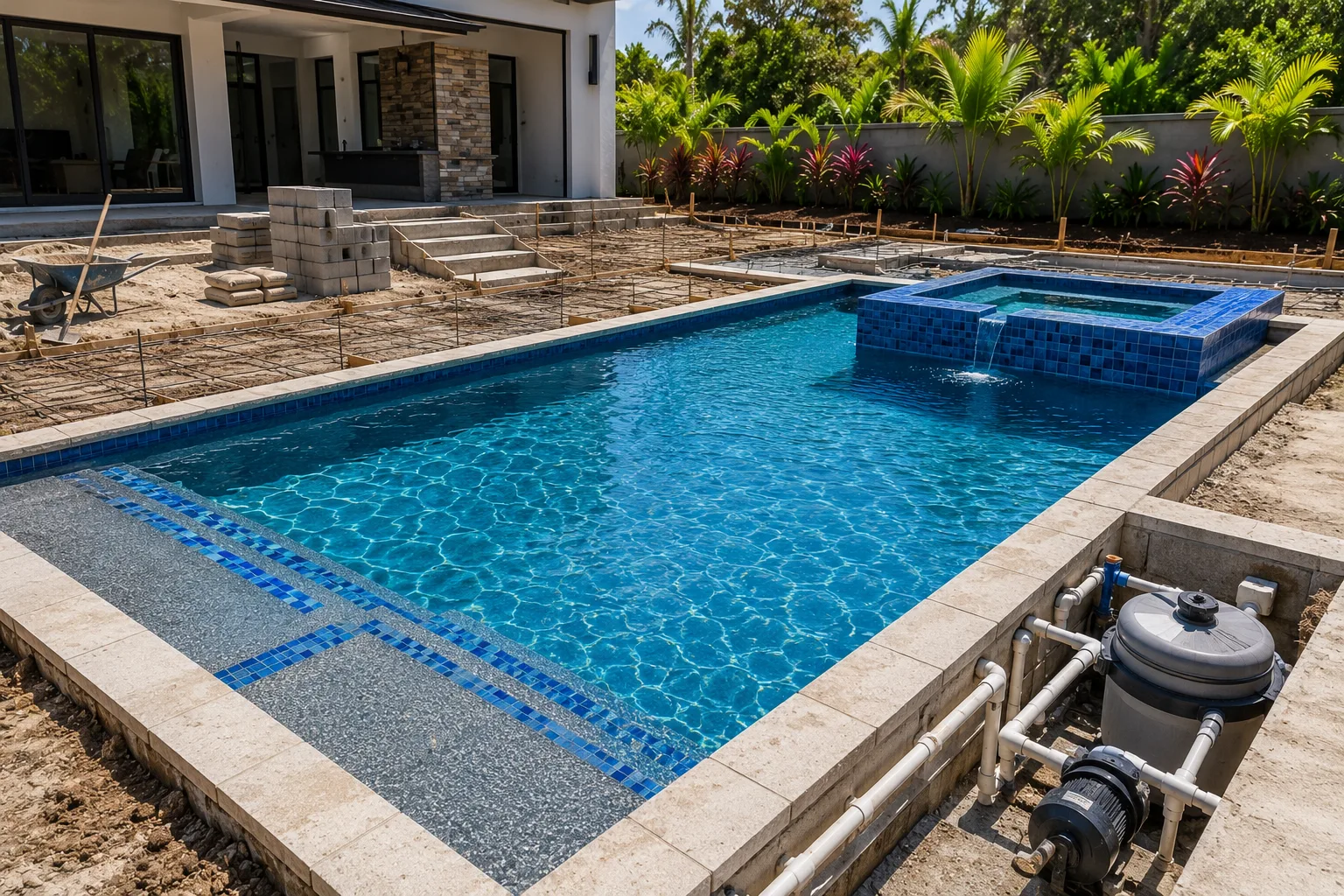
A detailed, informative, helpful, and easy-to-read guide to planning, constructing, and maintaining a safe and long-lasting swimming pool.
Building a swimming pool is a major project that can add beauty, relaxation, exercise, and entertainment value to a property. However, a pool must be built properly to stay safe, clean, durable, and enjoyable for many years.
A poorly planned or poorly built pool can lead to leaks, cracking, drainage problems, unsafe electrical work, high maintenance costs, and expensive repairs. A good pool project requires careful planning, proper design, skilled workers, permits, quality materials, safety features, and regular maintenance after construction.
1. Start With a Clear Purpose
Before building a pool, decide how it will be used. The purpose affects the size, shape, depth, features, materials, and budget.
Common pool purposes include:
- Family recreation
- Exercise and lap swimming
- Relaxation and cooling off
- Entertainment and outdoor gatherings
- Luxury backyard design
- Therapy or low-impact movement
A pool for small children, for example, may need different safety and depth planning than a pool built mainly for exercise.
2. Set a Realistic Budget
A swimming pool costs more than just digging a hole and filling it with water. The budget should include construction, permits, equipment, decking, fencing, landscaping, utilities, and future maintenance.
A good pool budget may include:
- Design and engineering
- Permits and inspections
- Excavation
- Pool shell or structure
- Plumbing and filtration
- Electrical work and lighting
- Pumps, filters, heaters, and automation
- Waterproofing and interior finish
- Decking and coping
- Safety fencing and gates
- Landscaping and drainage
- Ongoing water, electricity, chemicals, and cleaning
It is smart to keep extra money available for unexpected costs, especially if the soil condition, drainage, or access to the construction area becomes more difficult than expected.
3. Check Local Rules and Permits
Most places require permits before building a swimming pool. Local rules may control pool location, fencing, depth, drainage, electrical systems, setbacks from property lines, and safety barriers.
Common requirements may include:
- Building permit
- Electrical permit
- Plumbing permit
- Safety barrier or fence requirements
- Inspection approval
- Drainage and grading rules
- Homeowners association approval, if applicable
Building without proper permits can create fines, safety problems, insurance issues, and trouble when selling the property later.
4. Choose the Right Pool Type
Different pool types have different costs, construction times, durability, and maintenance needs.
Concrete or Gunite Pool
Concrete pools are strong and highly customizable. They can be built in many shapes and sizes, but they usually cost more and take longer to build.
Fiberglass Pool
Fiberglass pools come as pre-made shells installed into the ground. They can be faster to install and have a smooth surface, but shape and size options may be more limited.
Vinyl Liner Pool
Vinyl liner pools use a flexible liner over a frame or wall structure. They can be more affordable, but the liner may need replacement over time.
Above-Ground Pool
Above-ground pools are usually cheaper and easier to install, but they may not last as long or add the same property value as a well-built in-ground pool.
5. Choose a Good Location
Pool location affects safety, comfort, construction cost, maintenance, and long-term use. The best location should be convenient, safe, and suitable for the land.
When choosing a pool location, consider:
- Sunlight and shade
- Distance from the house
- Privacy
- Soil condition
- Drainage
- Nearby trees and falling leaves
- Access for construction equipment
- Distance from utilities, septic systems, and property lines
- Visibility from the house for safety supervision
Avoid placing a pool where water naturally drains toward it, because poor drainage can cause soil movement, flooding, contamination, and structural problems.
6. Design the Pool Carefully
A pool should be designed for both beauty and function. Think about how people will enter, exit, swim, sit, relax, and move around the pool area.
Important design choices include:
- Pool shape
- Pool size
- Depth and slope
- Steps and benches
- Lighting
- Decking space
- Water features
- Heating options
- Pool cover options
- Safety features
A simple, well-designed pool is often better than a complicated pool that is expensive to maintain.
7. Hire Qualified Pool Professionals
Pool construction involves excavation, structure, plumbing, electrical work, waterproofing, and finishing. Mistakes can be costly and dangerous, so it is important to work with qualified professionals.
Before hiring a pool contractor, check:
- License, if required in your area
- Insurance coverage
- Experience with your pool type
- Past project photos
- Customer reviews or references
- Written contract
- Warranty information
- Clear payment schedule
Avoid contractors who pressure you to pay too much upfront or refuse to provide a written agreement.
8. Prepare the Site
Site preparation makes the area ready for construction. This step helps prevent delays and protects the property.
Site preparation may include:
- Marking the pool layout
- Checking underground utilities
- Clearing plants, rocks, and obstacles
- Planning equipment access
- Protecting nearby structures
- Preparing drainage and grading
Utility location is very important. Digging without checking underground lines can be dangerous and expensive.
9. Excavate Correctly
Excavation shapes the hole for the pool. The hole must match the approved design and allow space for the pool structure, plumbing, and backfill.
Poor excavation can lead to uneven walls, unstable soil, drainage problems, and extra construction costs. Soil type matters. Some soils may need extra support or engineering.
10. Install Plumbing and Circulation Systems
A pool needs a circulation system to move water through the filter, heater, and sanitation system. Good plumbing helps keep the pool clean and reduces maintenance problems.
Pool plumbing may include:
- Skimmers
- Main drains, where allowed and properly designed
- Return jets
- Pipes and valves
- Pump
- Filter
- Heater, if used
- Sanitizing equipment
Poor plumbing design can reduce water circulation and make the pool harder to clean.
11. Install Electrical Systems Safely
Electrical safety around water is extremely important. Pool lights, pumps, heaters, automation, outlets, and bonding systems must be installed correctly by qualified professionals.
Important electrical safety areas include:
- Proper grounding and bonding
- GFCI protection where required
- Safe pool lighting installation
- Correct pump and equipment wiring
- Electrical inspections
Never treat pool electrical work as a casual DIY project. Water and electricity can be deadly if the system is not installed correctly.
12. Build a Strong Pool Structure
The pool structure must handle water pressure, soil pressure, movement, and weather. The construction method depends on the pool type.
Structural details may include:
- Reinforced steel for concrete pools
- Proper shell placement for fiberglass pools
- Strong walls and liner support for vinyl pools
- Correct backfilling
- Level installation
- Proper curing time for concrete materials
Rushing structural work can cause cracks, leaks, shifting, and long-term damage.
13. Waterproof and Finish the Pool Interior
The pool interior must hold water and be comfortable for swimmers. Different pool types use different finishes.
Common finishes include:
- Plaster
- Pebble finish
- Tile
- Fiberglass gel coat
- Vinyl liner
The finish should be installed carefully because it affects appearance, comfort, cleaning, and durability.
14. Build Safe Decking and Coping
Decking is the area around the pool. Coping is the edge material around the pool rim. These areas should be safe, durable, and slip-resistant.
Good decking should:
- Have a slip-resistant surface
- Drain water away properly
- Stay comfortable underfoot when possible
- Provide enough walking and seating space
- Be strong enough for outdoor use
Smooth surfaces that become slippery when wet can be dangerous.
15. Add Safety Features
Pool safety is one of the most important parts of the project. A pool should be built to reduce the risk of drowning, slipping, electrical hazards, and unsafe access.
Important safety features may include:
- Pool fence or barrier
- Self-closing and self-latching gate
- Pool cover
- Non-slip deck surface
- Safe steps and handrails
- Visible depth markers where required
- Good lighting
- Life-saving equipment nearby
- Door or gate alarms where appropriate
Safety is especially important if children, elderly people, guests, or non-swimmers may be near the pool.
16. Fill, Test, and Balance the Water
After construction, the pool must be filled and the water tested. Water chemistry affects swimmer comfort, equipment life, surface protection, and cleanliness.
Important water balance factors include:
- pH
- Chlorine or sanitizer level
- Alkalinity
- Calcium hardness
- Cyanuric acid, for outdoor chlorine pools
- Salt level, for saltwater systems
Poor water balance can cause cloudy water, algae, skin irritation, scale, corrosion, or damage to pool surfaces.
17. Plan for Regular Maintenance
A pool needs regular care after it is built. Maintenance keeps the water clean, equipment working, and surfaces protected.
Regular maintenance includes:
- Testing water chemistry
- Adding sanitizer when needed
- Cleaning skimmer baskets
- Brushing pool walls and floor
- Vacuuming or using a pool cleaner
- Cleaning or backwashing the filter
- Checking pump and equipment
- Removing leaves and debris
A pool that is ignored can quickly become dirty, unsafe, and expensive to fix.
Common Mistakes to Avoid
- Building without permits
- Choosing the cheapest contractor without checking quality
- Ignoring drainage around the pool
- Skipping electrical safety inspections
- Choosing a pool design that is too expensive to maintain
- Not planning enough deck space
- Using slippery materials around the pool
- Skipping fencing or safety barriers
- Not budgeting for long-term maintenance
Helpful Pool Building Checklist
- Decide the pool purpose
- Set a realistic budget
- Check permits and local rules
- Choose the right pool type
- Select a safe and practical location
- Hire qualified professionals
- Prepare the site and drainage
- Excavate carefully
- Install plumbing and electrical systems properly
- Build a strong pool structure
- Finish the interior correctly
- Install safe decking and coping
- Add fencing and safety features
- Balance the water after filling
- Follow a regular maintenance routine
Conclusion
Building a swimming pool properly requires planning, budgeting, permits, skilled construction, safe plumbing and electrical work, strong structure, good drainage, safety barriers, and regular maintenance. Every stage matters because a pool holds a large amount of water and must remain safe for swimmers and the property.
A well-built pool can provide years of enjoyment, exercise, relaxation, and outdoor beauty. By choosing the right design, working with qualified professionals, following local rules, and maintaining the pool properly, homeowners can create a pool that is safe, attractive, and long-lasting.