
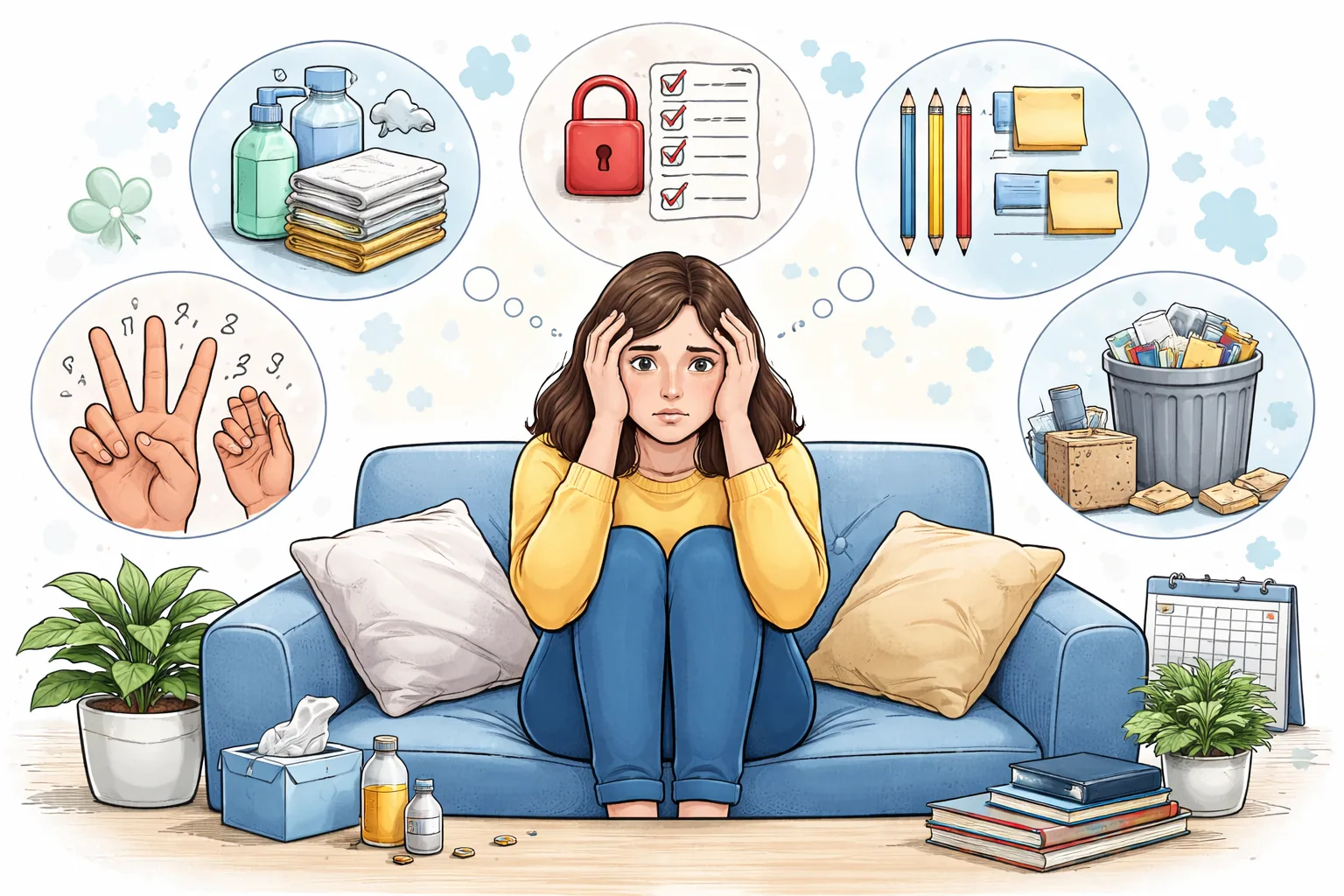
A detailed, informative, helpful, and easy-to-read guide to understanding Obsessive-Compulsive Disorder (OCD).
Obsessive-Compulsive Disorder, often called OCD, is a mental health condition that affects how a person thinks, feels, and behaves. People with OCD experience repeated unwanted thoughts (called obsessions) and may feel driven to perform certain actions or routines (called compulsions) to reduce anxiety or discomfort.
OCD is more than just being neat, organized, or careful. It can be a serious condition that interferes with daily life, relationships, work, and emotional well-being. However, with the right understanding and support, it can be managed effectively.
What Does OCD Mean?
OCD stands for:
- Obsessions: Repeated, unwanted thoughts, urges, or images that cause anxiety or distress.
- Compulsions: Repetitive behaviors or mental actions performed to reduce the anxiety caused by obsessions.
These two parts often work together in a cycle. The obsession creates anxiety, and the compulsion is done to try to relieve it. However, the relief is usually temporary, and the cycle continues.
Common Examples of Obsessions
Obsessions can vary widely, but they are often intrusive and difficult to control. Some common examples include:
- Fear of germs, dirt, or contamination
- Fear of harming oneself or others (even if the person does not want to)
- Unwanted violent or disturbing thoughts
- Need for things to be perfectly arranged or symmetrical
- Constant doubt (for example, “Did I lock the door?”)
These thoughts can feel very real and upsetting, even when the person knows they may not make logical sense.
Common Examples of Compulsions
Compulsions are actions a person feels they must do to reduce anxiety or prevent something bad from happening.
- Washing hands repeatedly
- Checking things over and over (locks, stoves, switches)
- Counting or repeating words silently
- Arranging objects in a specific way
- Seeking reassurance from others frequently
While these actions may temporarily reduce anxiety, they usually reinforce the OCD cycle and make it stronger over time.
The OCD Cycle
OCD often follows a repeating pattern:
- An intrusive thought appears (obsession)
- The thought causes anxiety or discomfort
- The person performs a behavior to reduce the anxiety (compulsion)
- Temporary relief is felt
- The cycle repeats again
Over time, this cycle can become stronger and more frequent if not addressed.
What Causes OCD?
The exact cause of OCD is not fully understood, but several factors may play a role:
- Brain function: Differences in how certain brain areas communicate
- Genetics: OCD can sometimes run in families
- Environment: Stressful or traumatic events may trigger symptoms
- Learned behavior: Repeating certain actions may reinforce the condition over time
It is important to understand that OCD is not caused by weakness or lack of willpower.
How OCD Affects Daily Life
OCD can affect many parts of a person’s life. In some cases, it may take up a large amount of time each day.
- Difficulty focusing on work or school
- Strain in relationships
- Feeling constantly anxious or stressed
- Avoiding situations that trigger obsessions
- Spending hours on compulsive behaviors
The severity can vary from mild to very intense depending on the person.
Types of OCD
OCD can appear in different forms. Some common patterns include:
- Contamination OCD: Fear of germs and excessive cleaning
- Checking OCD: Repeated checking of things like doors or appliances
- Order and symmetry OCD: Need for things to be arranged perfectly
- Intrusive thoughts OCD: Disturbing or unwanted thoughts
- Hoarding tendencies: Difficulty discarding items (though this can also be a separate condition)
Can OCD Be Treated?
Yes, OCD can be treated and managed. Many people improve significantly with the right support.
1. Therapy
One of the most effective treatments is a type of therapy called Cognitive Behavioral Therapy (CBT), especially a method known as Exposure and Response Prevention (ERP).
This approach helps people face their fears gradually without performing compulsions, which can reduce the OCD cycle over time.
2. Medication
Some people benefit from medication that helps regulate brain chemicals involved in OCD. A doctor or mental health professional can determine if this is appropriate.
3. Lifestyle Support
- Managing stress
- Getting enough sleep
- Regular exercise
- Support from family and friends
When to Seek Help
It may be time to seek help if:
- Obsessions or compulsions take up a lot of time
- Daily life is being affected
- Anxiety feels overwhelming
- You feel stuck in repetitive behaviors
Speaking to a healthcare provider or mental health professional can be an important first step.
Common Misunderstandings About OCD
- Myth: OCD just means being clean or organized.
Fact: OCD is a serious mental health condition involving anxiety and intrusive thoughts. - Myth: People with OCD can simply stop if they want.
Fact: OCD involves strong mental patterns that usually require treatment and support. - Myth: OCD is rare.
Fact: OCD affects many people worldwide.
Conclusion
OCD is a real and often challenging condition that involves unwanted thoughts and repetitive behaviors. It can affect many aspects of life, but it is also treatable. With proper understanding, therapy, and support, people with OCD can learn to manage their symptoms and live full, meaningful lives.
If you or someone you know may be struggling with OCD, seeking help is a strong and positive step forward.