
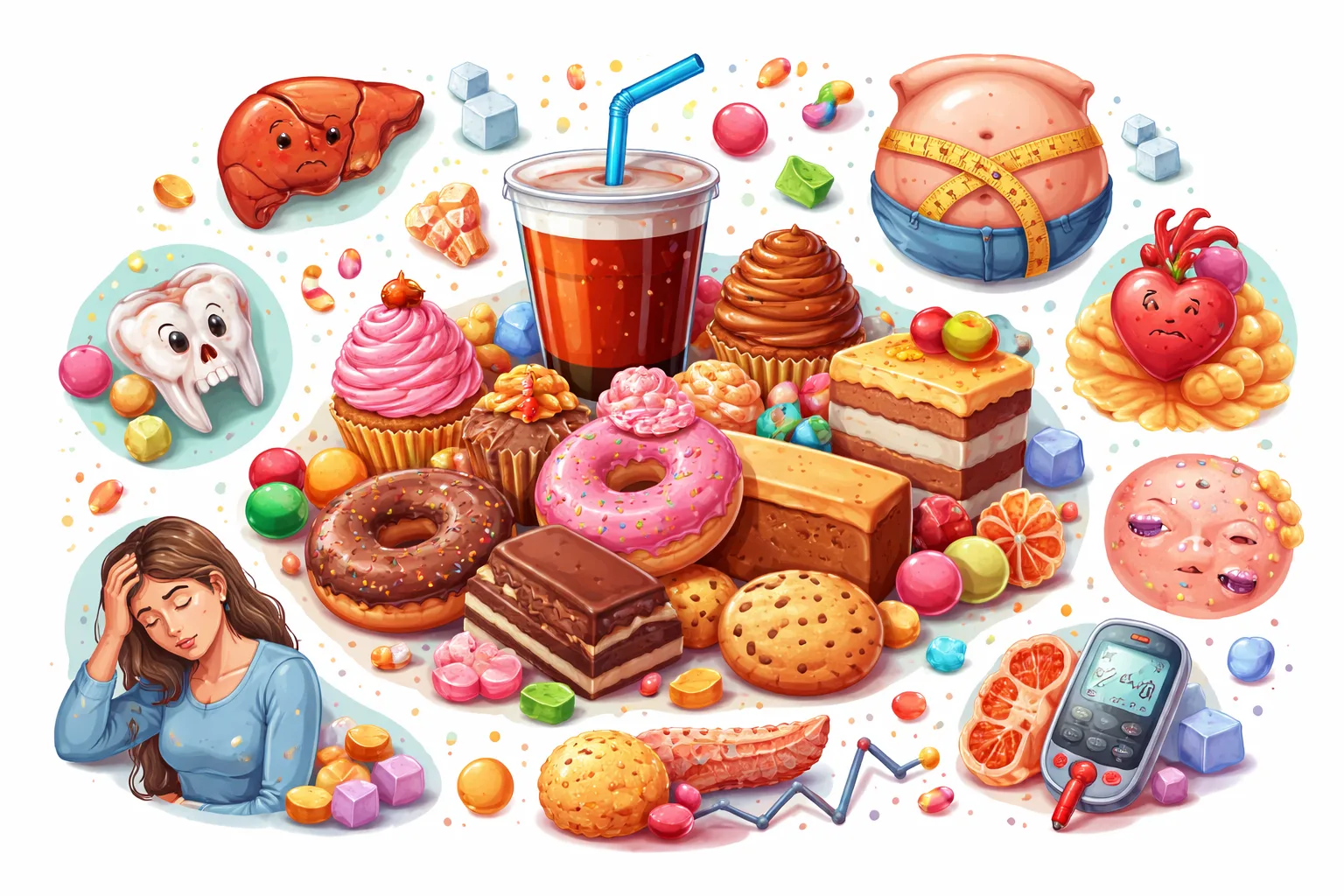
Sweet foods can be enjoyable, comforting, and hard to resist. Cakes, candy, sweet drinks, pastries, ice cream, sweet breads, and many packaged snacks are common parts of modern diets. Eating them once in a while is usually not a problem for most people. The real concern starts when sweet foods become a frequent habit and the body is exposed to too much sugar over time.
This article explains what can happen to the body when too much sweet food is consumed, both in the short term and over the long term. It is written in a simple and practical way so it is easy to understand and useful in daily life.
What counts as sweet foods?
Sweet foods are foods and drinks that contain a lot of sugar, especially added sugar. This includes obvious choices like candy, donuts, cookies, cakes, chocolate bars, sweet cereals, ice cream, and soda. It also includes foods that do not always look extremely sweet but still contain high amounts of sugar, such as flavored yogurt, sweet coffee drinks, energy drinks, milk tea, sweet sauces, packaged pastries, and many breakfast items.
Some foods contain natural sugars, such as fruit and plain milk. These are different from highly processed sweet foods because they usually come with other helpful nutrients such as fiber, vitamins, minerals, or protein. The bigger problem is often too much added sugar from processed foods and sugary drinks.
What happens right after eating too much sweet food?
When a person eats a large amount of sweet food, the body quickly breaks much of that sugar down into glucose, which enters the bloodstream. Blood sugar rises, and the pancreas responds by releasing insulin. Insulin helps move glucose from the blood into the cells to be used for energy or stored for later.
In the short term, this can create a fast burst of energy. Some people feel more awake, excited, or satisfied for a little while. But that feeling often does not last long. After the spike, energy may drop. A person may then feel tired, hungry, shaky, or irritable. This is one reason sweet foods can lead to repeated cravings throughout the day.
1. Energy spikes and crashes
One of the most common effects of too much sweet food is unstable energy. A large amount of sugar can make a person feel energized for a short time, especially if they have not eaten much earlier. But when the blood sugar rises fast and then drops, the result can be an energy crash.
This crash may lead to tiredness, low focus, mood changes, and the desire to eat more sugary foods again. Over time, this cycle can make daily energy feel less steady and can make it harder to maintain healthy eating habits.
2. More hunger and stronger cravings
Many sweet foods are low in fiber and low in protein. That means they may not keep a person full for very long. A person can eat a lot of calories from sweets and still feel hungry again soon after. This can lead to overeating.
Highly sweet foods can also train the brain to want more intense flavors. Natural foods may start to feel less satisfying compared with very sweet snacks or drinks. This can make cravings stronger and make balanced eating harder over time.
3. Weight gain
Eating too many sweet foods on a regular basis can contribute to weight gain. This is because many sweet foods are high in calories but not very filling. It is easy to consume a lot of sugar quickly, especially through drinks like soda, sweet coffee, and juice blends.
When the body receives more energy than it uses, the extra energy is stored, often as body fat. Over time, this can lead to an increase in body weight. Excess body fat, especially around the belly, is linked with higher risks for other health problems.
4. Blood sugar problems
The body is designed to manage blood sugar, but repeated sugar overload can place stress on that system. If a person often eats large amounts of sweet food, the body may need to release insulin over and over again. Over time, the cells may become less responsive to insulin. This is called insulin resistance.
When insulin resistance develops, the body has to work harder to keep blood sugar under control. If the problem continues, it may increase the risk of prediabetes and type 2 diabetes. This does not happen overnight, but long-term eating habits play a major role.
5. Fatty liver risk
Too much sugar, especially fructose from sweetened foods and drinks, can affect the liver. The liver processes fructose, and when the amount is too high on a regular basis, some of it can be turned into fat. Over time, this may contribute to fatty liver.
A fatty liver may not cause obvious symptoms at first, but it can become a serious health problem if it worsens. This is one reason why heavy intake of sugary drinks and highly sweet processed foods is a concern.
6. Higher risk of heart-related problems
Too much sugar can affect more than body weight. Over time, it may also affect heart health. Diets very high in added sugar are often linked with weight gain, high triglycerides, insulin resistance, and inflammation. These can all increase the risk of heart and blood vessel problems.
Sweet foods may not be the only cause, but eating too much of them regularly can be one important piece of the problem, especially when combined with low activity, poor sleep, smoking, or heavy intake of ultra-processed foods.
7. Tooth decay and dental problems
Sugar is one of the biggest reasons cavities develop. Bacteria in the mouth feed on sugar and produce acids. These acids can damage tooth enamel, leading to tooth decay over time. Sticky sweets and sugary drinks are especially troublesome because they may stay on the teeth longer.
Frequent snacking on sweet foods can be worse than eating sweets less often, because the teeth are exposed to sugar again and again throughout the day. Poor dental hygiene makes the problem even worse.
8. Skin changes
Some people notice that eating too much sweet food seems to affect their skin. While skin health depends on many factors, a very high-sugar diet may contribute to inflammation and may worsen breakouts in some individuals. Large blood sugar swings may also influence hormones and oil production.
Not everyone reacts the same way, but many people find that eating fewer sugary foods and more whole foods helps their skin look calmer and healthier.
9. Mood and brain effects
Sweet foods can feel comforting, especially during stress or sadness. Sugar may briefly improve mood, but frequent overuse can also create a cycle of highs and lows. Some people feel irritable, mentally tired, or unfocused after too much sugar.
When sweet foods become a regular emotional coping tool, it may become harder to manage cravings and maintain steady mood and energy. Sleep quality, stress levels, and overall diet also affect this pattern.
10. Digestive discomfort
Eating a very large amount of sweet food in one sitting can cause bloating, stomach discomfort, nausea, or loose stools in some people. This is especially true with certain sweeteners or very rich desserts that also contain a lot of fat.
If a person often fills up on sweet foods, they may also eat less fiber-rich food such as vegetables, beans, fruit, and whole grains. That can lead to digestive imbalance and less healthy bowel habits.
11. Poor nutrition even when calories are high
One hidden problem with too much sweet food is that it can crowd out better foods. A person may get plenty of calories but still miss important nutrients like protein, iron, calcium, potassium, magnesium, fiber, and vitamins.
This means a person can eat a lot and still not nourish the body well. Over time, that can affect energy, muscle health, immune function, and overall well-being.
What about sugary drinks?
Sugary drinks deserve special attention. Soda, sweet tea, flavored coffee drinks, energy drinks, boba drinks, and many packaged juices can deliver a large amount of sugar very quickly. Because liquid calories do not fill the stomach the same way solid foods do, it is easy to consume a lot without feeling full.
This makes sugary drinks one of the easiest ways to overload the body with sugar. Cutting back on these drinks can make a big difference for many people.
Signs you may be eating too much sweet food
Some possible signs include frequent cravings for dessert or sweet drinks, feeling tired after eating, getting hungry again soon after meals, regular energy crashes, gradual weight gain, trouble controlling snack portions, more cavities, and feeling that plain foods no longer taste satisfying enough.
These signs do not always mean sugar is the only issue, but they can be useful warning signals.
How to reduce sweet foods without feeling miserable
Cutting back does not have to mean removing all sweetness forever. A more realistic goal is to lower excess sugar and build a more balanced way of eating.
- Start with drinks first. Replacing some sugary drinks with water, sparkling water, or unsweetened tea can have a big impact.
- Pair sweet foods with real meals instead of constant snacking. This may reduce blood sugar swings.
- Eat more protein and fiber. Eggs, beans, yogurt, meat, fish, oats, vegetables, and fruit can help you feel full longer.
- Choose smaller portions. You do not always need to avoid sweets completely, but portion size matters.
- Do not skip meals. Skipping meals can make cravings worse later.
- Read labels. Many packaged foods contain more sugar than people expect.
- Keep easy, better options nearby. Fruit, nuts, plain yogurt, cheese, and simple home meals often make it easier to eat less sugar.
A balanced view
Sweet foods are not poison, and enjoying dessert sometimes is part of normal life for many people. The main problem is not one cookie, one slice of cake, or one holiday treat. The problem is when high-sugar foods become a daily pattern and begin replacing more nourishing foods.
The body usually handles occasional sweets without major trouble, but repeated overload can slowly affect weight, blood sugar, teeth, energy, liver health, and overall wellness. Small daily choices matter more than rare treats.
Final thoughts
If too much sweet food is consumed regularly, the body may react with energy crashes, stronger cravings, weight gain, blood sugar imbalance, dental problems, poor nutrition, and increased long-term health risks. The good news is that even simple changes can help. Reducing sugary drinks, eating more balanced meals, and choosing sweets more intentionally can support better health over time.
A healthier approach does not need to be extreme. It just needs to be consistent. The goal is not perfection. The goal is to help the body work better, feel better, and stay stronger in the long run.