
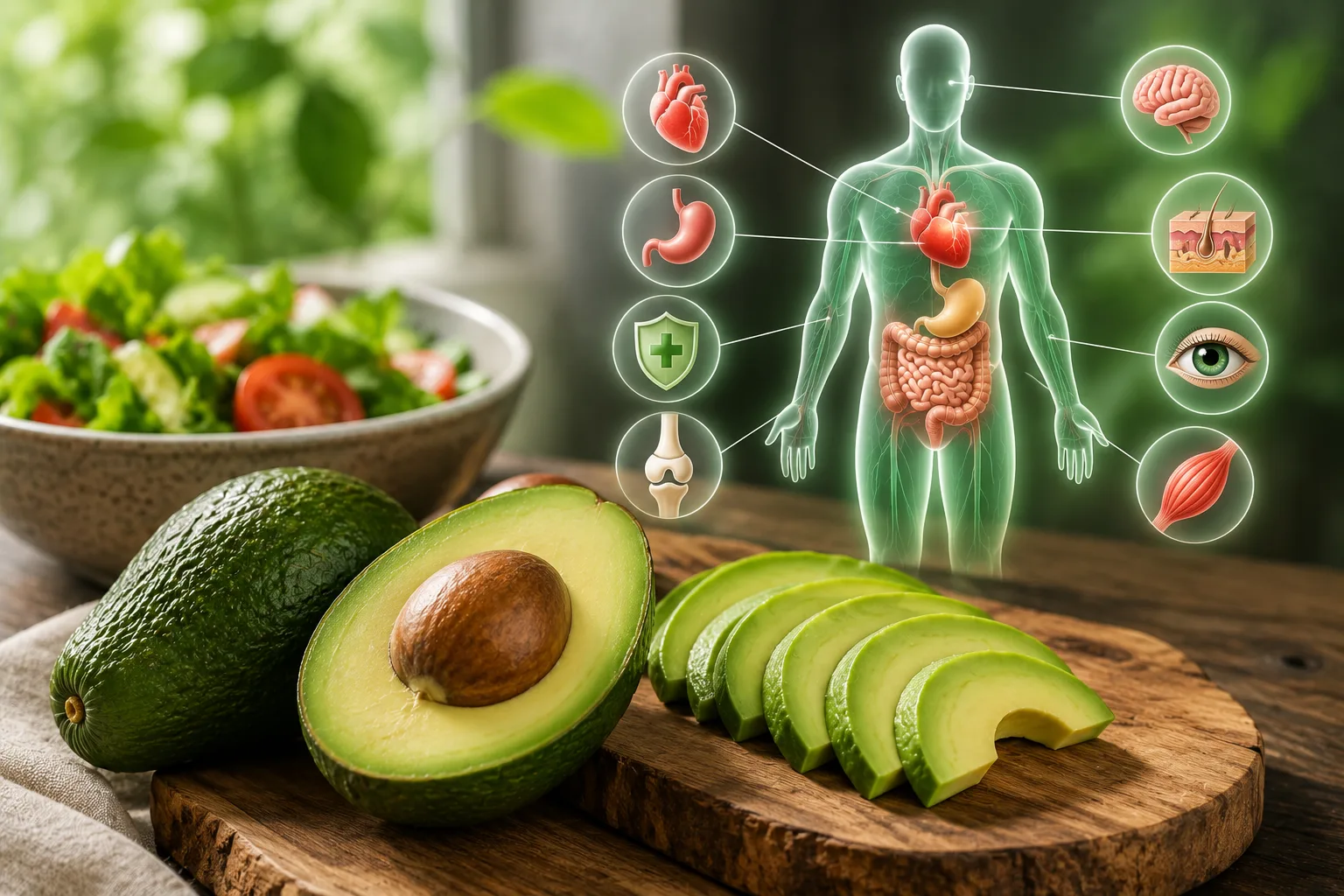
Avocado is a creamy, nutritious fruit that is enjoyed around the world. It is rich in healthy fats, fiber, vitamins, minerals, and antioxidants. When eaten as part of a balanced diet, avocado can support the heart, digestion, energy, skin, eyes, and overall wellness.
Unlike many fruits that are high in natural sugar, avocado is low in sugar and high in healthy monounsaturated fats. This makes it filling, satisfying, and useful for people who want steady energy and better nutrition.
1. The Body Receives Healthy Fats
One of the main things that happens when you eat avocado is that your body receives healthy fats. Avocados are especially rich in monounsaturated fat, the same type of fat found in olive oil. These fats can help support heart health when they replace unhealthy fats in the diet.
Healthy fats are also important because they help the body absorb fat-soluble vitamins such as vitamins A, D, E, and K. This means eating avocado with vegetables may help your body use some nutrients better.
2. The Heart Gets Nutritional Support
Avocado can be good for the heart because it contains healthy fats, potassium, magnesium, and fiber. These nutrients support healthy blood pressure, cholesterol balance, and normal heart function.
Potassium helps balance sodium in the body. This can be helpful for maintaining healthy blood pressure, especially when avocado is part of a diet that is also lower in excess salt.
3. Digestion May Improve
Avocado contains fiber, which helps support healthy digestion. Fiber helps food move through the digestive system, supports regular bowel movements, and feeds good bacteria in the gut.
Because avocado is soft and easy to eat, it can be a gentle food option for many people. However, eating too much at once may cause bloating or stomach discomfort for some people because of the fiber and fat content.
4. You May Feel Full Longer
Avocado is filling because it contains both healthy fat and fiber. These nutrients slow digestion and help you feel satisfied after eating. This may help reduce unnecessary snacking and support healthy weight management.
Even though avocado is healthy, it is also calorie-dense. This means portion size matters. A good serving for many people is about one-third to one-half of a medium avocado, depending on their diet and energy needs.
5. Blood Sugar May Stay More Stable
Avocado is low in sugar and high in fiber and healthy fat. Because of this, it usually has a small effect on blood sugar compared with many sweet foods. Eating avocado with a balanced meal may help slow the digestion of carbohydrates and support steadier energy.
For example, adding avocado to whole-grain toast, rice bowls, salads, or eggs can make the meal more filling and balanced.
6. The Skin Gets Helpful Nutrients
Avocado contains vitamin E, vitamin C, healthy fats, and antioxidants that help support healthy skin. Healthy fats help maintain the skin barrier, while antioxidants help protect cells from damage caused by everyday stress and the environment.
Eating avocado will not magically fix skin problems overnight, but it can be part of a nutritious diet that supports healthier skin over time.
7. The Eyes Receive Antioxidant Support
Avocado contains lutein and zeaxanthin, two antioxidants that are important for eye health. These nutrients help support the retina and may help protect the eyes from everyday light exposure and aging.
Eating avocado with other colorful foods like spinach, carrots, tomatoes, and peppers can create a nutrient-rich meal for eye health.
8. The Body Gets Important Vitamins and Minerals
Avocado provides many nutrients that the body needs for daily function. These include potassium, magnesium, folate, vitamin K, vitamin E, vitamin C, and several B vitamins.
- Potassium: Supports blood pressure balance and muscle function.
- Magnesium: Supports muscles, nerves, and energy production.
- Folate: Important for cell growth and healthy body function.
- Vitamin E: Supports skin and cell protection.
- Vitamin K: Supports blood clotting and bone health.
- B vitamins: Help the body use food for energy.
9. Muscles and Nerves May Work Better
Avocado contains potassium and magnesium, two minerals that help muscles and nerves work properly. Potassium helps muscles contract, while magnesium supports relaxation and normal nerve function.
This can be helpful for people who are active, walk a lot, exercise, or do physical work.
10. Avocado May Support Better Nutrient Absorption
Some nutrients are absorbed better when eaten with fat. Because avocado contains healthy fat, it may help the body absorb nutrients from vegetables and other foods, especially carotenoids found in colorful vegetables.
This is one reason avocado works well in salads, grain bowls, tacos, sandwiches, and vegetable dishes.
Healthy Ways to Eat Avocado
Avocado is easy to add to many meals. It can be eaten plain, mashed, sliced, blended, or used as a creamy replacement for less healthy spreads.
- Add sliced avocado to eggs or toast.
- Mix avocado into salads for healthy fat and creaminess.
- Use avocado in sandwiches instead of heavy mayonnaise.
- Blend avocado into smoothies for a creamy texture.
- Make guacamole with lime, garlic, onion, tomato, and cilantro.
- Add avocado to rice bowls, tacos, or grilled chicken meals.
How Much Avocado Should You Eat?
Avocado is healthy, but it is still high in calories because of its fat content. Many people do well with one-third to one-half of a medium avocado per serving. Active people or those who need more calories may eat more, while people watching calories may choose smaller portions.
Possible Side Effects of Eating Too Much Avocado
Eating too much avocado may cause stomach discomfort, bloating, or excess calorie intake. Some people may also be sensitive or allergic to avocado. People who take certain medications, such as blood thinners, should ask a healthcare professional about foods high in vitamin K.
Also, avocado is higher in potassium, so people with kidney disease or potassium restrictions should speak with a healthcare professional before eating large amounts regularly.
Conclusion
When you consume avocado, your body receives healthy fats, fiber, vitamins, minerals, and antioxidants. These nutrients can support heart health, digestion, fullness, skin, eyes, muscles, nerves, and steady energy. Avocado is not a miracle food, but it is a powerful and nutritious food that can be part of a healthy lifestyle.
The best way to enjoy avocado is in moderation, combined with other healthy foods such as vegetables, whole grains, eggs, fish, chicken, beans, or rice. With the right portion, avocado can be a delicious and helpful addition to your daily meals.