
Buying a used car can be smart and affordable—if you take a structured approach. This guide walks you through research, budgeting, inspection, test drives, negotiation, and paperwork, with practical checklists to help you avoid common pitfalls and feel confident at every step.
Table of contents
- Quick overview
- Budget and total cost of ownership
- Model research and history reports
- Where to find good used cars
- Preliminary inspection checklist
- Test drive checklist
- Pre-purchase inspection (PPI)
- Negotiation and offer strategy
- Paperwork, title transfer, and payment
- Dealer vs private party
- Red flags and scams to avoid
- After you buy: first-week checklist
- FAQs
Quick overview
- Define needs: Seats, cargo, commute, fuel, reliability, safety, ownership costs.
- Set budget: Include taxes, fees, insurance, maintenance, and immediate service items.
- Shortlist models: Favor reliable trims with common parts and clear service records.
- Inspect + test drive: Screen basics, then book a pre-purchase inspection with a trusted mechanic.
- Negotiate out-the-door: Use comparable listings and inspection results; avoid add-ons you don’t need.
- Complete paperwork safely: Verify title, liens, VIN match; use secure payment methods.
Budget and total cost of ownership
- Purchase price: List price vs out-the-door (taxes, fees, registration).
- Insurance: Get quotes for your short list—premiums vary by model and history.
- Fuel and maintenance: Estimate monthly costs based on mileage and service intervals.
- Immediate service fund: Set aside for tires, fluids, brakes, battery, belts, filters.
- Reserve: Keep an emergency buffer for unexpected repairs.
Rule of thumb: Aim for an out-the-door total you can afford with a 10–15% buffer.
Model research and history reports
Model fit
- Reliability and recalls: Favor models with solid reliability and available parts.
- Safety: Prioritize strong crash-test ratings and driver-assistance features.
- Ownership patterns: Look for one-owner cars with documented maintenance.
Vehicle history
- VIN check: Confirm accidents, title brands (salvage/rebuilt), odometer events.
- Service records: Oil changes, major services (timing belt, transmission, coolant, brakes).
- Location: Coastal/snowbelt exposure can affect rust and corrosion.
Tip: A clean title plus consistent records usually beats a lower price with unknown history.
Where to find good used cars
- Franchise dealers: Certified pre-owned options, financing, and reconditioning (typically higher prices).
- Independent dealers: Wider variety and pricing—inspect carefully and request service invoices.
- Private sellers: Often best value—verify identity, title in hand, and maintenance docs.
- Auctions/car marketplaces: Potential deals but higher risk—know fees and conditions.
Preliminary inspection checklist
Exterior and structure
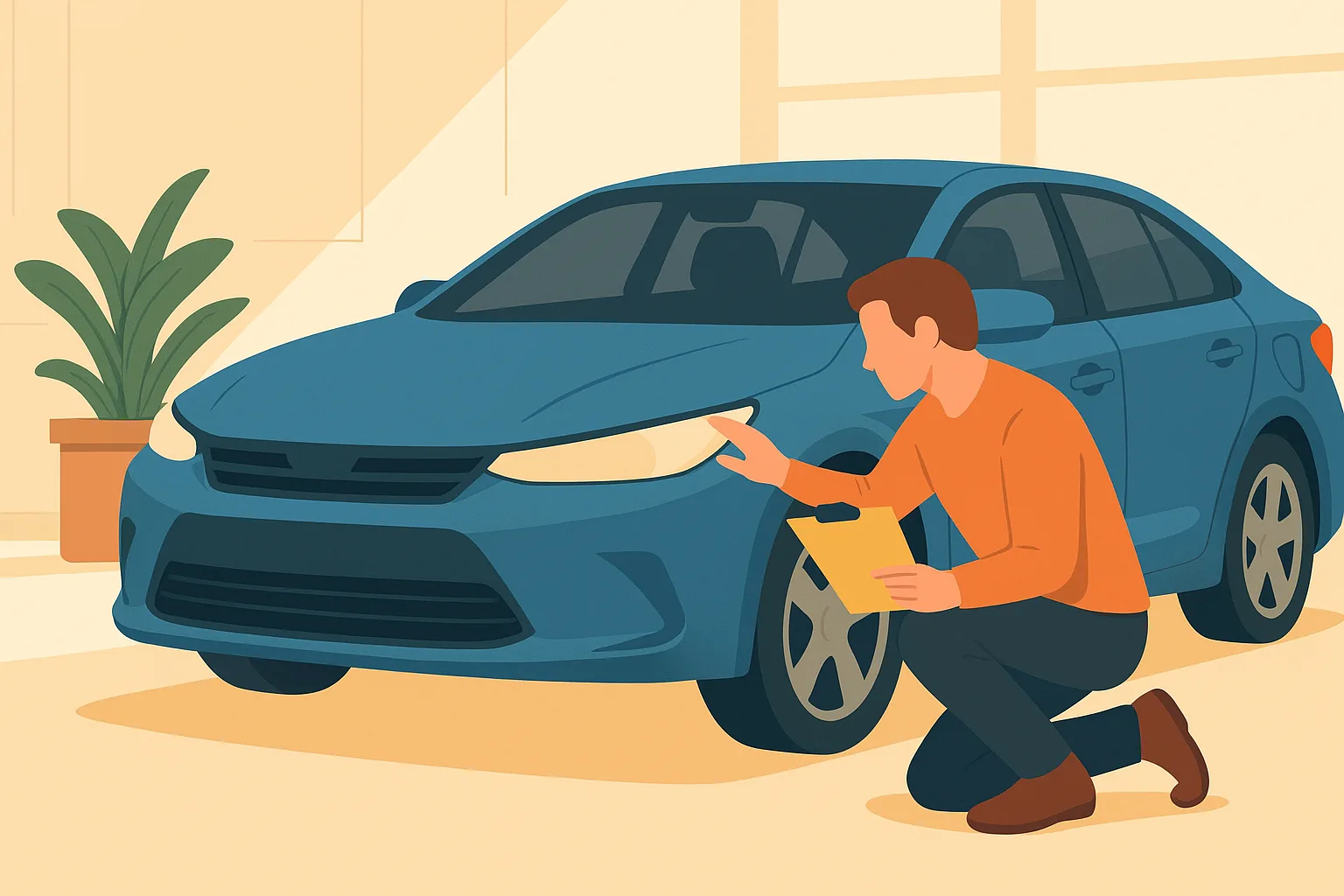
- Panel gaps & paint: Inconsistent gaps, overspray, or orange peel can signal repairs.
- Rust: Check wheel wells, rocker panels, undercarriage seams.
- Glass & lights: Cracks, chips, condensation inside headlights/taillights.
- Tires: Even wear, tread depth, date codes; mismatched sets can hint at poor maintenance.
Interior and basics
- Odors and moisture: Musty smell or wet carpets suggest leaks or flood damage.
- Controls: Windows, locks, HVAC, infotainment, cameras, sensors.
- Odometer consistency: Wear on pedals/steering vs displayed mileage.
- Spare/tools: Spare tire, jack, inflator kit present and usable.
Under hood
- Fluids: Oil level/condition, coolant color, brake fluid, transmission fluid (if accessible).
- Leaks: Look underneath after idle—oil, coolant, transmission, power steering.
- Belts/hoses: Cracks, swelling, fraying; battery age and corrosion.
Time saver: Skip cars with structural rust, flood signs, or mismatched VIN/title before paying for a mechanic.
Test drive checklist
- Cold start: Listen for rattles, rough idle, smoke; watch initial warning lights.
- Acceleration and shifting: Smooth throttle, no hesitation; transmission shifts cleanly.
- Braking: Firm pedal, straight stops, no vibration or squeals.
- Steering and suspension: No clunks over bumps; car tracks straight; no pull.
- Highway test: Stability at speed, wind noise, vibrations, cruise control function.
- Parking maneuvers: Tight turns, reverse camera/sensors, parking brake hold.
Environment: Drive on city streets and highways; turn off radio to hear mechanical noises.
Pre-purchase inspection (PPI)
- Independent mechanic: Choose someone unaffiliated with the seller.
- Scope: Scan for codes, inspect brakes, suspension, leaks, electronics, and frame.
- Report: Request written findings, photos, and an estimate for repairs.
- Decision: Use the report to renegotiate or walk away if costs are high.
Non-negotiable: If a seller refuses a reasonable PPI, that’s a walk-away signal.
Negotiation and offer strategy
- Comparable listings: Gather 3–5 comps (year, trim, mileage, condition) to anchor price.
- Out-the-door focus: Negotiate total including taxes/fees; avoid monthly payment traps.
- Use findings: Leverage inspection results and upcoming maintenance (tires, brakes, fluids).
- Be ready to walk: Set a max price; politely leave if it’s not met.
- Keep it simple: Decline add-ons you don’t need (etching, nitrogen, paint protection) unless priced fairly.
Sample line: “Based on these comps and the inspection items, my out-the-door offer is $X. I can complete payment today.”
Paperwork, title transfer, and payment
Verify identity and vehicle
- VIN match: Dashboard, door jamb, and engine bay should match title.
- Title brand: Clean vs salvage/rebuilt; review disclosures.
- Liens: Confirm payoff or lien release; seller must have clear title to transfer.
Bill of sale and forms
- Bill of sale: Include buyer/seller info, VIN, price, date, disclosures, signatures.
- Odometer disclosure: Required for most vehicles—complete accurately.
- DMV/registration: Title transfer, taxes, plates/temporary permits per your state.
Payment safety
- Secure methods: Bank cashier’s check, escrow service, or in-branch transfer.
- Meet safely: Daytime at a bank or DMV; avoid large cash exchanges.
- Receipts: Keep copies of all documents and proof of payment.
Protect yourself: Never wire funds to unknown parties; verify title status with your DMV if anything seems off.
Dealer vs private party
Dealer pros/cons
- Pros: Financing options, reconditioning, some warranties, paperwork handled.
- Cons: Higher prices, fees, upsells; inspect and question add-ons.
Private pros/cons
- Pros: Lower prices, direct history from owner, simpler transactions.
- Cons: No dealer protections; you handle paperwork and due diligence.
Bottom line: Choose the seller with the best car and documentation, not just the lowest price.
Red flags and scams to avoid
- Title not in seller’s name: Curbstoning risk—walk away.
- Flood indicators: Silt under carpets, rusted seat bolts, water lines in trunk.
- Odometer inconsistencies: Wear vs mileage, history report mismatches.
- Refusal of PPI: Seller won’t allow inspection by an independent mechanic.
- Pressure tactics: “Other buyer arriving” or “price today only”—stay calm and walk if needed.
- VIN tampering: Scratched or loose VIN plates—report and avoid.
After you buy: first-week checklist
- Insurance and registration: Activate coverage and complete DMV transfer.
- Baseline service: Oil/filter change, cabin/air filters, top off fluids.
- Safety items: Wipers, lights, tire pressures, spare kit readiness.
- Maintenance plan: Schedule belts, brakes, battery test, and alignment if needed.
- Documentation file: Keep title, bill of sale, inspection report, invoices together.
Peace of mind: A clean baseline service helps you start ownership on solid footing.
FAQs
How many miles is “too many” on a used car?
Condition and maintenance matter more than mileage. A well-maintained higher-mile car can beat a neglected lower-mile one. Use inspection results to decide.
Are extended warranties worth it?
They can be, but read the contract: covered components, exclusions, deductibles, and claim process. Compare the cost vs expected repairs for that model.
What’s a fair deposit?
For dealers, deposits are common to hold a car briefly—ensure it’s refundable in writing. Private sellers rarely need deposits; use a clear bill of sale instead.
Can I buy sight-unseen?
It’s risky. If you must, use a thorough third-party inspection, verify documents, and use secure escrow. Expect shipping and potential delays.
What about salvage or rebuilt titles?
Only consider if priced appropriately and repairs are documented by a reputable shop. Insurance, resale, and financing can be harder—proceed with caution.