
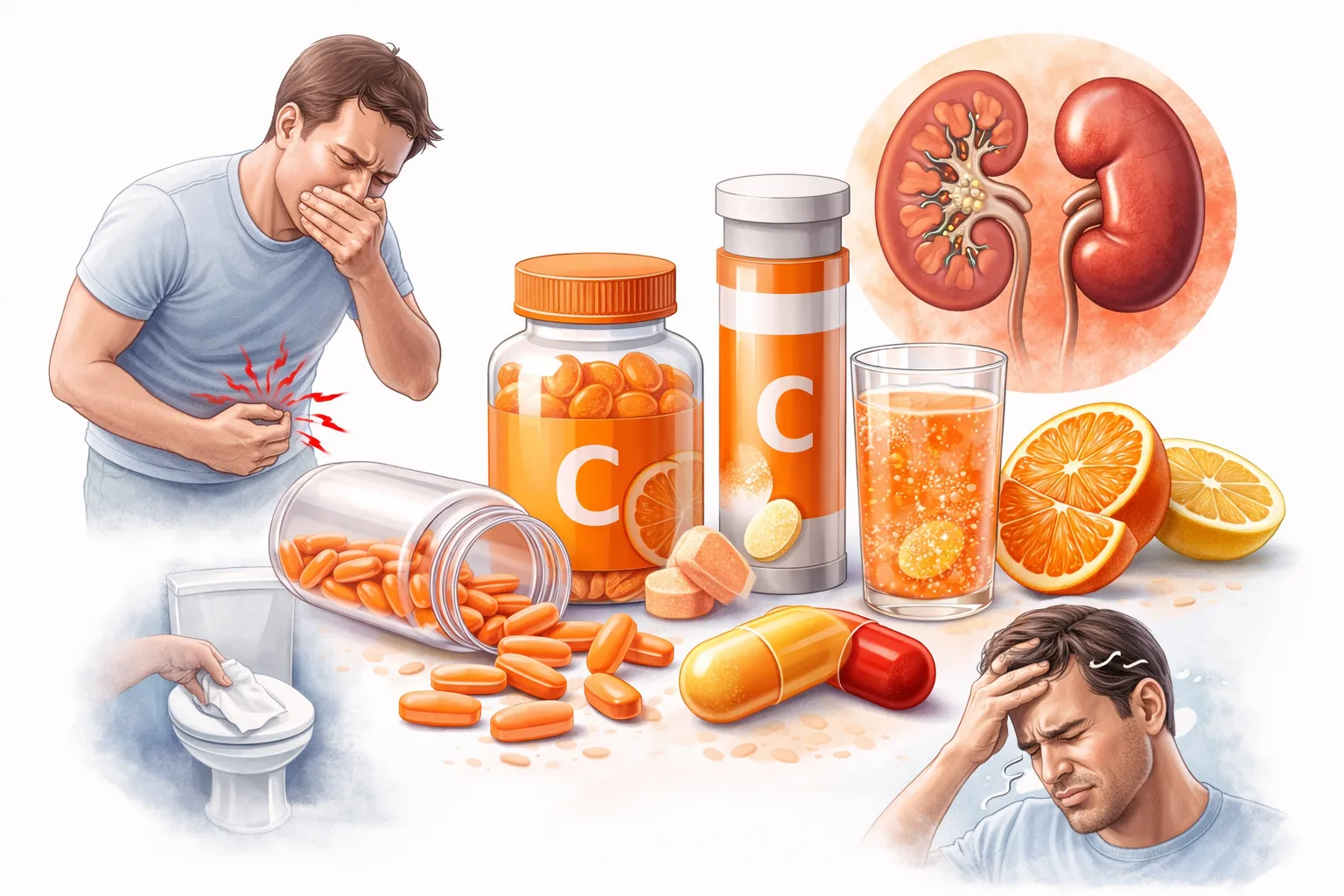
In general, getting too much vitamin C from normal foods is unlikely to be harmful. Most problems happen when people take large doses of vitamin C supplements for long periods or in very high single doses. Adults have a tolerable upper intake level of 2,000 mg per day.
Why Vitamin C Matters
Vitamin C is a water-soluble vitamin, which means your body does not store large amounts of it for long. You need regular intake, but not extreme intake. Adults in the UK generally need about 40 mg per day, and most people can meet their needs through a normal diet.
- Helps make collagen for skin, blood vessels, and connective tissue
- Supports wound healing
- Acts as an antioxidant
- Helps the body absorb non-heme iron from plant foods
Can You Take Too Much Vitamin C?
Yes. High-dose supplements can cause side effects, especially when intake goes above the recommended upper limit. The most common problems are digestive. NHS guidance notes that taking more than 1,000 mg per day can cause stomach pain, diarrhea, and gas, while NIH and Mayo Clinic also list nausea, cramps, heartburn, vomiting, and loose stools among possible effects of excess vitamin C.
The biggest risk usually comes from supplements, not from oranges, strawberries, peppers, or other vitamin C-rich foods.
What Happens to the Body If You Take Too Much?
1. Stomach Upset
One of the first signs of too much vitamin C is digestive discomfort. You may feel:
- Upset stomach
- Nausea
- Vomiting
- Stomach cramps
- Bloating
- Heartburn
This happens because very large doses can irritate the digestive tract.
2. Diarrhea and Loose Stools
Diarrhea is one of the best-known effects of excess vitamin C. When the body cannot absorb all of it, the extra vitamin C can pull water into the intestines and lead to loose stools. NHS, NIH, and Mayo Clinic all list diarrhea as a common side effect of high-dose supplementation.
3. Gas and Abdominal Discomfort
Some people develop bloating, flatulence, or a “heavy stomach” feeling after taking too much vitamin C, especially in large single doses.
4. Headache or Sleep Disturbance
Mayo Clinic also lists headache, tiredness, sleepiness, and insomnia among possible side effects in some people taking too much vitamin C. These effects are less common than digestive symptoms, but they can happen.
Can Too Much Vitamin C Affect the Kidneys?
It can in some people. High vitamin C intake may increase the risk of kidney stones, especially in people who already have a history of stones or other kidney-related risk factors. NIH cites evidence linking high vitamin C intake with kidney stone risk, and Mayo Clinic also warns that high doses may increase this risk.
This does not mean everyone who takes vitamin C will get kidney stones. But people with a past history of stones should be more careful with high-dose supplements.
Who Should Be Extra Careful?
- People with kidney stone history: high doses may increase stone risk.
- People with hemochromatosis or iron overload disorders: high amounts of vitamin C can increase iron absorption and may contribute to iron buildup that can damage tissues.
- People with diabetes using some blood sugar monitors: NIH notes high vitamin C intake might cause false readings on blood sugar monitors.
- People taking frequent high-dose supplements without medical advice: this is where side effects are more likely.
Does Too Much Vitamin C From Food Cause the Same Problem?
Usually no. Major side effects are much more likely from pills, powders, gummies, and high-dose drink mixes. Mayo Clinic specifically notes that getting too much vitamin C from food is not likely to be harmful.
Foods rich in vitamin C, such as oranges, strawberries, kiwi, bell peppers, broccoli, and tomatoes, are normally safe as part of a balanced diet. The body handles food sources differently than concentrated supplements.
Signs You May Be Taking Too Much Vitamin C
Common warning signs include:
- Frequent diarrhea after supplements
- Stomach pain or cramping
- Nausea or vomiting
- Bloating or gas
- Heartburn
- Repeated kidney stone problems in someone taking high doses
If these symptoms begin after starting a vitamin C supplement, the supplement may be part of the problem.
What Should You Do If You’ve Been Taking Too Much?
- Check the dose on the bottle. Many supplements contain 500 mg, 1,000 mg, or more per serving.
- Reduce or stop high-dose supplements if they are not medically needed.
- Drink enough water, especially if diarrhea has occurred.
- Talk to a healthcare professional if you have kidney stone history, iron overload, or ongoing symptoms.
NHS notes that stomach pain, diarrhea, and flatulence from large vitamin C doses should go away once you stop taking the supplements.
How Much Vitamin C Is Usually Enough?
| Topic | Simple Guide |
|---|---|
| Basic adult need | About 40 mg/day in NHS guidance; most people can get enough from food. |
| Adult upper limit | 2,000 mg/day. |
| When side effects often begin | Digestive issues can happen with large supplemental doses, often above 1,000 mg/day. |
| Best source | Regular foods first, supplements only if needed. |
Simple Conclusion
Vitamin C is essential, but more is not always better. Too much vitamin C—especially from supplements—can lead to stomach upset, diarrhea, nausea, bloating, and in some people a higher risk of kidney stones. High doses may also be a bigger concern for people with iron overload conditions.
For most people, the safest approach is simple: get vitamin C mainly from food, avoid unnecessary megadoses, and check with a healthcare professional before taking very high-dose supplements regularly.