
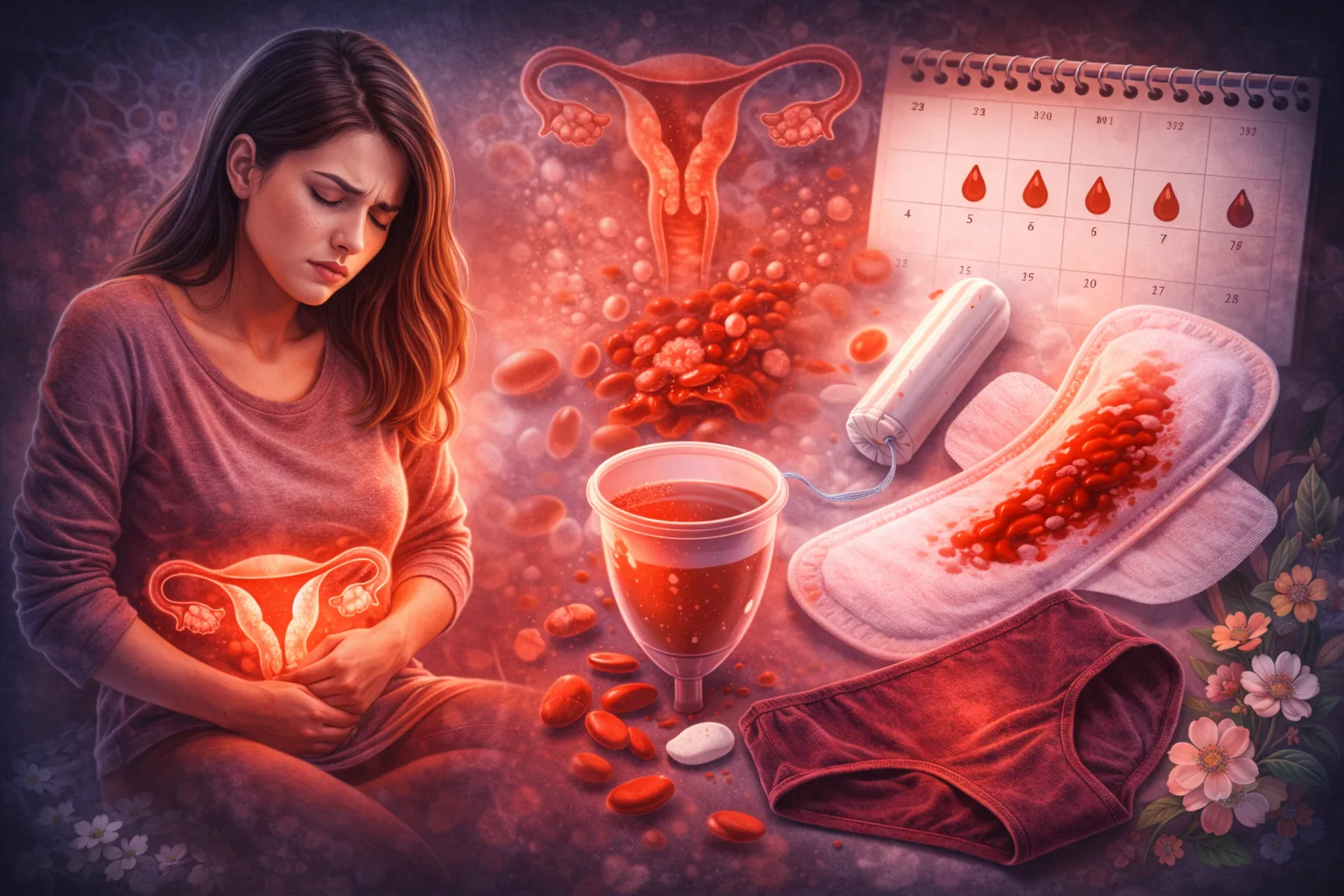
What periods are, what’s normal, common symptoms, products, tracking tips, and when to seek medical care.
Introduction
Menstruation (often called a “period”) is the monthly shedding of the uterine lining. It is a normal part of the reproductive cycle for many people from puberty until menopause.
Periods can look different from person to person. Flow amount, cycle length, cramps, mood changes, and other symptoms vary. This guide explains how menstruation works, what’s considered normal, how to manage common problems, and when to see a doctor.
What Is a Period?
During the menstrual cycle, the uterus builds a lining (endometrium) in case pregnancy happens. If pregnancy does not occur, hormone levels change and the lining is shed through the vagina. This shedding is menstrual bleeding.
Menstrual blood is a mix of blood and uterine tissue. It may look bright red, dark red, or brown. Small clots can happen, especially on heavier days.
Understanding the Menstrual Cycle (Simple Explanation)
The menstrual cycle is counted from the first day of bleeding to the first day of the next period. A typical cycle is often around a month, but “normal” can vary widely.
1) Menstrual Phase (Period)
The uterine lining is shed. Bleeding typically lasts several days.
2) Follicular Phase
The body prepares an egg for release; estrogen rises; the lining starts rebuilding.
3) Ovulation
An egg is released (often mid-cycle). Some people notice mild pain or extra discharge.
4) Luteal Phase
Progesterone rises; the lining thickens. If pregnancy doesn’t occur, hormones fall and the next period begins.
What’s Considered “Normal”?
“Normal” periods vary. These general ranges are commonly seen:
| Topic | Common Range | Notes |
|---|---|---|
| Cycle length | About 21–35 days (varies) | Teen cycles can be irregular for a few years; cycles can change with age |
| Bleeding duration | About 2–7 days | Some people bleed shorter or longer; patterns matter |
| Flow | Light to moderate | Heavier flow on day 1–2 is common |
| Color | Bright red to dark red/brown | Brown blood often means older blood (common at start/end) |
Common Period Symptoms
Many people have symptoms before or during their period. Common ones include:
- Cramps (lower abdomen, back, thighs)
- Bloating or water retention
- Breast tenderness
- Headaches
- Acne flare-ups
- Mood changes, irritability, sadness
- Fatigue
- Changes in appetite or cravings
- Digestive changes (diarrhea or constipation)
PMS vs. PMDD
PMS (Premenstrual Syndrome) refers to emotional and physical symptoms that happen before a period and improve soon after bleeding starts.
PMDD (Premenstrual Dysphoric Disorder) is a more severe form, where mood symptoms significantly affect daily life. If symptoms are intense—especially depression, anxiety, or anger—professional support can help.
Period Cramps: Why They Happen and How to Relieve Them
Cramps happen when the uterus contracts to shed its lining. These contractions are influenced by chemicals called prostaglandins. Some people have stronger contractions and more pain.
Home Relief Options
- Heat: heating pad or warm bath can relax muscles and ease pain.
- Gentle movement: walking, stretching, yoga.
- Hydration: can reduce headache and fatigue; warm drinks may help.
- Sleep: rest supports pain tolerance and mood.
- Over-the-counter pain relief: some people use NSAIDs (follow label directions and medical advice).
Period Products: Pads, Tampons, Cups, and More
There’s no single “best” product—choose what feels comfortable and fits your lifestyle.
Pads
- Easy to use
- Good for beginners
- Many sizes for light or heavy flow
Tampons
- Convenient for sports/swimming
- Choose the lowest absorbency that works
- Change regularly
Menstrual Cups
- Reusable and cost-effective
- Can hold more than many tampons
- Takes practice to insert/remove
Period Underwear
- Comfortable backup or main option
- Reusable
- Different absorbency levels
Hygiene and Comfort Tips
- Change products regularly to reduce irritation and odor.
- Gentle washing: warm water and mild soap outside only; avoid harsh douches.
- Breathable underwear can reduce irritation.
- Carry a small kit: pad/tampon, wipes, spare underwear, pain relief if needed.
- Prevent leaks: use higher absorbency at night or add period underwear as backup.
Common Period Changes (And Why They Happen)
Periods can change over time due to stress, weight changes, intense exercise, sleep changes, new medications, pregnancy, breastfeeding, and hormonal birth control.
It’s also common for cycles to be irregular:
- In the first few years after the first period
- During perimenopause (the years leading to menopause)
- With certain hormonal conditions (like PCOS)
When to See a Doctor (Important Warning Signs)
It’s a good idea to get medical advice if you have:
- Very heavy bleeding (soaking through pads/tampons frequently, passing large clots, or bleeding that interferes with daily life)
- Bleeding longer than a week or bleeding between periods
- Severe cramps that keep you from normal activities
- Sudden major change in cycle pattern, flow, or pain
- Missed periods (if pregnancy is possible, test; otherwise discuss causes)
- Symptoms of anemia (extreme fatigue, dizziness, shortness of breath)
- Possible infection signs (fever, foul-smelling discharge, severe pelvic pain)
How to Track Your Period (Simple Method)
- Mark day 1 = first day of bleeding.
- Track length = days until next day 1.
- Track flow (light/medium/heavy) and symptoms (cramps, mood, headaches).
- Note triggers: stress, sleep, travel, diet changes, intense workouts.
Quick Summary
- Menstruation is the shedding of the uterine lining when pregnancy doesn’t occur.
- Normal cycles and flow vary; patterns matter more than one “perfect” number.
- Cramps and PMS are common and often manageable with heat, rest, and healthy routines.
- There are many product options—choose what fits your comfort and lifestyle.
- Seek medical advice for heavy bleeding, severe pain, unusual changes, or signs of anemia or infection.