
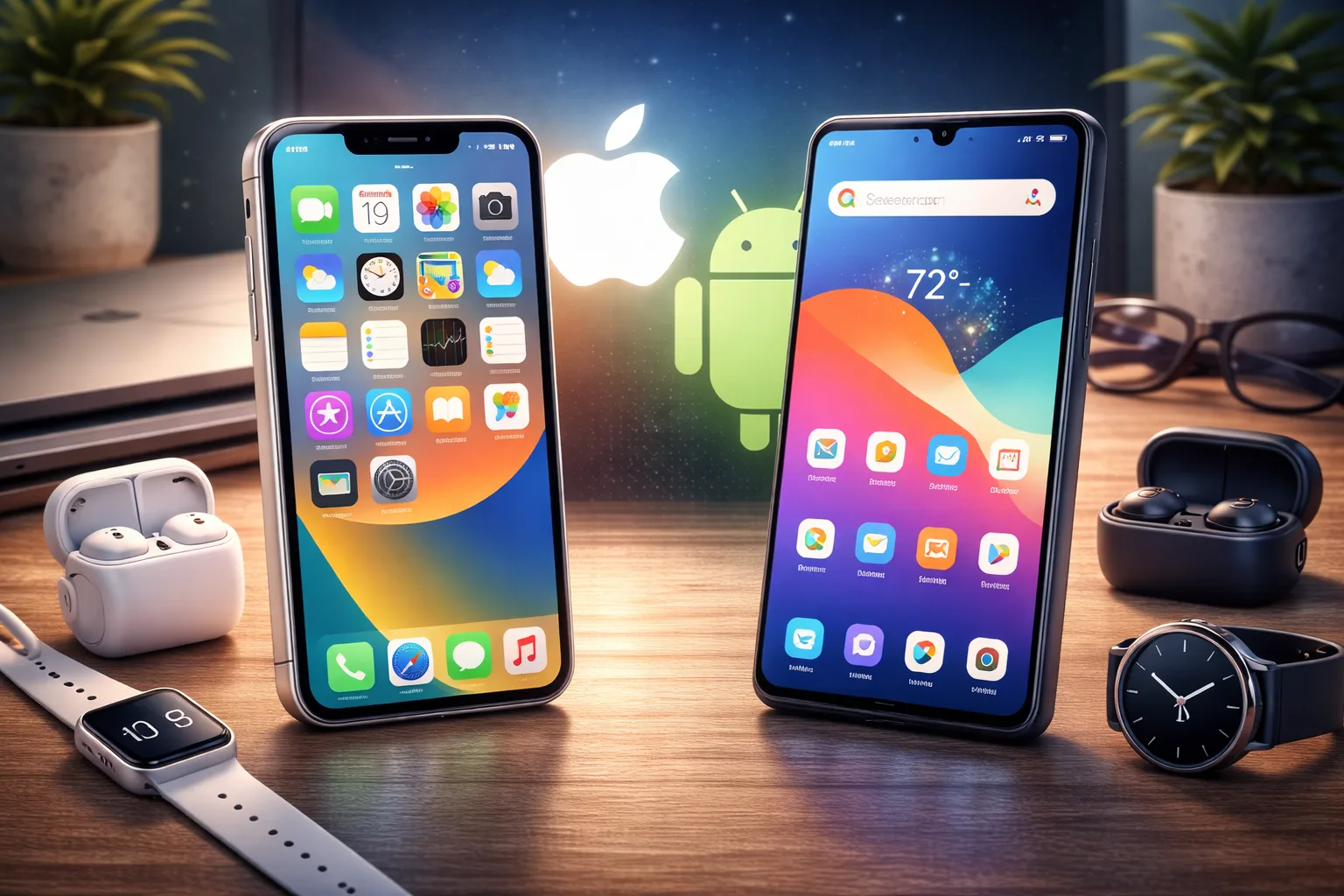
A practical comparison to help you pick the best phone for your life, budget, and preferences.
Introduction
If you're shopping for a smartphone, you’ll almost always choose between two major options: Apple’s iPhone (iOS) or Android phones (made by brands like Samsung, Google, OnePlus, Motorola, Xiaomi, and many others).
Both can call, text, take photos, run apps, and do everything most people need. But the experience can feel very different. The best choice depends on what you value: simplicity, customization, camera style, long-term support, price, or integration with other devices.
What’s the Real Difference?
iPhone (iOS)
- Apple controls the hardware and software together.
- Fewer phone models, more consistent performance.
- Strong integration with iPad, Mac, Apple Watch, AirPods.
Android
- Google makes Android, but many companies build phones with it.
- Huge variety: budget, mid-range, and premium devices.
- More customization and feature options.
Side-by-Side Comparison
| Category | iPhone (Apple) | Android |
|---|---|---|
| Ease of use | Very consistent, simple interface, smooth setup | Varies by brand; can be simple or highly customizable |
| Device choices | Limited models (easy to pick) | Many brands, sizes, features, and price ranges |
| Updates | Usually long and consistent updates for many years | Depends on brand; some are excellent, others less consistent |
| Camera style | Reliable, balanced photos and strong video recording | Can be amazing; styles differ (some better zoom, night mode, AI) |
| Customization | Limited; clean and controlled | High; launchers, widgets, settings, and advanced features |
| Privacy approach | Strong privacy marketing; many controls built into iOS | Improving privacy; depends on Google services and brand settings |
| Apps | Great app quality; sometimes gets new apps/features first | Huge library; more flexibility in installing apps |
| Price options | Mostly mid-to-high price; older models help lower cost | Budget to premium; more low-cost options |
| Resale value | Often strong resale value | Varies; some brands hold value well, others drop faster |
1) Budget: What Can You Spend?
Budget is often the most important factor. Here’s a simple way to think about it:
- Low budget: Android usually offers more good options in the budget range.
- Mid-range: Both can be great. Android has many choices; iPhone offers older models.
- High-end: Both offer premium phones with excellent cameras and performance.
2) Ecosystem: What Devices Do You Already Own?
Your phone works better when it matches your other devices.
If you already use Apple devices
- iPhone pairs very smoothly with Mac, iPad, AirPods, and Apple Watch.
- Features like shared messaging, file sharing, and device syncing feel seamless.
If you use Windows or Google services
- Android integrates naturally with Google apps (Gmail, Drive, Photos, Calendar).
- Many Android phones work well with Windows PCs and cross-platform services.
3) Camera: Photos vs Video
Both iPhones and many Android phones take excellent photos. The best choice depends on what you care about:
- Video creators: iPhones are often praised for consistent, high-quality video and smooth stabilization.
- Zoom lovers: Some Android flagships offer stronger zoom cameras and advanced lens options.
- Night photos: Many Android phones do very strong “night mode,” but results differ by brand.
- Easy point-and-shoot: iPhone results are usually consistent with less effort.
4) Updates and Long-Term Use
Your phone is safer and smoother when it gets regular updates. Updates can include security fixes, new features, and bug improvements.
- iPhone: Updates are typically consistent across supported devices.
- Android: Update support depends on the brand and model (some offer long support, others shorter).
If you plan to keep your phone for many years, update support becomes more important.
5) Customization and Control
If you enjoy changing how your phone looks and works, Android is usually better:
- Custom launchers and deeper theme changes.
- More control over default apps and system behavior.
- More variety of features across brands.
If you prefer a simple, consistent experience with fewer settings, iPhone is often easier.
6) Security and Privacy
Both platforms have strong security features, but they approach privacy differently. In general:
- iPhone: Often highlights privacy controls and limits tracking by apps.
- Android: Has improved privacy a lot, but settings may vary by brand and Google account usage.
Your habits matter too: using strong passwords, keeping software updated, avoiding suspicious apps, and enabling device protection features.
Which One Should You Pick? (Simple Scenarios)
Pick iPhone if you want:
- A smooth, simple experience with less troubleshooting
- Strong ecosystem with other Apple devices
- Consistent updates and long-term support
- Great video and reliable camera results
- Strong resale value
Pick Android if you want:
- More phone choices and more price options
- Customization and control over your device
- Specific hardware features (zoom cameras, folding phones, etc.)
- More flexibility for apps and system settings
- Deep integration with Google services
Step-by-Step Checklist Before You Buy
- Set your budget and decide whether you’re open to older models.
- List your “must-have” features: camera, battery, storage, size, 5G, etc.
- Decide what matters most: simplicity, customization, updates, ecosystem.
- Compare 2–3 models (not 20) to avoid confusion.
- Read/watch real reviews focusing on battery life and camera samples.
- Check update support for the specific model you want.
- Buy from a reputable seller and consider warranty options.
Conclusion
There is no “one perfect phone” for everyone. iPhone is a strong choice for people who want a smooth, consistent experience and long-term support—especially if they already use Apple products.
Android is ideal for people who want more choices, more price flexibility, and more control over how their phone works. If you choose based on your real daily needs—budget, camera, apps, and ecosystem—you’ll be happy with either platform.