
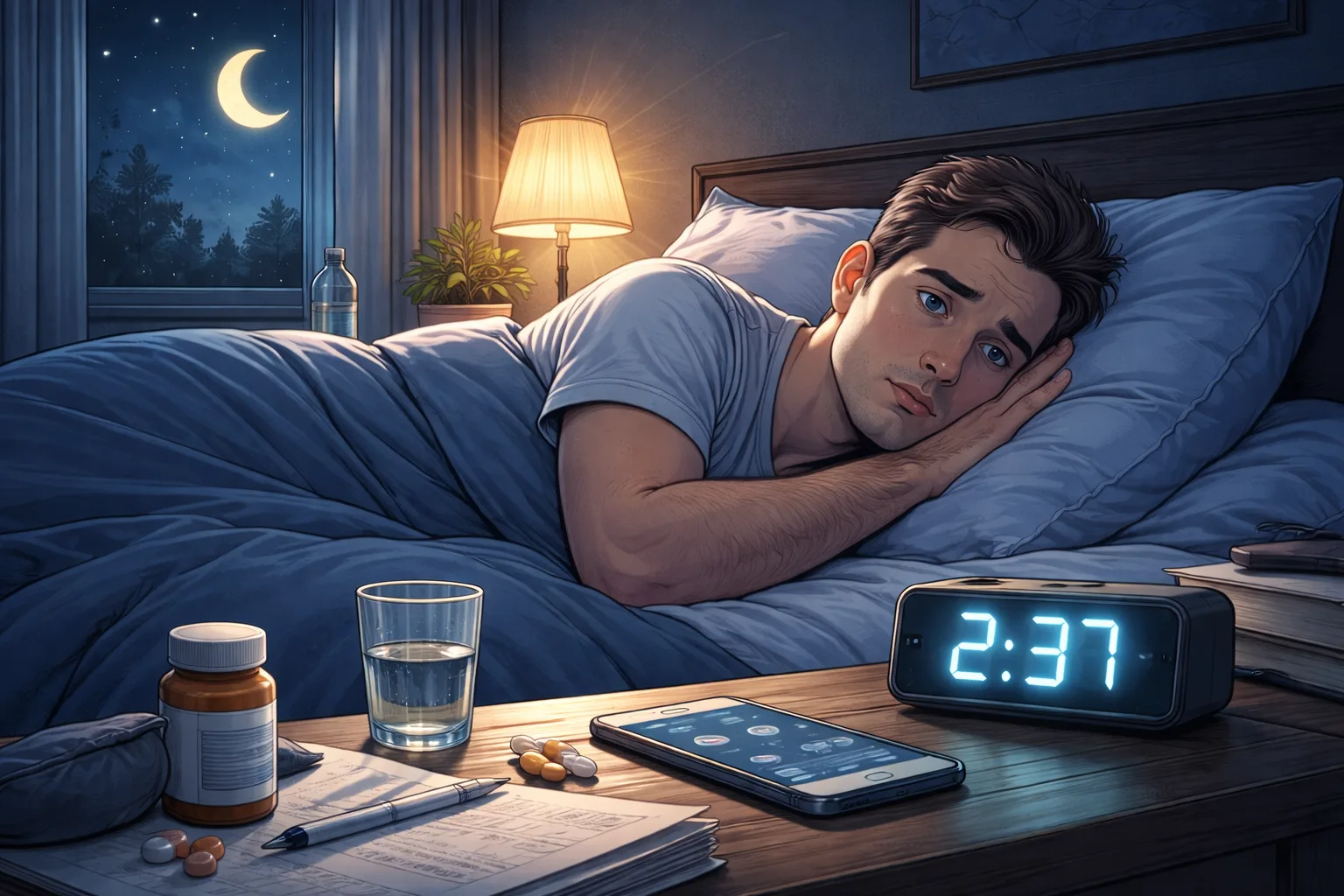
A beginner-friendly guide to understanding insomnia and improving sleep step by step.
Introduction
Insomnia is a sleep problem where you have trouble falling asleep, staying asleep, or waking too early and not being able to fall back asleep. Many people experience insomnia sometimes (for example during stress), but if it happens often and affects your daily life, it can become a serious health issue.
The good news: insomnia is usually treatable. Often, small changes in habits and a structured approach can significantly improve sleep over time.
What Is Insomnia?
Insomnia is not just “sleeping less.” It is a pattern of poor sleep that leads to problems during the day such as fatigue, low energy, poor focus, mood changes, or reduced performance at work or school.
Common Insomnia Patterns
Sleep Onset Insomnia
Difficulty falling asleep (often lying awake for a long time).
Sleep Maintenance Insomnia
Waking up during the night and struggling to fall back asleep.
Early Morning Awakening
Waking too early and not being able to return to sleep.
Mixed Insomnia
A combination of the patterns above.
Acute vs. Chronic Insomnia
- Acute insomnia: Short-term sleep trouble (often days to a few weeks). Common during stress, travel, illness, or life changes.
- Chronic insomnia: Sleep difficulty that happens at least several nights per week and lasts for months, often with daytime impairment.
Chronic insomnia is common and can become a cycle: poor sleep causes worry and stress, and worry and stress make sleep worse.
Common Causes of Insomnia
Insomnia usually has more than one cause. Here are the most common:
1) Stress and Anxiety
- Work stress, financial stress, relationship issues.
- Racing thoughts at night.
- Feeling “on alert” even when tired.
2) Poor Sleep Habits
- Irregular sleep schedule (different sleep/wake times daily).
- Using the bed for scrolling, gaming, or working.
- Long naps late in the day.
3) Caffeine, Nicotine, Alcohol
- Caffeine late in the day can delay sleep and make sleep lighter.
- Nicotine is a stimulant.
- Alcohol may make you sleepy at first, but often disrupts sleep later.
4) Screens and Light Exposure
- Bright light at night can confuse your body clock.
- Scrolling or intense content can keep the brain alert.
5) Medical or Mental Health Conditions
- Depression, anxiety disorders, PTSD.
- Chronic pain, reflux, asthma, thyroid issues.
- Frequent urination at night.
6) Sleep Disorders
- Sleep apnea (breathing pauses during sleep).
- Restless legs syndrome.
- Circadian rhythm disorders (shift work, jet lag).
Symptoms of Insomnia
Insomnia affects both night and daytime life. Common symptoms include:
- Taking a long time to fall asleep.
- Waking up multiple times at night.
- Waking earlier than planned.
- Feeling tired or unrefreshed in the morning.
- Daytime sleepiness, low energy, headaches.
- Difficulty concentrating or remembering.
- Irritability, mood swings, anxiety.
- Worrying about sleep frequently.
When to See a Doctor
It’s a good idea to talk with a healthcare professional if:
- Insomnia lasts more than a few weeks or keeps returning.
- It affects your work, driving, mood, or safety.
- You snore loudly, wake up choking/gasping, or feel very sleepy during the day (possible sleep apnea).
- You have severe anxiety, depression, or panic symptoms.
- You use alcohol or medications to force sleep.
- You have pain, reflux, breathing problems, or other symptoms that wake you up.
The Most Effective Treatment: CBT-I
The most recommended evidence-based treatment for chronic insomnia is often CBT-I (Cognitive Behavioral Therapy for Insomnia). It is not just “talk therapy.” It uses structured strategies to reset sleep patterns and reduce the anxiety cycle around sleep.
Sleep Scheduling
Aligning your sleep window with your real sleep ability to build stronger sleep drive.
Stimulus Control
Training your brain to connect your bed with sleep (not stress, scrolling, or work).
Thought Restructuring
Reducing fear thoughts like “If I don’t sleep, tomorrow will be ruined.”
Sleep Hygiene
Improving habits that support sleep (light, caffeine timing, routines).
Sleep Hygiene: Practical Tips That Help
Sleep hygiene means creating conditions that make sleep easier. These tips are simple, but they work best when you do them consistently.
Daytime Habits
- Wake up at the same time daily (even weekends) to stabilize your body clock.
- Get morning light: Spend 10–20 minutes outside in daylight soon after waking.
- Move your body: Exercise helps sleep (but avoid intense exercise right before bed).
- Watch naps: If you nap, keep it short (20–30 minutes) and earlier in the day.
- Limit caffeine late: Many people sleep better if caffeine is avoided after early afternoon.
Evening Habits
- Lower light 1–2 hours before bed: Dim lights; avoid bright screens if possible.
- Create a wind-down routine: Shower, gentle stretching, reading, or calm music.
- Avoid heavy meals late: Large or spicy meals can disrupt sleep.
- Limit alcohol: It can break sleep in the second half of the night.
Bedroom Setup
- Cool, dark, quiet: Cooler rooms are often better for sleep.
- Comfortable bed/pillow: Support matters for muscle relaxation.
- Use bed only for sleep and intimacy: Keep work and phone time out of bed.
What to Do When You Can’t Sleep at Night
One of the best approaches is to reduce the “fight” with sleep. Trying too hard can activate your stress system and keep you awake.
- If you can’t fall asleep within ~20–30 minutes: Get out of bed.
- Do something calm in dim light: A book, gentle breathing, soft music.
- Avoid bright screens: If you must use a phone, dim it as much as possible.
- Return to bed when sleepy: Not just tired—sleepy.
- Repeat if needed: This helps your brain relearn that bed = sleep.
Medications and Supplements (Important Notes)
Some people use sleep medicines or supplements, but they should be used carefully. For chronic insomnia, behavior-based treatment (like CBT-I) is often preferred for long-term results.
- Short-term prescription sleep meds may help during acute stress but can have side effects.
- Over-the-counter sleep aids can cause grogginess and may not be suitable for long-term use.
- Melatonin may help certain body-clock issues (like jet lag) more than general insomnia.
A Simple 7-Day Starter Plan
Here is a realistic plan you can start right away:
- Day 1: Choose a fixed wake-up time and commit to it for 7 days.
- Day 2: Get 10–20 minutes of morning daylight after waking.
- Day 3: Stop caffeine after early afternoon.
- Day 4: Create a 30–60 minute wind-down routine (no intense scrolling).
- Day 5: Make your bedroom cooler/darker/quieter (even small improvements help).
- Day 6: Use the “get out of bed” rule if you can’t sleep after ~20–30 minutes.
- Day 7: Track sleep for one week and notice patterns (stress days, late meals, screen time).
Conclusion
Insomnia can feel frustrating and exhausting, but it is often treatable. The most effective long-term solutions usually combine a consistent schedule, better sleep habits, reduced sleep anxiety, and addressing underlying causes.
Start small: pick one or two changes you can maintain, and build from there. If insomnia is persistent or severe, consider professional support—especially CBT-I, which is designed specifically to break the insomnia cycle.