
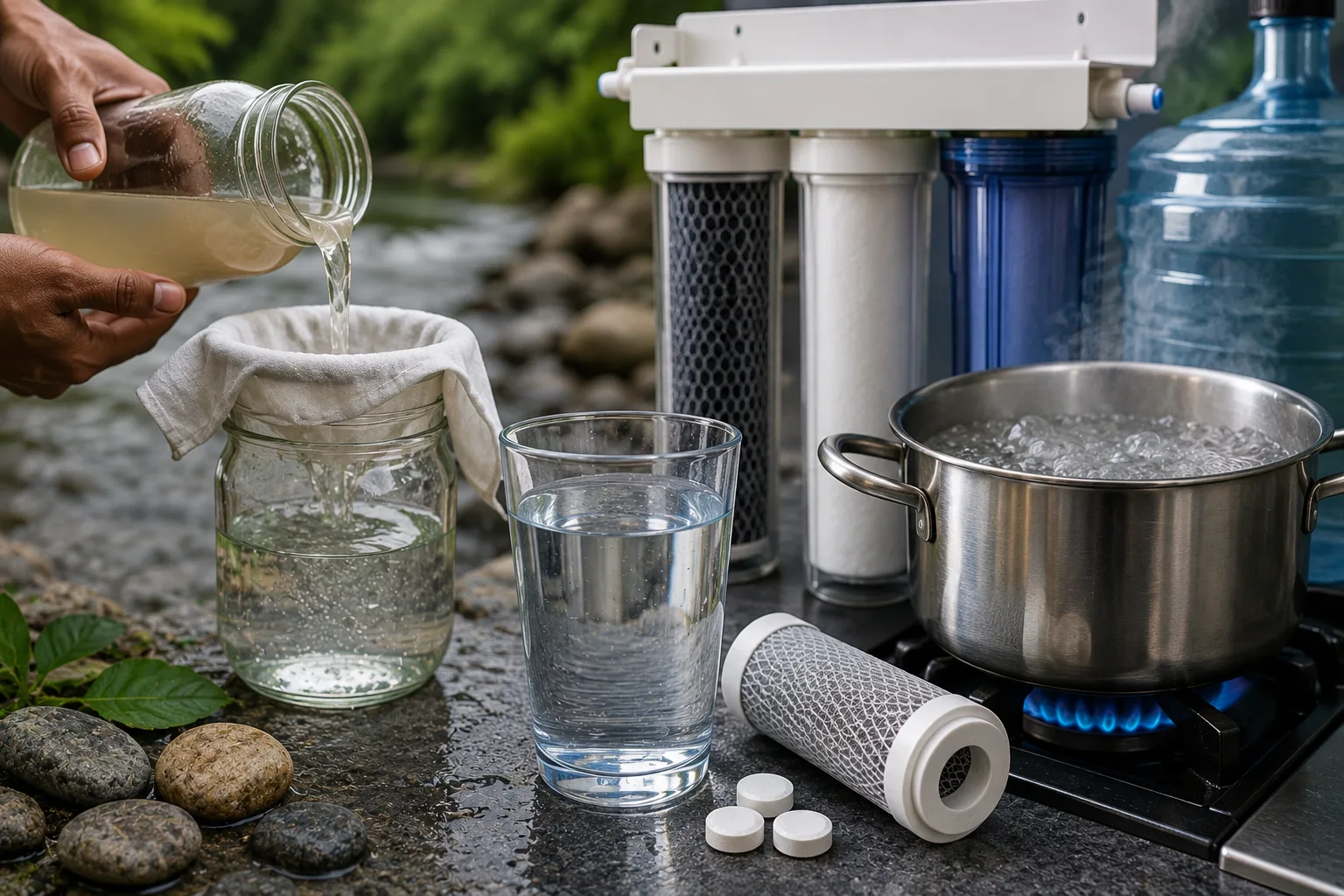
A detailed, informative, helpful, and easy-to-read guide to improving water clarity and drinking safety.
Clean drinking water is essential for health. Water may look clear but still contain germs, chemicals, heavy metals, or other contaminants. At the same time, cloudy or dirty-looking water may need settling and filtering before it can be treated properly.
Making water safe usually involves more than one step: removing visible dirt, filtering particles, killing germs, storing water safely, and testing when contamination is possible. Boiling is one of the best emergency methods for killing germs, but it does not remove many chemicals, fuel, salt, or heavy metals. CDC and EPA both recommend boiling clear water for 1 minute, or 3 minutes at elevations above 6,500 feet.
1. Understand the Difference Between Clear and Safe
Clear water is not always safe water. Water can look clean but still contain bacteria, viruses, parasites, pesticides, lead, arsenic, nitrates, fuel, or other harmful substances.
A good water safety plan should focus on both appearance and safety:
- Clean-looking water: Free from visible dirt, mud, leaves, and particles.
- Clear water: Not cloudy or murky.
- Safe drinking water: Free from harmful germs and unsafe levels of chemicals.
2. Start With the Best Water Source Available
The safer the original water source, the easier it is to treat. If possible, use water from a protected tap, tested well, sealed container, or bottled water.
Avoid using water that may be contaminated by:
- Floodwater
- Sewage
- Fuel or oil
- Industrial chemicals
- Pesticides
- Dead animals
- Unknown waste
Water contaminated with fuel or toxic chemicals should not be made safe by boiling or basic disinfection. Use another water source instead.
3. Let Dirty Water Settle First
If water is muddy or cloudy, let it sit in a clean container so heavy particles can settle to the bottom. After settling, carefully pour or scoop the clearer water from the top into another clean container.
This helps remove:
- Sand
- Mud
- Large particles
- Some floating debris
Settling does not kill germs or remove dissolved chemicals. It is only a first step before filtering and disinfecting.
4. Filter Out Visible Dirt and Particles
Filtering helps make water clearer by removing particles. In an emergency, cloudy water can first be filtered through a clean cloth, paper towel, or coffee filter before boiling or disinfecting.
Simple filtering options include:
- Clean cotton cloth
- Coffee filter
- Paper towel
- Commercial water filter
- Ceramic filter
- Activated carbon filter
Important: basic cloth filtering does not make water safe by itself. Many germs and chemicals can still remain.
5. Boil Water to Kill Germs
Boiling is one of the most reliable ways to kill disease-causing germs in water. If the water is cloudy, filter it first or let it settle, then boil the clearer water.
How to boil water safely:
- Pour the clear water into a clean pot.
- Bring it to a full rolling boil.
- Boil for 1 minute.
- If above 6,500 feet elevation, boil for 3 minutes.
- Let the water cool naturally.
- Store it in a clean, covered container.
Boiling kills germs, but it does not remove chemicals, salt, heavy metals, or fuel contamination.
6. Disinfect Water When Boiling Is Not Possible
If boiling is not possible, water may be disinfected with approved chemical disinfectants such as unscented household chlorine bleach, iodine, or chlorine dioxide tablets. The CDC notes that disinfectants can kill many germs, but they may not work as well as boiling for some parasites.
Important bleach safety tips:
- Use only plain, unscented household bleach.
- Do not use scented bleach, splashless bleach, or bleach with added cleaners.
- Follow the bleach label if it gives drinking water instructions.
- Use the correct amount based on bleach strength.
- Mix well and let the water stand before drinking.
For bleach with 5% to 9% sodium hypochlorite, CDC emergency guidance lists 2 drops per quart or liter of clear water, and double the amount for cloudy, murky, colored, or very cold water. Always follow official local guidance when available.
7. Use a Proper Drinking Water Filter
A good water filter can improve taste, odor, clarity, and safety depending on the filter type. However, not all filters remove the same contaminants.
Common filter types include:
- Sediment filters: Remove sand, rust, and particles.
- Activated carbon filters: Improve taste and reduce some chemicals and odors.
- Ceramic filters: Can remove many bacteria and parasites depending on pore size.
- Reverse osmosis: Can reduce many dissolved contaminants, including some metals and salts.
- UV purifiers: Use ultraviolet light to inactivate germs in clear water.
Read the filter label carefully. Some portable filters do not remove viruses, and many filters do not remove chemical contamination unless designed for that purpose.
8. Test Water When Safety Is Uncertain
If you use well water, stored water, rainwater, or water from an uncertain source, testing is important. Testing is the only way to confirm many invisible contaminants.
Water may need testing for:
- Bacteria
- Nitrates
- Lead
- Arsenic
- pH
- Hardness
- Pesticides or industrial chemicals, depending on location
Private wells are usually the owner’s responsibility, so regular testing is important, especially after flooding, repairs, or changes in taste, smell, or color.
9. Store Clean Water Safely
Water can become contaminated again if stored in dirty containers. After boiling, disinfecting, or filtering, store water properly.
Safe storage tips:
- Use clean, food-grade containers.
- Use containers with tight covers.
- Do not touch the inside of the container or lid.
- Pour water instead of dipping cups into the container.
- Keep stored water away from chemicals, fuel, and sunlight.
- Clean and sanitize containers regularly.
10. Improve Taste and Smell
Water that has been boiled or disinfected may taste flat or slightly like chlorine. This does not always mean it is unsafe.
To improve taste:
- Let boiled water cool and pour it between clean containers to add air.
- Use an activated carbon filter if appropriate.
- Store water cold in a clean container.
- Keep containers covered to prevent odors from entering.
If water smells like fuel, chemicals, sewage, or rotten material, do not drink it until it has been properly tested and confirmed safe.
11. What Boiling and Bleach Cannot Fix
Boiling and basic disinfection are useful for germs, but they are not complete solutions for every water problem.
They may not remove:
- Lead
- Arsenic
- Nitrates
- Salt
- Fuel
- Pesticides
- Industrial chemicals
- Heavy metals
For these problems, you may need tested water treatment systems such as reverse osmosis, certified filters, professional treatment, or a different water source.
12. Basic Home Water Treatment Setup
For everyday home use, many people use a multi-step approach.
- Sediment filter: Removes dirt, rust, and particles.
- Activated carbon filter: Improves taste and reduces some chemicals.
- Reverse osmosis or certified filter: Reduces many dissolved contaminants.
- UV or disinfection: Helps control germs when needed.
- Safe storage: Prevents recontamination.
The best setup depends on what is in your water. Testing should guide the treatment choice.
Common Mistakes to Avoid
- Assuming clear water is always safe
- Drinking floodwater or chemically contaminated water
- Using scented or splashless bleach for disinfection
- Using too much or too little disinfectant
- Filtering water but not disinfecting when germs may be present
- Storing clean water in dirty containers
- Ignoring strange smells, colors, or oily films
- Never testing private well water
Simple Emergency Method
If you need safer drinking water during an emergency and the water is not chemically contaminated, follow this order:
- Let muddy water settle.
- Filter through clean cloth, paper towel, or coffee filter.
- Boil at a rolling boil for 1 minute, or 3 minutes above 6,500 feet.
- Let it cool.
- Store in a clean, covered container.
Conclusion
Making water clean, clear, and safe for drinking requires the right steps. First remove visible dirt by settling and filtering. Then kill germs by boiling or using proper disinfection when boiling is not possible. Store treated water in clean, covered containers to prevent recontamination.
Remember that clear water is not always safe, and boiling does not remove chemicals or heavy metals. If water may contain fuel, pesticides, lead, arsenic, nitrates, sewage, or industrial chemicals, use another safe source or get the water tested and treated properly.