
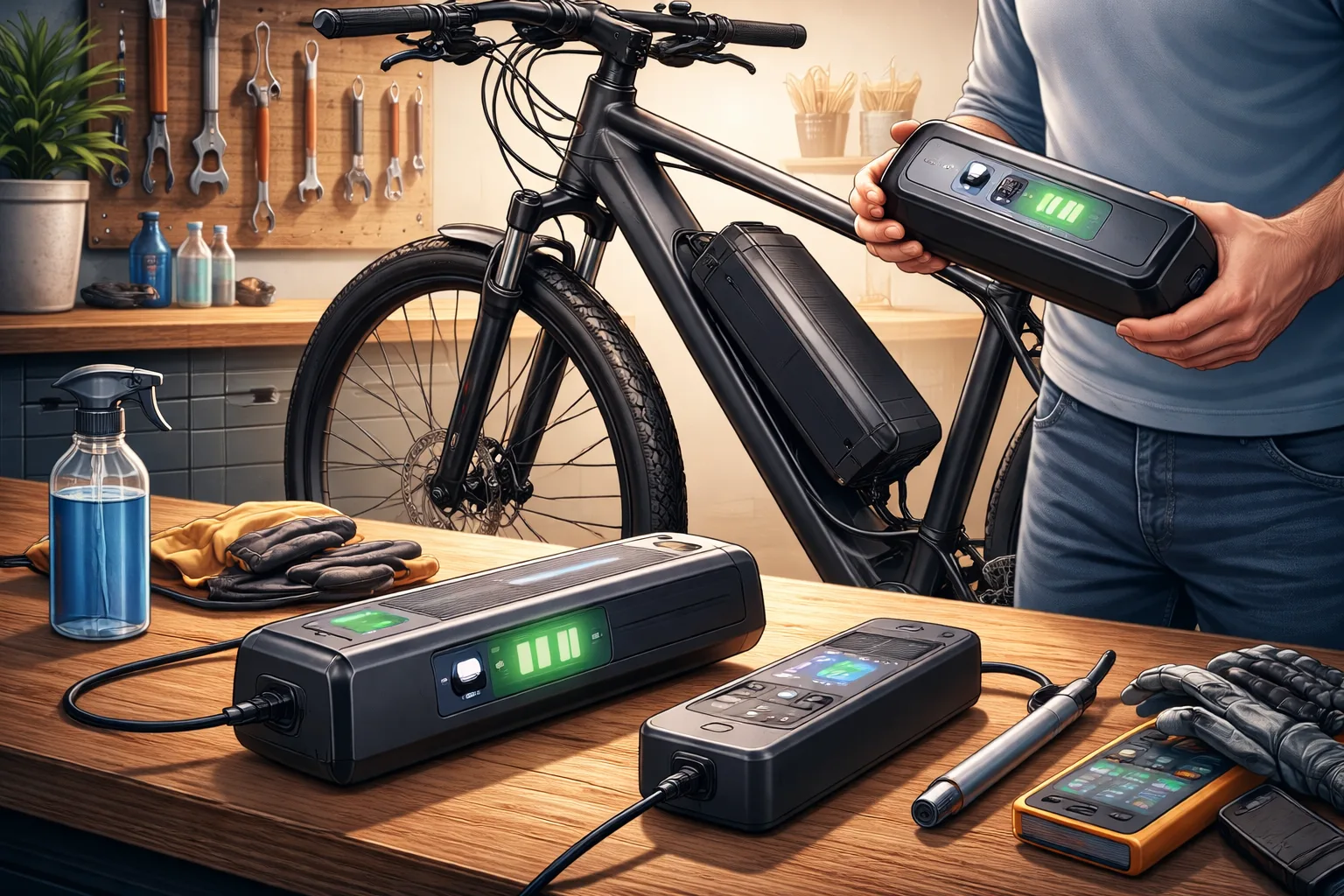
Simple daily habits, smart charging, and safe storage to extend your battery’s life.
Introduction
Your e-bike battery is one of the most expensive parts of your bike. Most modern e-bike batteries use lithium-ion cells, which can last for years—but only if you treat them well. The goal is not just “more range today,” but “good range for a long time.”
This guide explains the easiest, most effective ways to keep an e-bike battery healthy: how to charge it, when to store it, what temperatures to avoid, and habits that reduce wear.
How E-Bike Batteries Wear Out (Simple Explanation)
Lithium-ion batteries slowly lose capacity over time. This happens from:
- Cycle aging: Using and recharging the battery repeatedly (normal wear).
- Calendar aging: The battery aging even when you’re not riding (time + temperature + charge level).
- Stress conditions: High heat, very low charge, and staying at 100% for long periods.
You can’t stop aging completely, but you can slow it down a lot with smart habits.
Best Charging Habits (The Big Rules)
1) Avoid living at 0% or 100%
Batteries are happiest in the middle. For everyday use, many riders try to keep the battery between 20% and 80% most of the time.
- Charging to 100% sometimes is fine—especially before a long ride.
- Try not to store the battery at 100% for days.
- Avoid running the battery completely flat regularly.
2) “Partial charging” is okay
With lithium-ion, you do not need to fully drain the battery before charging. Topping up (charging a little) is normal and often gentler than deep cycles.
- Charging from 40% to 70% is fine.
- Charging from 30% to 80% is fine.
- Doing small top-ups can reduce stress compared to frequent deep discharges.
3) Use the correct charger
Always use the charger recommended by the battery or bike maker. A wrong charger can overheat the battery, damage the cells, or create a safety risk.
4) Don’t charge when the battery is very hot
After a long ride, the battery might be warm. Let it cool down to room temperature before charging when possible.
Charging Safety: Do This to Reduce Risk
- Charge in a safe place: On a non-flammable surface, away from clutter.
- Don’t cover the charger: Chargers create heat and need airflow.
- Avoid extension cords if possible: Use a solid wall outlet. If you must use one, use a high-quality cord rated for the load.
- Inspect the charging port: Keep it clean and dry. If you see corrosion or damage, stop using it and get it checked.
- Unplug after charging: Many chargers stop automatically, but unplugging is still a good habit.
Best Storage Habits (Short-Term and Long-Term)
Storage is a huge factor in battery health. If you store your e-bike for days or weeks, follow these rules:
| Situation | Best Battery Level | Best Practice |
|---|---|---|
| Daily use (ride often) | Roughly 20–90% | Charge based on next ride distance; avoid leaving it at 0% or 100% for long periods. |
| Not riding for 1–2 weeks | About 40–60% | Store indoors in a cool, dry place; check charge every 1–2 weeks. |
| Winter storage / months | About 40–60% | Top up occasionally to stay in mid-range; avoid freezing temps; store away from direct sun/heat. |
Temperature: The #1 Battery Killer Is Heat
Heat speeds up battery aging. Cold reduces range temporarily but is usually less damaging than heat. Here’s how to protect your battery:
Avoid Hot Car Storage
Leaving a battery in a hot car (especially in the sun) can seriously harm it over time. If you transport your bike, bring the battery inside when possible.
Don’t Charge in Freezing Conditions
Charging a very cold lithium battery can cause damage. If it’s cold outside, bring the battery indoors and let it warm up to room temperature before charging.
Store Indoors
A cool, dry indoor space is best. Garages can get very hot in summer and very cold in winter.
Expect Less Range in Cold Weather
Range often drops in winter. This is normal and usually improves when temperatures rise again.
Riding Habits That Help Battery Health
How you ride affects battery wear, heat, and how deep you drain the battery.
- Use a lower assist level when you can: High assist drains the battery faster and may increase heat.
- Help on hills: Pedal more on steep climbs to reduce motor strain and battery load.
- Avoid full-throttle starts (if your bike has a throttle): Smooth acceleration reduces power spikes.
- Keep tires properly inflated: Low pressure increases rolling resistance and drains the battery faster.
- Maintain your drivetrain: A clean, lubricated chain and good shifting reduce wasted energy.
- Plan your charge: If you only need a short ride tomorrow, you don’t need to charge to 100% today.
Do You Need to “Calibrate” the Battery?
Some e-bike systems estimate battery percentage based on voltage and usage patterns. That estimate can drift. On certain systems, doing an occasional full charge (and sometimes a longer charge until the charger stops) can help the meter read more accurately.
Signs Your E-Bike Battery Might Be Aging
Over time, batteries lose capacity. Common signs include:
- Range drops noticeably compared to when the battery was new (even in similar conditions).
- Voltage sag: Battery percentage drops quickly during acceleration or hills.
- Charging behavior changes: Takes much less time to “reach 100%” or the charger behaves unusually.
- Battery gets hotter than usual during use or charging.
- Physical changes: Swelling, cracks, damaged casing, corrosion at contacts.
Simple Checklist (Daily / Weekly / Seasonal)
Daily
- Charge based on tomorrow’s ride (don’t always charge to 100% if you don’t need it).
- Let the battery cool down before charging if it’s warm.
- Store indoors if weather is extreme.
Weekly
- Check tire pressure.
- Wipe battery contacts and ensure the mount is secure.
- Inspect charger cable for damage.
Seasonal
- Winter: keep battery warm indoors; avoid charging when cold.
- Summer: avoid hot car storage and direct sun; keep charging area ventilated.
- If storing: leave battery around 40–60% and check monthly.
Always
- Use the correct charger.
- Avoid water intrusion in charging port.
- Stop using any damaged battery.
Conclusion
Keeping your e-bike battery healthy is mostly about smart habits: avoid extreme heat, avoid storing at 0% or 100%, charge based on your real needs, and store around 40–60% when you’re not riding for a while.
If you follow these basics, you’ll usually get better range over time, fewer battery problems, and a longer battery life—saving you money and keeping your rides reliable.