
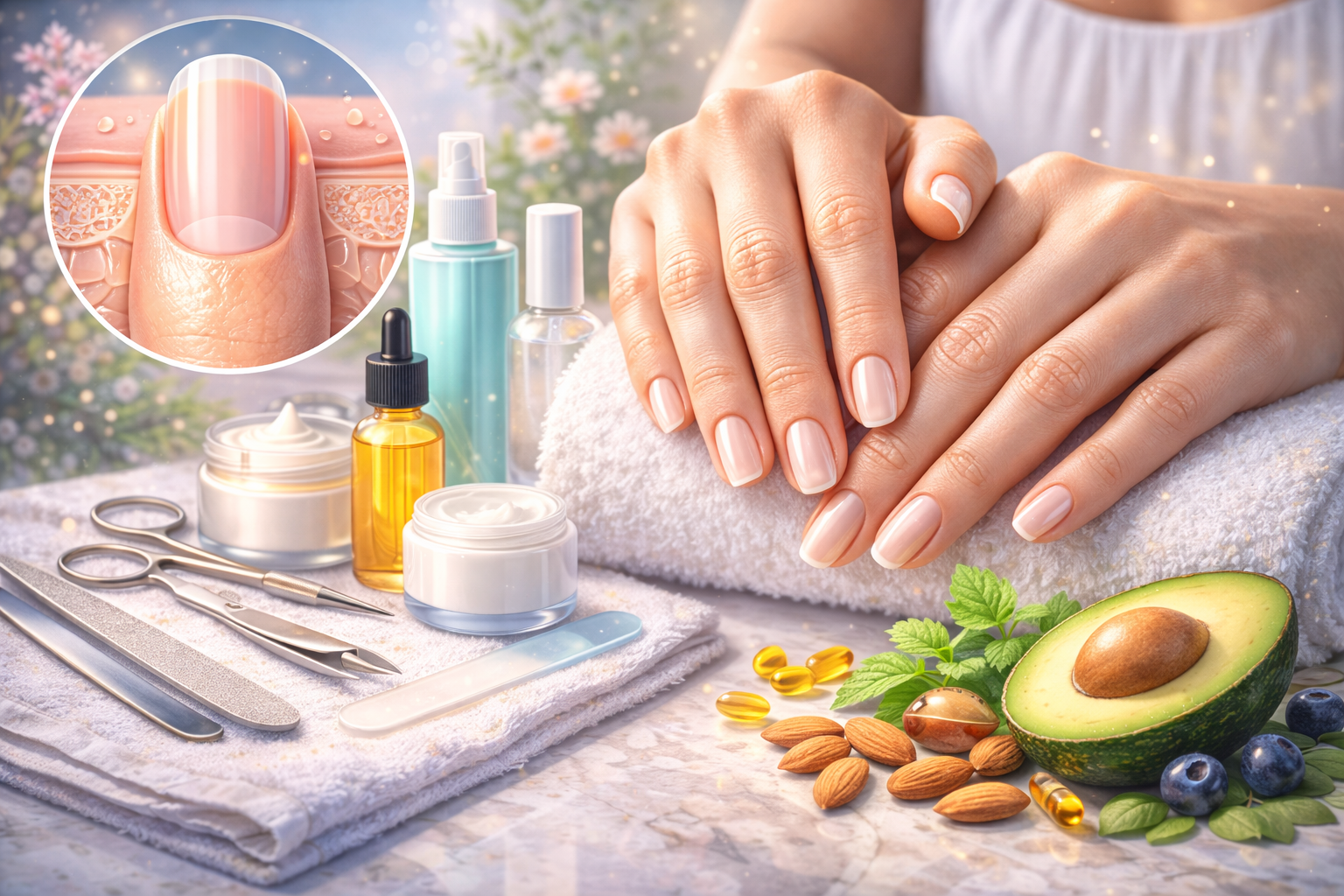
Simple nail care habits, nutrition tips, and solutions for brittle nails, peeling, discoloration, and more.
Introduction
Healthy nails should feel strong, look smooth, and stay clean and comfortable. Many nail problems—brittle nails, peeling, splitting, discoloration, or infections—are caused by repeated trauma, harsh chemicals, moisture imbalance, or neglected cuticle care.
The good news: most nail issues improve with simple routine changes. This guide explains what nails need, how to build a basic nail-care routine, and when nail changes might need medical attention.
How Nails Grow (Quick Basics)
Nails grow from the nail matrix (under the skin at the base of the nail). The visible nail plate is made of keratin, the same protein found in hair. Nails grow slowly, so improvements take time.
- Fingernails: often take months to grow out fully.
- Toenails: can take longer.
What Healthy Nails Look Like
Healthy nails usually have:
- Even color (varies by skin tone)
- Smooth surface with minimal ridges
- Firm texture (not soft and bendy)
- Little to no peeling or splitting
Healthy nail area (skin around nails):
- No swelling or pus
- Cuticles not constantly torn or bleeding
- Minimal redness and irritation
The Simple Nail-Care Routine (Daily & Weekly)
Daily Habits
- Moisturize nails and cuticles: a small amount of hand cream or cuticle oil helps prevent dryness and cracking.
- Protect from chemicals: wear gloves for dishwashing or strong cleaners.
- Avoid using nails as tools: scraping, opening cans, or peeling stickers causes micro-cracks.
- Keep nails at a practical length: shorter nails break less.
Weekly Habits
- Trim and file: file in one direction to reduce splitting.
- Gentle cuticle care: push back lightly after showering (no aggressive cutting).
- Check for changes: discoloration, lifting, swelling, or pain.
Cuticles: Why They Matter
Cuticles protect the nail matrix from bacteria and fungi. Damaging cuticles (cutting too deeply, picking, biting) can lead to irritation and infection.
- Instead of cutting cuticles aggressively, soften them with warm water and gently push back.
- If you get hangnails, clip them carefully (don’t rip them).
- Moisturize regularly to reduce hangnails.
Brittle, Peeling, or Splitting Nails: Common Causes
Brittle nails are extremely common. Causes often include:
External causes
- Frequent handwashing and sanitizer use
- Dishwashing without gloves
- Harsh nail polish removers (especially acetone)
- Gel/acrylic damage from removal
- Repeated trauma (typing, tools, picking)
Internal causes (sometimes)
- Low iron or anemia
- Thyroid issues
- Nutritional gaps (protein, zinc)
- Medical conditions affecting circulation or skin
Polish, Gel, Acrylics: How to Reduce Damage
Nail polish is usually fine for many people, but repeated gel/acrylic use and aggressive removal can weaken nails.
- Take breaks: give nails a “rest period” between gel/acrylic sets.
- Avoid scraping: peeling off gel damages layers of the nail plate.
- Use gentler remover: if possible, minimize strong acetone exposure.
- Moisturize more: polish and removers can dry nails.
Nail Discoloration: What It Can Mean
Color changes can have many causes—some harmless, some worth checking.
| Change | Common causes | What to do |
|---|---|---|
| Yellow nails | Polish staining, smoking, sometimes fungus | Use a base coat; if thick/crumbly, consider evaluation |
| White spots | Minor trauma, dryness | Usually harmless; let it grow out |
| Dark streak | Bruise, pigmentation, rarely serious causes | Get checked if new, widening, or changing |
| Greenish color | Bacterial growth under lifted nail | Get checked; keep nail dry and clean |
Nail Fungus (Onychomycosis): Signs and Prevention
Nail fungus is more common in toenails. It may cause:
- Thickened nail
- Yellow/brown discoloration
- Crumbly edges
- Nail lifting from the nail bed
Prevention Tips
- Keep feet dry; change socks if sweaty
- Wear breathable shoes
- Use sandals in public showers/pools
- Don’t share nail clippers or files
- Disinfect tools and keep nails trimmed
Nutrition for Healthy Nails
Nails are made of protein (keratin), and overall nutrition affects nail strength. A balanced diet supports steady nail growth.
Key nutrients
- Protein: eggs, poultry, fish, beans, tofu
- Iron: meats, beans, spinach (iron deficiency can affect nails)
- Zinc: meat, dairy, nuts, legumes
- Omega-3 fats: fish, flax, walnuts
Simple daily plan
- Add protein to each meal
- Eat fruits/vegetables for vitamins
- Hydrate consistently
- Limit ultra-processed foods
When to See a Doctor
Get medical advice if you have:
- Swelling, pus, or severe pain around the nail (possible infection)
- Sudden nail lifting or nail deformity
- New dark streaks or rapidly changing nail color
- Persistent thick, crumbly nails (possible fungus)
- Multiple nails changing with other symptoms (fatigue, hair loss, weight changes)
A Simple 21-Day Stronger Nails Plan
- Days 1–7: Moisturize cuticles daily + wear gloves for washing dishes/cleaning.
- Days 8–14: Trim and file nails; stop using nails as tools; reduce harsh remover use.
- Days 15–21: Add a weekly “nail rest day” (no polish) and continue hydration + protection.
Quick Summary
- Healthy nails come from protection, hydration, and gentle grooming.
- Moisturize nails and cuticles daily, and wear gloves for chemicals and frequent water exposure.
- Brittle nails are often caused by repeated wet/dry cycles, harsh removers, or trauma.
- Discoloration and thickened nails may indicate infection or other issues—get checked if persistent or changing.