
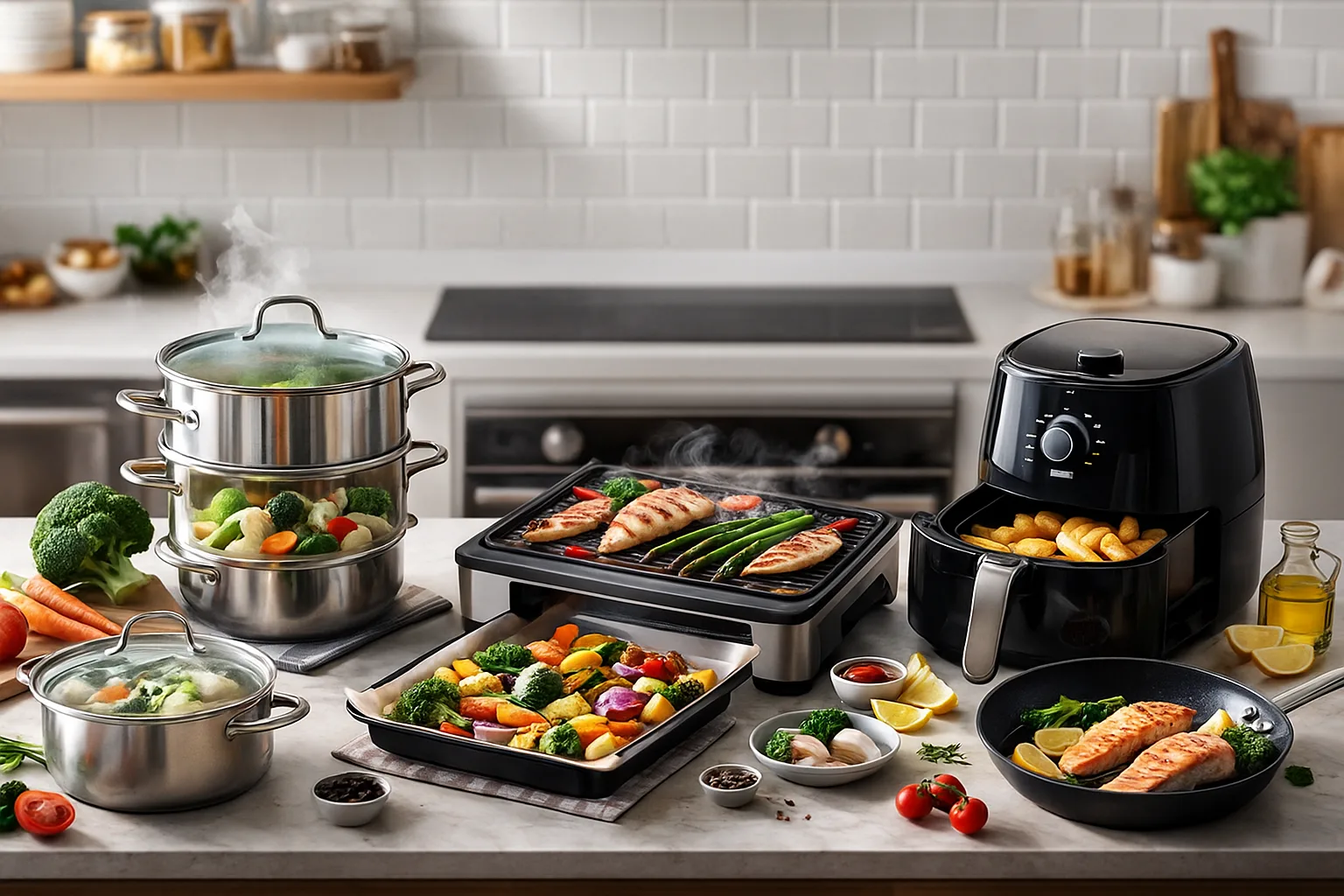
A simple guide to common cooking methods and how they affect nutrition.
Introduction
There are many ways to cook food: boiling, steaming, stir-frying, grilling, baking, air frying, and more. Each method changes the taste, texture, and nutrition of what you eat.
No single method is “perfect” for everything, but some techniques tend to use less oil, keep more vitamins, and create fewer harmful substances. In this article you will learn:
- The most common cooking methods and how they work.
- Advantages and disadvantages of each method.
- Which methods are generally healthier and why.
- Practical tips to make any cooking style better for your health.
Basic Idea: What Makes a Cooking Method “Healthy”?
When we talk about a cooking method being healthier, we usually mean:
- Less added fat: Using small amounts of healthy oil instead of lots of butter or deep frying.
- Fewer harmful compounds: Avoiding heavy charring and extremely high dry heat.
- More nutrients preserved: Keeping vitamins, minerals, and antioxidants in the food.
- Reasonable portions: Not turning a healthy ingredient into a huge, calorie-heavy meal.
The ingredient still matters—grilled vegetables are healthier than grilled processed meat—but the cooking method can move a dish in a better or worse direction.
Main Cooking Methods
Here are the most common ways to cook food, grouped and explained.
1. Boiling
- Common for pasta, eggs, potatoes, soups, and some vegetables.
- Simple, quick, and does not require oil.
Pros: Low in added fat; good for large batches; helps soften hard foods.
Cons: Water-soluble vitamins (like vitamin C and some B vitamins) can leak into the water and be lost if you pour it away.
Health tip: Use the cooking water for soups or sauces when possible to keep some nutrients.
2. Steaming
- Great for vegetables, fish, dumplings, and chicken breast.
- Food does not touch the water directly.
Pros: Very little nutrient loss; no need for oil; gentle on delicate foods.
Cons: Flavor can be mild if you do not season well; texture may be too soft for some people.
Health tip: Add herbs, lemon, garlic, or ginger to the water or on the food for more flavor without extra fat.
3. Poaching & Simmering
- Ideal for eggs, fish, chicken, and fruit.
- Less movement than boiling, so foods stay tender.
Pros: Gentle on protein; keeps meat moist; low or no added fat.
Cons: Can be bland if liquid is not seasoned; slower than high-heat methods.
Health tip: Use broth, tomato sauce, or lightly seasoned water to add taste with few calories.
4. Stewing & Braising
- Good for tougher cuts of meat, beans, and vegetables.
- Low and slow cooking breaks down fibers and creates rich flavor.
Pros: Very tender results; liquid keeps nutrients and flavors.
Cons: Can become high in fat if you add lots of oil, cream, or fatty meat.
Health tip: Trim visible fat, use lean meats or more beans, and skim fat from the top after chilling.
5. Baking & Roasting
- Baking usually refers to breads, cakes, and casseroles; roasting to meats and vegetables.
- Heat surrounds the food, creating browning and caramelization.
Pros: Can be low in added fat; great for large portions; develops deep flavor.
Cons: Baked treats can contain lots of sugar and butter; high oven temps can dry out lean meats.
Health tip: Use moderate amounts of healthy oils, and focus on roasting vegetables, fish, or lean meats more often than sugary baked desserts.
6. Grilling & Broiling
- Grilling: heat from below (barbecue or grill pan).
- Broiling: heat from above (in an oven).
Pros: Adds smoky flavor; fat drips away from meat; quick cooking.
Cons: Very high heat can create potentially harmful compounds when meat is heavily charred; foods can dry out.
Health tip: Avoid burning; marinate meat, pre-cook thicker cuts in the oven, and grill more vegetables and fish.
7. Stir-Frying & Sautéing
- Common in Asian-style dishes and quick vegetable or meat meals.
- High heat but short cooking time.
Pros: Preserves color, crunch, and many nutrients; easy to mix vegetables, protein, and whole grains.
Cons: Can become high in calories if you use a lot of oil or sugary sauces.
Health tip: Use just enough oil to coat the pan, choose healthy oils (like olive or canola), and build sauces mainly from herbs, garlic, ginger, and low-sodium soy.
8. Deep-Frying
- Used for fries, fried chicken, doughnuts, and many snacks.
- Creates a crispy outside and soft inside.
Pros: Tasty texture; fast cooking.
Cons: Very high in calories and fat; repeated use of oil can create unhealthy compounds; often paired with salty batters or sugary coatings.
Health tip: Save deep-fried foods for occasional treats, not everyday eating.
9. Air Frying
- Mimics the texture of fried foods with much less fat.
- Great for potatoes, chicken pieces, vegetables, and reheating leftovers.
Pros: Crisp texture with minimal oil; lower calories than deep-frying.
Cons: Still easy to overeat “snack” foods; some breaded items may contain refined flours and salt.
Health tip: Use just a light spray of oil and focus on whole foods (vegetables, fish, chicken) rather than processed frozen snacks.
10. Microwaving
- Used for reheating, steaming vegetables, and simple dishes.
- Very fast and convenient.
Pros: Short cooking time helps preserve nutrients; no extra oil needed.
Cons: Texture can be uneven or rubbery if overcooked; not ideal for all foods.
Health tip: Add a splash of water and cover vegetables when microwaving to steam them gently.
Which Cooking Methods Are Generally Healthier?
Overall, the healthiest methods are those that use little added fat, avoid burning, and preserve nutrients. In most cases, these methods rank best:
- Steaming – Excellent for vegetables and fish; minimal nutrient loss, no oil required.
- Boiling / Poaching / Simmering – Good for eggs, legumes, grains, and lean meats (especially when you keep the cooking liquid).
- Stir-Frying / Sautéing with small amounts of healthy oil – Great balance of flavor, texture, and nutrition when you use plenty of vegetables.
- Baking / Roasting – Healthy for vegetables and lean proteins when you use moderate oil and avoid heavy crusts or sugary glazes.
- Air Frying – A better alternative to deep-frying for many foods.
Healthier Choices Within Each Method
You don’t need to give up your favorite style of cooking. Instead, use these simple adjustments to make any method healthier:
- Use healthy oils in small amounts: Prefer olive, canola, or other unsaturated fats over butter or shortening, and measure instead of pouring freely.
- Focus on whole foods: Vegetables, beans, whole grains, fish, and lean meats benefit most from gentle cooking methods.
- Limit processed ingredients: Pre-breaded, frozen snacks often contain lots of salt and unhealthy fats, no matter how you cook them.
- Avoid heavy charring: Turn foods often, lower the grill temperature, and trim off burnt parts.
- Flavor with herbs and spices: Garlic, onion, pepper, lemon, and fresh herbs add taste without extra calories or sodium.
Step-by-Step: Choosing a Method for Your Meal
- Start with the main ingredient. Is it a vegetable, fish, lean meat, whole grain, or something processed?
- Decide your goal. Light and fresh, crispy and satisfying, or warm comfort food?
- Pick 1–2 healthier methods (steaming, baking, stir-frying, etc.) that match the ingredient.
- Add flavor smartly: Marinate with herbs and acids (like lemon or vinegar), not just sugar and oil.
- Balance the plate: Aim for half vegetables, one-quarter lean protein, and one-quarter whole grains when possible.
Conclusion
There are many ways to cook food, and each method can be part of a healthy lifestyle when used wisely. Techniques like steaming, boiling, poaching, baking, stir-frying with a little healthy oil, and air frying generally support better nutrition by using less fat and preserving more vitamins.
Deep-frying and heavily charred grilling are best kept as occasional treats, while everyday meals can rely on gentler, lower-fat methods. By understanding how each cooking style affects your food, you can choose the one that fits your taste, your schedule, and your health goals—one meal at a time.