
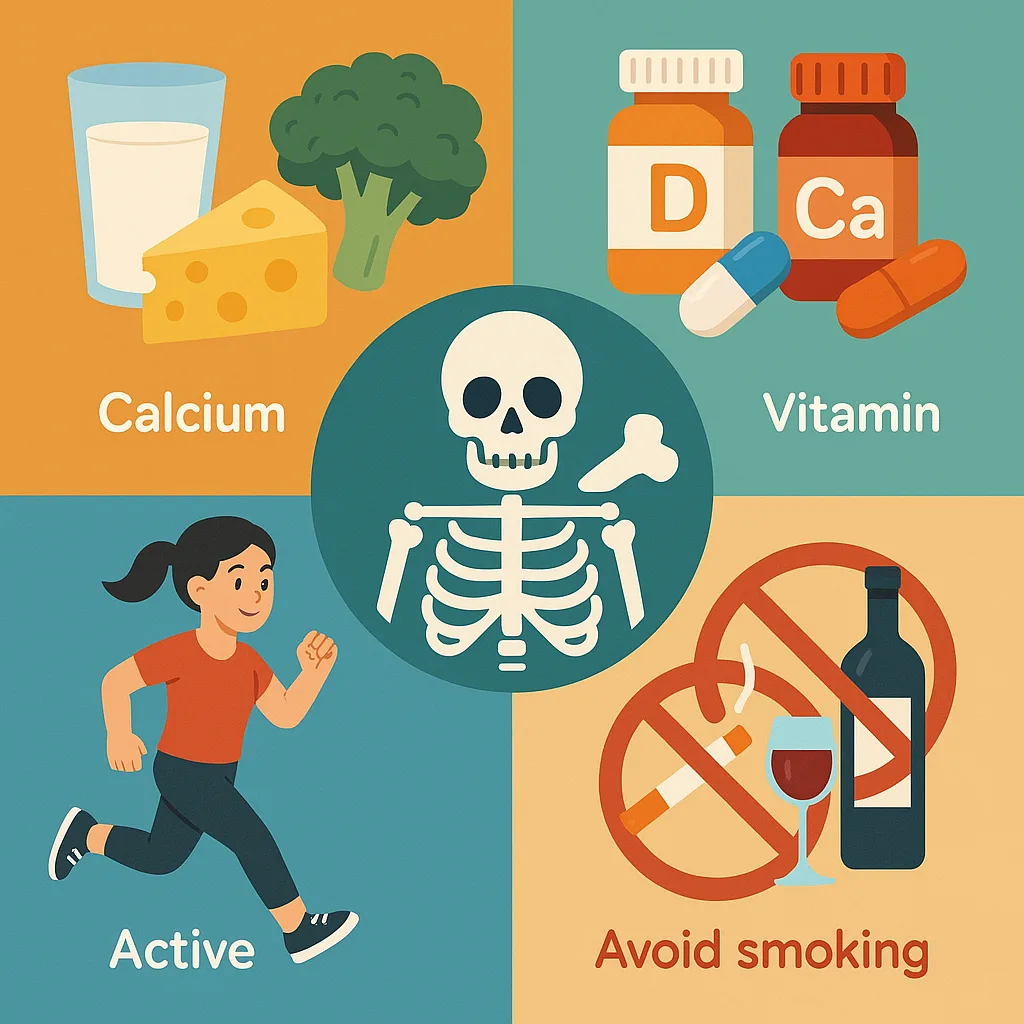
Why Bone Health Matters
Bones are not “dead” tissue. They constantly rebuild themselves. When bone breakdown happens faster than bone rebuilding, bones can become weak and brittle over time.
- Strong bones reduce the risk of fractures and injuries.
- Healthy bones support posture, balance, and movement.
- Bone health becomes more important with age, especially after 40–50.
The best time to build bone is when you are younger, but it is never too late to improve bone strength.
How Bones Get Strong (Simple Explanation)
Bone Remodeling
Your body is always removing old bone and replacing it with new bone. This process is called bone remodeling.
- Osteoclasts break down old bone.
- Osteoblasts build new bone.
What Makes Bone Strong?
Bone strength depends on:
- Bone density (how much mineral is inside)
- Bone quality (structure and strength of the tissue)
- Muscle strength (strong muscles protect bones)
Common Bone Problems (What People Usually Mean)
- Osteopenia: lower bone density than normal (early warning stage).
- Osteoporosis: significantly low bone density, higher fracture risk.
- Stress fractures: small cracks from repeated impact or overuse.
- Joint wear and tear: not the same as bone loss, but often confused with it.
You may not feel symptoms early on. Many people discover weak bones only after a fracture—so prevention matters.
Top Causes of Weak Bones
- Low calcium intake over time
- Low vitamin D (harder to absorb calcium)
- Lack of strength training and weight-bearing activity
- Smoking and high alcohol intake
- Very low calorie dieting for long periods
- Hormone changes (especially with aging)
- Long-term medication use (some steroids, etc.)
- Low muscle mass and poor balance (higher fall risk)
Bone health is not just about calcium—exercise + vitamin D + protein + lifestyle all work together.
Nutrition for Strong Bones
1) Calcium (The Bone Mineral)
Calcium is the main mineral in bones. If your diet is low in calcium, your body may pull calcium from bones.
- Dairy: milk, yogurt, cheese
- Fortified foods: fortified plant milks, fortified cereals
- Other sources: leafy greens (some types), tofu made with calcium, canned sardines/salmon with bones
2) Vitamin D (Helps Absorb Calcium)
Vitamin D helps your body absorb calcium and supports muscle function and balance.
- Sunlight: your skin makes vitamin D from sun exposure
- Foods: fatty fish, egg yolks, fortified milk
- Supplements: may be needed if levels are low (ask a clinician)
3) Protein (Supports Bone + Muscle)
Protein helps maintain muscle, and stronger muscles protect bones and reduce falls.
- Eggs, chicken, turkey, fish, tofu, beans, Greek yogurt, milk
4) Key Support Nutrients
- Magnesium: nuts, seeds, whole grains, leafy greens
- Vitamin K: leafy greens (supports bone metabolism)
- Potassium: bananas, potatoes, beans, yogurt
If you can only improve one thing: hit your protein daily and add calcium-rich foods consistently.
Best Exercises for Healthy Bones
Bones get stronger when they experience safe stress. The best bone-building exercises include:
1) Weight-Bearing Cardio
- Brisk walking
- Hiking
- Stair climbing
- Jogging (if joints tolerate it)
2) Strength Training (Most Important)
Strength training sends a strong signal to bones, especially in hips, spine, and legs.
- Squats, lunges, step-ups
- Deadlifts or hip hinges (light to moderate, good form)
- Push-ups, rows, overhead press
- Machines are fine too (leg press, chest press, rows)
3) Balance and Mobility (Fall Prevention)
- Single-leg stands
- Heel-to-toe walking
- Gentle mobility and stretching
A strong body plus good balance is one of the best “anti-fracture” strategies because it lowers fall risk.
Simple Weekly Routine for Bone Health
| Day | Focus | Example |
|---|---|---|
| Mon | Strength Training | Full body: squats + rows + push-ups + core (30–45 min) |
| Tue | Weight-Bearing Cardio | Brisk walk 30–60 min |
| Wed | Strength Training | Full body: lunges + presses + hinges (30–45 min) |
| Thu | Balance + Mobility | 10–20 min balance work + stretching |
| Fri | Strength Training | Full body (repeat Mon with small progress) |
| Sat | Active Day | Hike, stairs, long walk, sports |
| Sun | Rest | Recovery + good meals + sleep |
Even if you only do 2 strength sessions + regular walking, your bones can benefit.
Lifestyle Habits That Protect Bones
- Sleep 7–9 hours when possible (recovery supports hormones and training progress).
- Limit smoking (smoking is strongly linked to weaker bones).
- Limit heavy alcohol intake (can reduce bone building and increase falls).
- Maintain a healthy weight (very low weight can increase osteoporosis risk; excess weight increases joint stress and fall risk).
- Get regular activity (movement is a daily bone signal).
Who Should Pay Extra Attention to Bone Health?
- Adults over 50
- People with a family history of osteoporosis
- People who have had fractures from minor falls
- Smokers and heavy alcohol users
- People with long-term steroid medication use
- People with low body weight or long-term restrictive dieting
When to Talk to a Doctor
Consider professional advice if you have:
- Frequent fractures or a fracture after a small fall
- Back pain with height loss or “stooped” posture
- Risk factors like long-term steroid use
- Concerns about vitamin D or calcium deficiency
A bone density test (often called a DEXA scan) may be recommended for some adults, especially with risk factors.
Conclusion
Healthy bones come from consistent habits: strength training, weight-bearing movement, enough protein, and proper calcium + vitamin D support. Small improvements done weekly can make a big difference over months and years.
If you start today with a simple plan—two strength workouts per week, regular walking, and better nutrition—your bones (and whole body) will thank you.