
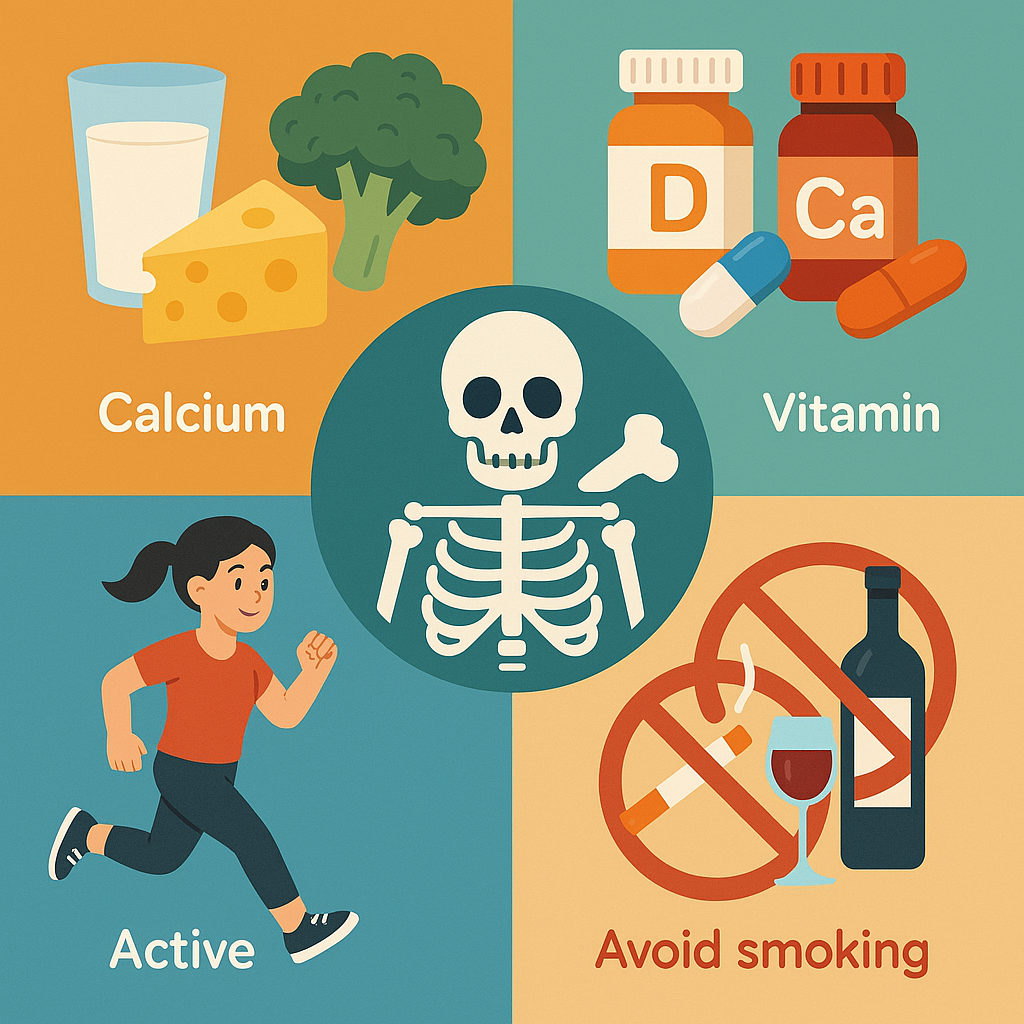
Bone strength isn’t only about calcium—movement, nutrition, sleep, and lifestyle habits all matter.
Introduction
Strong bones support your body, protect organs, store minerals, and help you stay active as you age. Bone health matters for everyone—not only older adults. Building good bone habits now can lower the risk of osteoporosis (weak bones) and fractures later.
This guide explains how bones work, what nutrients they need, which exercises strengthen bones, and what lifestyle habits protect bone density over time.
How Bones Work (Simple Explanation)
Bones are living tissue. They constantly remodel through two main processes:
- Bone building: your body creates new bone tissue.
- Bone breakdown: your body removes old bone tissue.
When you’re younger, bone building usually wins, helping you reach peak bone mass. As you age, breakdown can start to outpace building—especially without healthy habits.
What Weak Bones Can Lead To
Low bone density can increase the risk of fractures. Common fracture sites include the wrist, hip, and spine. Spinal compression fractures can cause back pain, loss of height, and a “stooped” posture over time.
Major Bone Health Risk Factors
Risk factors you can improve
- Low calcium or vitamin D intake
- Low physical activity (especially little weight-bearing exercise)
- Smoking or heavy alcohol use
- Low muscle strength and poor balance (higher fall risk)
- Very low calorie diets / low protein intake
Risk factors you can’t change
- Age
- Family history of osteoporosis
- Menopause and lower estrogen levels
- Some medical conditions and long-term medications (example: steroids)
Nutrition for Healthy Bones
Bone health depends on multiple nutrients. Calcium and vitamin D are the most well-known, but they are not the only ones.
Calcium: The Main Bone Mineral
Calcium supports bone structure. Your body also uses calcium for muscle function and nerve signaling. If dietary calcium is low, your body may pull calcium from bones.
- Food sources: dairy (milk, yogurt, cheese), fortified plant milks, sardines with bones, tofu made with calcium, leafy greens.
- Practical tip: Spread calcium foods across meals.
Vitamin D: Helps Absorb Calcium
Vitamin D helps your body absorb calcium. Many people have low vitamin D, especially with limited sun exposure.
- Sources: sunlight (varies), fatty fish, fortified foods, supplements if prescribed.
- Testing: a clinician can test vitamin D levels if needed.
Other Important Nutrients
- Protein: supports bone structure and muscle (which protects bones).
- Magnesium: supports bone mineral balance.
- Vitamin K: helps regulate calcium in the body.
Exercise That Builds Strong Bones
Bone responds to stress: when you load the skeleton safely, your body strengthens bone over time. The most bone-supportive exercise types are:
1) Weight-Bearing Cardio
- Brisk walking
- Stair climbing
- Hiking
- Dancing
Why it helps: your bones support your weight, sending a “build stronger” signal.
2) Strength Training
- Squats, lunges, step-ups
- Push-ups, rows, overhead press
- Resistance bands or weights
Why it helps: muscle pulls on bone, encouraging bone growth and improving balance.
3) Balance + Mobility
- Single-leg balance drills
- Tai chi, yoga (gentle)
- Ankle and hip mobility work
Why it helps: fewer falls = fewer fractures.
4) What About Cycling/Swimming?
These are excellent for fitness and joint-friendly movement, but they are not very weight-bearing. They’re great as part of a plan, but include some weight-bearing exercise too if possible.
Daily Habits That Protect Bones
- Don’t smoke: smoking weakens bones and slows healing.
- Limit heavy alcohol: can harm bone and raise fall risk.
- Sleep: supports recovery, hormones, and muscle function.
- Get enough protein: helps both bone and muscle.
- Maintain healthy body weight: extremes (too low or too high) can increase risk in different ways.
- Fall-proof your environment: good shoes, clear pathways, good lighting, handrails if needed.
Osteoporosis and Osteopenia (What They Mean)
These terms describe lower bone density:
- Osteopenia: lower bone density than normal, but not as low as osteoporosis.
- Osteoporosis: bones are fragile and fracture risk is higher.
Bone density can be measured with a scan (often called a DXA/DEXA scan). Your clinician may recommend testing based on age, risk factors, or fracture history.
Warning Signs: When to See a Doctor
Seek medical advice if you have:
- Fractures from minor falls or low-impact injuries
- Loss of height or new stooped posture
- Persistent back pain (especially mid-back)
- Long-term steroid use or conditions affecting hormones
- Very low body weight or eating problems
A Simple 6-Week Bone-Strength Plan
- Week 1: Add a daily 10–20 minute walk.
- Week 2: Include a calcium-rich food once per day (yogurt, fortified milk, tofu, sardines).
- Week 3: Add two strength workouts (15–25 minutes each): squats/step-ups + push + row.
- Week 4: Add balance drills 3x/week (30–60 seconds per side).
- Week 5: Increase walking pace or add hills/stairs once per week.
- Week 6: Review progress and keep the plan realistic for long-term consistency.
Quick Summary
- Bones are living tissue and can become stronger with the right “signals.”
- Top bone builders: weight-bearing movement + strength training + adequate calcium and vitamin D.
- Sleep, protein, and not smoking protect bone health.
- Consider medical evaluation for fractures, height loss, long-term steroid use, or high risk factors.