
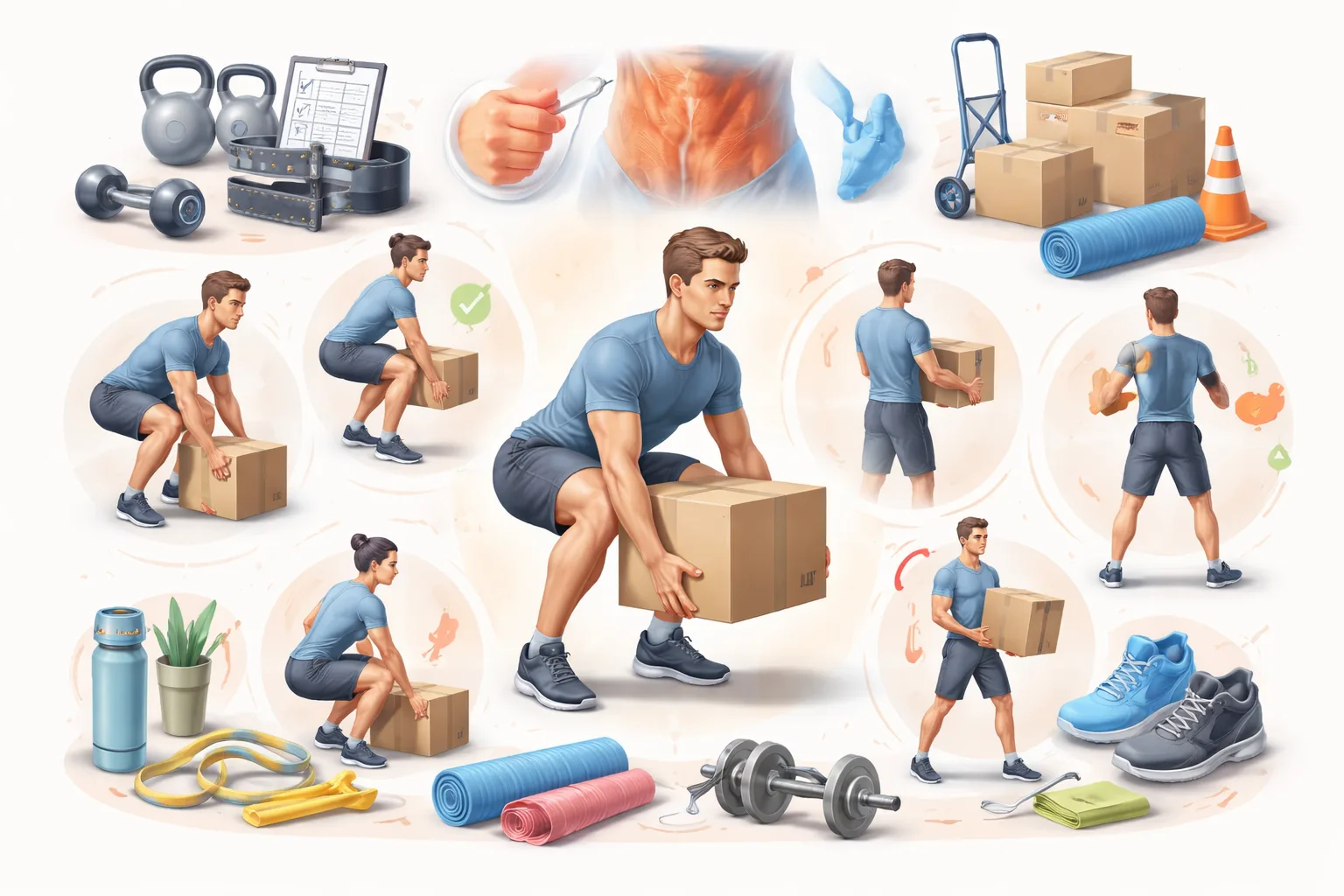
Why Lifting Technique Matters
Good lifting technique is not just about avoiding pain. It also helps you:
- Reduce unnecessary strain on the back, hips, knees, and shoulders
- Move heavy objects more efficiently
- Improve balance and control
- Use your stronger muscles instead of relying on weak positions
- Build long-term work and training durability
Good technique does not mean one perfect posture for every situation. It means using stable, controlled positions that match the load, the object, and the task.
The Main Goal of Good Lifting
The main goal is simple:
- Stay balanced
- Keep the load close to your body
- Use your legs and hips well
- Brace your core
- Avoid sudden twisting under load
- Move with control instead of rushing
Before You Lift: The 5-Second Check
Before lifting anything, quickly ask yourself:
- How heavy is it? Test the weight first if you are unsure.
- Can I grip it safely? Slippery, awkward, or loose items are harder to control.
- Where am I taking it? Know the path before you pick it up.
- Do I need help? Team lifting is smarter than forcing a bad lift.
- Is there a better method? A cart, dolly, or table can save your body.
Many bad lifts happen because people rush before thinking.
The Basic Lifting Setup
1. Get Close to the Object
The farther a load is from your body, the harder it is on your back and arms. Step close so the weight stays near your center of mass.
2. Set Your Feet
Stand with feet about shoulder-width apart or in a comfortable, stable stance. One foot slightly forward can help balance in some situations.
3. Hinge and Bend
Bend through your hips and knees together. Do not just fold and reach with a rounded upper body. Think: hips back, knees bend, chest stays controlled.
4. Grip Firmly
Get a secure grip before lifting. If you cannot grip it well, the lift is already less safe.
How to Brace Your Core
Bracing your core helps your torso stay stable during a lift. A simple way to think about it:
- Tighten your midsection like you are preparing for a light punch
- Do not suck in your stomach too hard
- Breathe in, brace, then move with control
A stable core helps your body transfer force better from the legs and hips.
Bracing is especially important when lifting from the floor, carrying awkward objects, or picking up repeated loads.
The Lift Itself: Step-by-Step
- Stand close to the object.
- Set your feet and find balance.
- Bend at hips and knees to reach it.
- Brace your core and grip firmly.
- Lift smoothly by driving through your feet and straightening your legs and hips together.
- Keep the object close to your body the whole time.
- Stand tall without leaning back too hard.
How to Lower an Object Safely
Lowering is just as important as lifting. Many people lift carefully, then drop into a bad position when putting something down.
- Keep the object close
- Bend through hips and knees again
- Lower with control
- Avoid reaching far forward at the bottom
Think: lift with control, lower with control.
How to Carry a Load
Once the object is lifted:
- Keep it close to your chest or torso when possible
- Walk with short, steady steps
- Keep your eyes forward, not down the whole time
- Avoid sudden twisting or turning
If you need to change direction, move your feet instead of twisting your spine while holding the load.
One of the Biggest Rules: Do Not Twist Under Load
Twisting while lifting or carrying is one of the most common ways people strain their back. If the object needs to go to the side:
- Lift it first
- Turn your whole body with your feet
- Then move to the new position
Turn with your feet, not just your waist.
Good Technique for Different Real-Life Lifts
Lifting a Box from the Floor
- Stand close to the box
- Squat/hinge down
- Grip both sides evenly
- Brace and lift smoothly
- Hold the box against your body if possible
Lifting a Bag or Uneven Object
- Be extra careful with balance
- Test the weight first
- Keep shoulders level
- Do not jerk it up with one arm only if it is heavy
Lifting to a Shelf or Higher Surface
- Lift close to body first
- Step closer to the shelf
- Avoid pressing heavy items forward with outstretched arms
- Use a step or ladder for higher placement if needed
Repeated Lifting at Work
- Use rhythm, not speed
- Reset your stance each rep
- Do not let fatigue turn into sloppy movement
- Take short breaks if possible during long sessions
Good Technique in the Gym vs Daily Life
Gym lifting and work lifting are related, but not identical.
| Situation | Main Goal | Technique Focus |
|---|---|---|
| Daily lifting | Safe, efficient movement | Balance, control, close load, no twisting |
| Gym lifting | Training muscles and strength | Controlled reps, setup, bracing, proper range |
In both cases, the same basics matter: stable feet, strong brace, controlled movement, and good load position.
Common Lifting Mistakes
- Reaching too far away from the body instead of stepping closer
- Jerking the weight instead of lifting smoothly
- Twisting while lifting
- Rushing because of time pressure
- Using only the back without good hip and leg involvement
- Ignoring fatigue when form is getting worse
- Trying to prove strength instead of asking for help
Is a Rounded Back Always Bad?
This is a common question. In real life, the spine is not always perfectly straight, and some rounding can happen naturally. The bigger issue is usually:
- Lifting more than you can control
- Being far from the load
- Twisting suddenly
- Lifting when tired or off-balance
A controlled spine and a close load matter more than trying to look “perfect.”
How to Protect Your Back More Effectively
- Strengthen your legs, hips, core, and upper back
- Keep hamstrings and hips moving well
- Use carts, dollies, and better setup when possible
- Improve your grip strength
- Get enough rest if your job includes lots of lifting
Good technique works best when your body is also strong enough for the task.
Simple Warm-Up Before Heavy or Repeated Lifting
- Walk for 2–5 minutes
- Do a few bodyweight squats
- Do a few hip hinges
- Roll shoulders and loosen upper back
- Practice one or two light lifts before heavier ones
Even a short warm-up can improve movement and reduce stiffness.
Quick Checklist for Good Lifting Technique
- Get close
- Set feet
- Bend hips and knees
- Brace core
- Grip firmly
- Lift smoothly
- Keep load close
- Do not twist
- Lower with control
When to Stop and Reconsider the Lift
You should pause and change the plan if:
- The object is too heavy to move smoothly
- You cannot grip it safely
- The path is blocked or unstable
- You feel sharp pain during the setup
- You are too fatigued to maintain control
Smart lifting is not just about strength. It is about judgment.
Conclusion
Good lifting technique is built on simple habits: stay close to the load, use a stable stance, brace your core, bend through the hips and knees, lift smoothly, and avoid twisting under load.
You do not need to move like a robot. You just need consistent, controlled positions that help your body handle work safely and efficiently. Over time, these habits can make a big difference in strength, comfort, and injury prevention.