
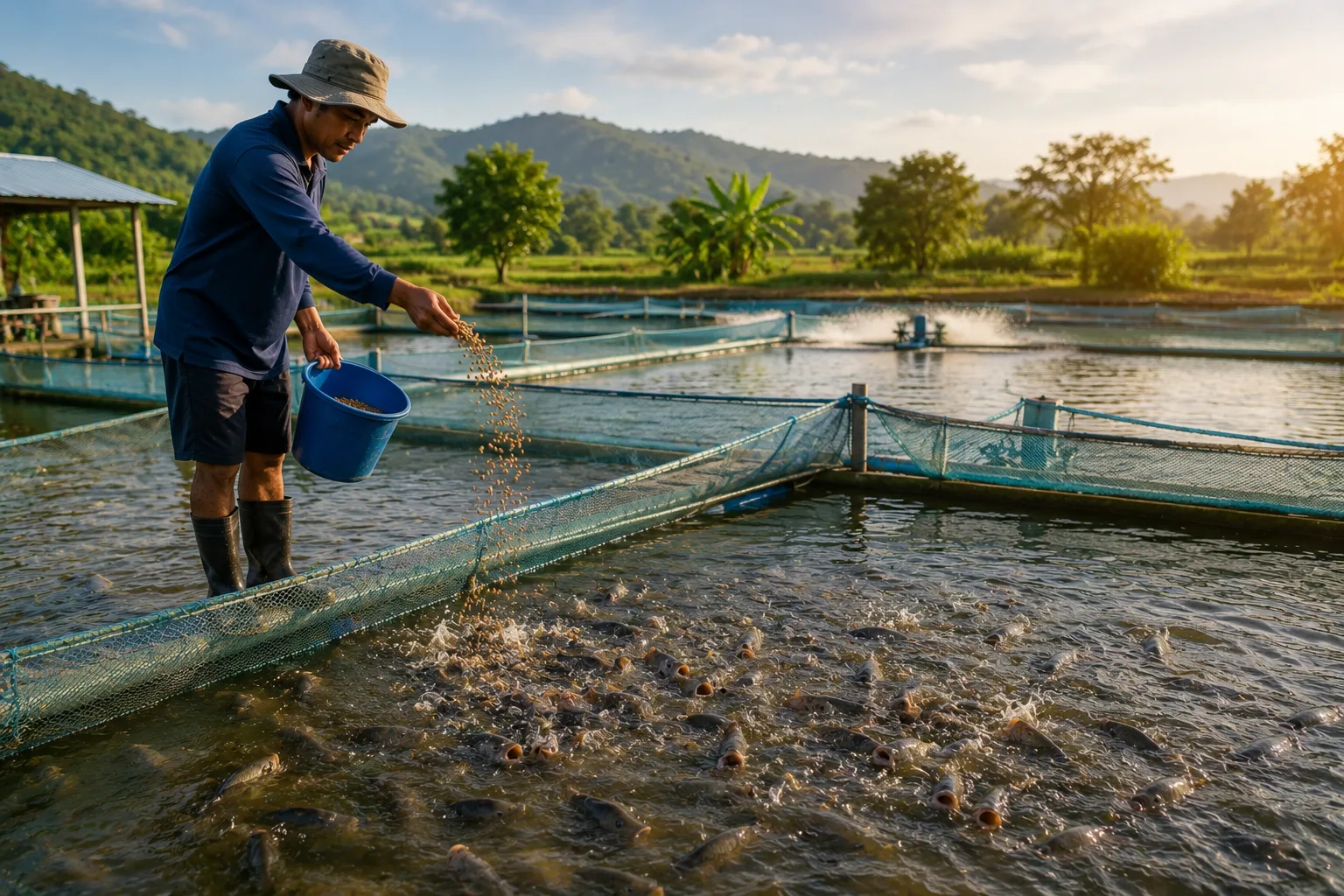
A detailed, informative, helpful, and easy-to-read guide to starting and managing a healthy fish farming operation.
Fish farming, also called aquaculture, is the practice of raising fish in controlled environments such as ponds, tanks, cages, or recirculating systems. It can be done for food, income, business, or family consumption. With good management, fish farming can become a productive and profitable agricultural activity.
Successful fish farming requires planning, clean water, proper fish selection, good feeding, disease prevention, and regular monitoring. Fish live directly in their environment, so water quality is one of the most important parts of the entire system.
1. Choose the Right Fish Farming System
Before starting, choose the farming system that fits your land, budget, water supply, and goals.
- Pond farming: Fish are raised in earthen or lined ponds. This is common for tilapia, catfish, and carp.
- Tank farming: Fish are raised in concrete, plastic, fiberglass, or metal tanks.
- Cage farming: Fish are raised in floating cages placed in lakes, rivers, or reservoirs.
- Recirculating aquaculture system: Water is filtered and reused, often used where space or water is limited.
- Integrated farming: Fish farming is combined with crops, ducks, or other farm activities.
Beginners often start with small ponds or tanks because they are easier to observe and manage.
2. Select the Right Fish Species
The best fish species depends on your climate, water conditions, market demand, available feed, and farming method.
Common farmed fish include:
- Tilapia: Fast-growing, hardy, and popular in many areas.
- Catfish: Strong, adaptable, and good for warm climates.
- Carp: Common in pond systems and suitable for many farming conditions.
- Trout: Needs cool, clean, oxygen-rich water.
- Milkfish: Common in some coastal and brackish-water areas.
Choose fish that are suitable for your local environment. A fish that grows well in one region may not perform well in another.
3. Plan the Farm Location
Location is very important in fish farming. A good location makes daily management easier and helps reduce problems.
A good fish farm location should have:
- Reliable water supply
- Good drainage
- Protection from flooding
- Access to roads or transportation
- Enough space for ponds, tanks, storage, and future growth
- Safe distance from pollution sources
- Access to feed, fingerlings, and markets
4. Prepare the Pond or Tank Properly
Fish need a clean and safe growing space. Whether using a pond or tank, preparation should be done before stocking fish.
For Pond Farming
- Remove weeds, trash, and unwanted fish.
- Repair pond walls and leaks.
- Make sure the pond can hold water properly.
- Install inlet and outlet screens to prevent escape and unwanted animals.
- Fill the pond with clean water.
- Allow the pond environment to stabilize before stocking.
For Tank Farming
- Clean and disinfect the tank before use.
- Check for leaks.
- Provide aeration if needed.
- Set up water flow, filtration, or drainage.
- Make sure tanks are shaded or protected from extreme heat.
5. Use Healthy Fingerlings
Fingerlings are young fish used to start the farm. Good fingerlings are important because weak or sick fish can lead to poor growth, disease, and high losses.
Healthy fingerlings should be:
- Active and alert
- Similar in size
- Free from wounds or deformities
- Not gasping at the surface
- Purchased from a trusted hatchery
Avoid mixing very small and very large fish together, especially in species that may compete strongly or eat smaller fish.
6. Stock Fish at the Right Density
Stocking density means how many fish are placed in a pond or tank. Too many fish can cause poor growth, low oxygen, dirty water, stress, disease, and death.
The right density depends on fish species, pond size, water quality, aeration, feeding plan, and management skill. Beginners should avoid overcrowding and start with a manageable number of fish.
7. Maintain Good Water Quality
Water quality is one of the most important parts of fish farming. Poor water can quickly affect fish health and growth.
Important water factors include:
- Oxygen: Fish need dissolved oxygen to survive.
- Temperature: Each species has a preferred temperature range.
- pH: Water that is too acidic or too alkaline can stress fish.
- Ammonia: Fish waste and uneaten feed can create harmful ammonia.
- Clarity: Very dirty or polluted water can cause health problems.
Watch fish behavior daily. If fish gather near the surface, gasp for air, stop eating, or act weak, water quality may be poor.
8. Feed Fish Properly
Feed is a major cost in fish farming, so it must be managed carefully. Good feed helps fish grow faster and healthier.
Good feeding practices include:
- Use feed suitable for the fish species and age.
- Feed at regular times.
- Do not overfeed.
- Remove or reduce uneaten feed.
- Store feed in a dry, cool place.
- Use fresh feed, not moldy or spoiled feed.
Overfeeding wastes money and pollutes the water. Underfeeding slows growth. The best feeding plan balances growth, cost, and water quality.
9. Monitor Fish Health Daily
Healthy fish are active, eat well, and swim normally. Daily observation helps farmers catch problems early.
Warning signs include:
- Fish not eating
- Fish gasping near the surface
- Unusual swimming behavior
- Red spots, wounds, or sores
- White patches or fungus-like growth
- Swollen belly or unusual body shape
- Sudden deaths
If many fish become sick or die quickly, get help from a fish health specialist, veterinarian, or local aquaculture advisor.
10. Practice Biosecurity
Biosecurity means preventing disease from entering or spreading in the farm.
Good biosecurity practices include:
- Buy fingerlings from trusted sources.
- Quarantine new fish when possible.
- Keep equipment clean.
- Do not share nets or buckets between ponds without cleaning.
- Keep wild animals away from ponds or tanks.
- Do not allow polluted water to enter the farm.
- Remove dead fish immediately.
11. Control Predators and Pests
Fish farms can attract birds, snakes, frogs, insects, rats, and other predators or pests. These can eat fish, damage equipment, or spread disease.
Protection methods include:
- Use nets or covers when needed.
- Keep pond edges clean.
- Install screens on water inlets and outlets.
- Repair holes and gaps around tanks or ponds.
- Check the farm regularly for signs of predators.
12. Keep Good Farm Records
Records help farmers understand growth, cost, profit, and problems.
Useful records include:
- Date of stocking
- Number of fingerlings stocked
- Feed used daily or weekly
- Fish deaths
- Water quality observations
- Medicine or treatment used
- Harvest weight
- Sales and expenses
Without records, it is difficult to know whether the farm is making progress or losing money.
13. Harvest Fish at the Right Time
Fish should be harvested when they reach a good market size or when growth slows and keeping them longer becomes less profitable.
Before harvesting:
- Check market demand and prices.
- Prepare containers, nets, and transport.
- Handle fish gently to avoid damage.
- Keep harvested fish clean and cool.
- Sell quickly if there is no cold storage.
14. Understand the Business Side
Fish farming is not only an agricultural activity. It is also a business. Farmers should understand costs, selling prices, market demand, and profit.
Main costs may include:
- Pond or tank construction
- Fingerlings
- Feed
- Water and electricity
- Labor
- Medicine or treatment
- Transport
A good fish farmer should plan before stocking fish and know where the fish will be sold after harvest.
Common Mistakes to Avoid
- Starting without a clear plan
- Using poor-quality fingerlings
- Overstocking the pond or tank
- Overfeeding fish
- Ignoring water quality
- Not removing dead fish quickly
- Using dirty equipment
- Skipping farm records
- Harvesting without checking market demand
Helpful Daily Fish Farm Routine
- Check fish behavior early in the morning.
- Observe water color, smell, and clarity.
- Feed the fish properly.
- Remove uneaten feed if possible.
- Check for dead or sick fish.
- Inspect pond walls, tanks, pipes, and nets.
- Record feed use, deaths, and unusual signs.
Conclusion
Fish farming can be a productive and profitable activity when done properly. The most important practices include choosing the right fish species, preparing a clean pond or tank, using healthy fingerlings, maintaining good water quality, feeding correctly, preventing disease, and keeping good records.
Good fish farming requires daily attention. Farmers who observe their fish carefully, protect water quality, control feeding, and plan the business side are more likely to succeed and produce healthy fish for the market or family use.