
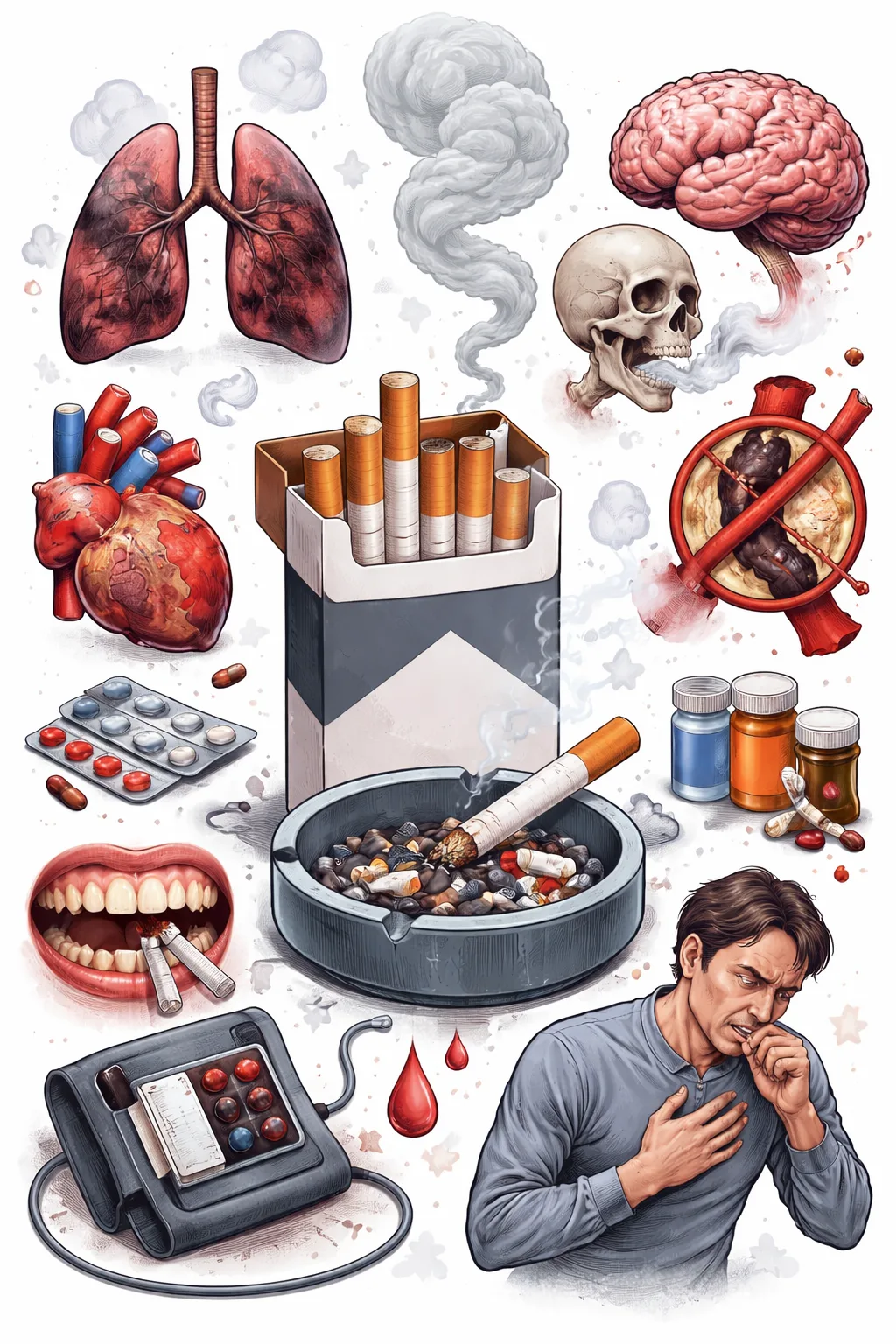
A detailed, informative, helpful, and easy-to-read guide to how heavy smoking affects the body.
Smoking too much can seriously harm your body. The damage can happen slowly over time, but some effects can also show up right away. Smoking affects the lungs, heart, blood vessels, brain, mouth, skin, and many other parts of the body. The more a person smokes, and the longer they continue, the higher the risk usually becomes.
Many people already know that smoking is linked to lung cancer, but the truth is much bigger than that. Heavy smoking can increase the risk of heart disease, stroke, chronic breathing problems, poor circulation, weaker immunity, addiction, and many other health issues. It can also harm people nearby through secondhand smoke.
What Does “Too Much Smoking” Mean?
“Too much” does not always mean exactly the same number for everyone. Some people smoke occasionally, while others smoke many cigarettes every day. In general, the more often a person smokes and the more tobacco smoke they take into their body, the more harmful chemicals they are exposed to.
Even low levels of smoking are harmful, but heavier smoking often increases the risk of more serious disease, faster damage, and stronger nicotine dependence.
What Happens Right Away When You Smoke a Lot?
1. Your Heart Rate and Blood Pressure Can Rise
Nicotine is a stimulant. It can raise heart rate and blood pressure and put extra stress on the heart and blood vessels. This may not always be obvious at first, but it adds strain to the body.
2. Breathing Can Feel Worse
Smoking irritates the airways and lungs. After smoking a lot, some people may notice coughing, throat irritation, chest discomfort, wheezing, shortness of breath, or more mucus.
3. Dizziness, Nausea, or Headaches Can Happen
Too much nicotine and smoke exposure can make a person feel lightheaded, nauseated, shaky, or uncomfortable. Some people also get headaches or feel sick after smoking heavily, especially if they are not used to it.
4. Your Mouth and Throat Get Irritated
Smoking exposes the mouth and throat to hot, chemical-filled smoke. This can lead to dryness, bad breath, irritation, and over time, more noticeable staining of the teeth.
What Happens Over Time If You Keep Smoking Too Much?
1. Lung Damage
One of the biggest risks of heavy smoking is damage to the lungs. Smoking can injure the airways and air sacs, reduce lung function, and increase the risk of chronic lung diseases such as chronic obstructive pulmonary disease (COPD), including emphysema and chronic bronchitis.
Over time, a person may find it harder to breathe, exercise, or even do simple daily activities without getting tired.
2. Higher Risk of Cancer
Smoking is strongly linked to cancer. Lung cancer is one of the best-known examples, but smoking is also associated with cancers in other parts of the body, including the mouth, throat, and more.
The risk generally rises with more smoking over longer periods.
3. Heart Disease and Stroke Risk Goes Up
Smoking damages blood vessels and puts stress on the cardiovascular system. Over time, this can raise the risk of heart disease, heart attack, and stroke. Heavy smoking can make circulation worse and reduce how well oxygen moves through the body.
4. Poor Circulation
Smoking can narrow blood vessels and reduce healthy blood flow. This can affect the hands, feet, legs, and other areas of the body. Some people notice cold hands and feet, slower healing, or pain related to circulation problems.
5. More Coughing and Mucus
Heavy smokers often develop more frequent coughing and mucus production. This happens because the lungs and airways become irritated and damaged. The body tries to clear out the harmful particles, but the normal cleaning system of the airways can become weaker over time.
6. Addiction to Nicotine
Smoking too much also increases the risk of stronger nicotine addiction. Nicotine is highly addictive. A person may begin to crave cigarettes more often, feel uncomfortable without them, and find it hard to stop even when they want to quit.
Withdrawal symptoms may include irritability, restlessness, anxiety, trouble concentrating, low mood, and strong cravings.
7. Harm to the Mouth, Teeth, and Gums
Smoking can stain teeth, worsen bad breath, and increase the risk of gum disease. It can also affect healing in the mouth and raise the risk of more serious oral health problems over time.
8. Weaker Immune Function
Smoking can weaken the immune system, making it harder for the body to fight illness and recover well. This means smokers may be more vulnerable to some infections and may heal more slowly.
9. Effects on Reproductive and General Health
Smoking can also affect reproductive health and general long-term health in many ways. It harms nearly every organ of the body, not just the lungs.
Can Smoking Too Much Harm Other People Too?
Yes. Secondhand smoke can also damage the health of people nearby. There is no safe level of exposure to tobacco smoke. People who regularly breathe secondhand smoke are at higher risk for serious health problems, including heart disease and lung cancer.
Warning Signs That Smoking Is Affecting Your Health
- Frequent coughing
- Shortness of breath
- Chest tightness or wheezing
- Getting tired easily
- Repeated throat irritation
- Yellowing teeth or worsening gum problems
- Needing cigarettes more often just to feel normal
These signs do not always mean severe disease is already present, but they should not be ignored.
Is There Any Safe Amount of Smoking?
Tobacco health authorities say there is no safe level of exposure to tobacco smoke. Smoking even a small amount is harmful, and smoking more usually makes the risks worse.
What Happens If You Stop Smoking?
Quitting smoking can bring real benefits. The body starts recovering after quitting, and the risk of major health problems can begin to go down over time. For example, heart-related risk and lung cancer risk can improve compared with continuing to smoke, although the timeline varies from person to person.
Quitting is often difficult because of nicotine addiction, but many people succeed with support, medication, nicotine replacement products, counseling, or a structured quit plan.
Helpful Tips for Someone Who Wants to Cut Down or Quit
- Set a quit date or a reduction plan
- Remove cigarettes, lighters, and ashtrays from your space
- Identify stress triggers and smoking habits
- Ask a doctor about nicotine replacement or stop-smoking medicines
- Use counseling, quitlines, or support groups
- Avoid smoking around family, children, and indoors
When to Get Medical Help
A person should seek medical attention if they have chest pain, trouble breathing, coughing up blood, severe wheezing, or other serious symptoms. It is also a good idea to talk to a doctor if smoking has become hard to control or if there are signs of chronic breathing or heart problems.
Conclusion
Smoking too much can damage nearly every part of the body. In the short term, it can irritate the lungs, raise heart rate, and cause nausea, dizziness, and coughing. Over time, it can lead to addiction, lung disease, cancer, heart disease, stroke, poor circulation, gum problems, and many other health issues.
The most effective way to reduce the harm is to stop smoking completely. Cutting down may reduce exposure, but quitting offers the biggest health benefit.
Sources
- CDC – Cigarette Smoking
- CDC – Smoking and Tobacco Use
- CDC – Health Effects of Cigarettes: Cardiovascular Disease
- CDC – Health Effects of Cigarettes: Cancer
- WHO – Tobacco Fact Sheet
- WHO – Protecting People from Tobacco Smoke
- NHS – Understanding the True Impact of Smoking
- NHS – Passive Smoking
- NHS – Quit Smoking