
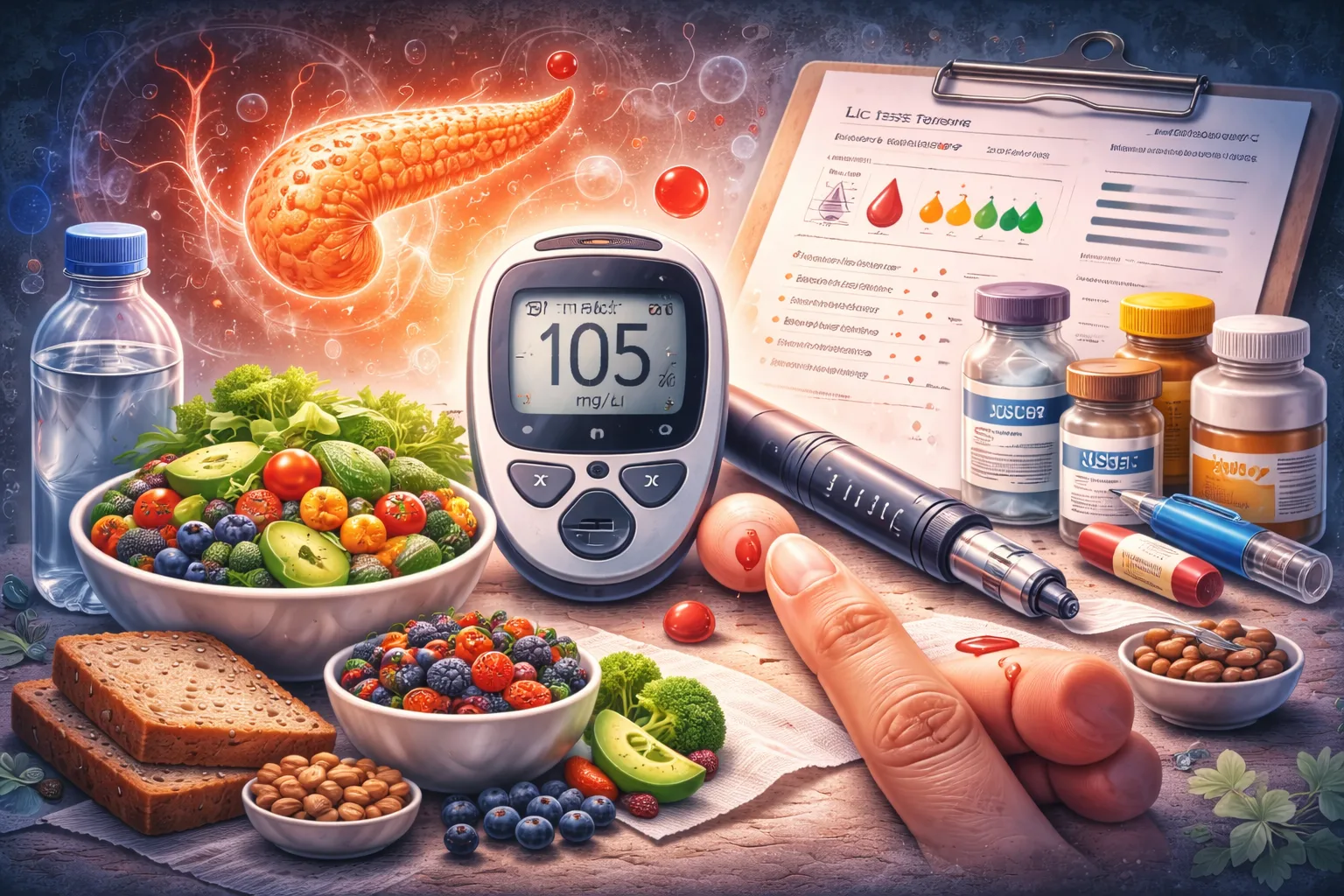
A clear guide to understanding diabetes, protecting your health, and building daily habits that work.
Introduction
Diabetes is a condition where the body has trouble controlling blood sugar (glucose). Glucose is an important fuel for your cells, but when it stays too high for too long, it can damage blood vessels and organs over time.
There are different types of diabetes, and management depends on the type, your health history, and your overall risk factors. With the right plan, many people live long, healthy lives with diabetes.
What Blood Sugar and Insulin Do (Simple Explanation)
After you eat, carbohydrates are broken down into glucose. Glucose enters your bloodstream, and your pancreas releases insulin, a hormone that helps glucose move into your cells for energy.
- In Type 1 diabetes: the body makes little or no insulin.
- In Type 2 diabetes: the body becomes resistant to insulin and may not make enough to keep up.
- In gestational diabetes: pregnancy hormones can cause insulin resistance during pregnancy.
Types of Diabetes
Type 1 Diabetes
An autoimmune condition where the immune system attacks insulin-producing cells. It often begins in childhood or young adulthood but can occur at any age.
Key feature: insulin is required for survival.
Type 2 Diabetes
The most common type. The body becomes resistant to insulin and blood sugar rises over time. Lifestyle factors and genetics both play roles.
Key feature: can often improve significantly with lifestyle + medication when needed.
Prediabetes
Blood sugar is higher than normal but not high enough for diabetes. This is a major opportunity to prevent or delay Type 2 diabetes.
Key feature: lifestyle changes can be very effective.
Gestational Diabetes
Diabetes that develops during pregnancy. It usually resolves after birth, but it increases the future risk of Type 2 diabetes.
Key feature: needs close monitoring to protect parent and baby.
Common Symptoms of Diabetes
Some people have no symptoms for a long time (especially with Type 2). When symptoms occur, they may include:
- Frequent urination
- Increased thirst
- Increased hunger
- Unexplained weight loss (more common in Type 1)
- Fatigue
- Blurry vision
- Slow-healing cuts
- Frequent infections (skin, urinary, yeast)
- Tingling or numbness in hands/feet (more common after years of high sugar)
How Diabetes Is Diagnosed (Common Tests)
Diabetes is diagnosed through blood tests. Your clinician will interpret results based on your overall health and risk.
| Test | What It Measures | Why It’s Useful |
|---|---|---|
| A1C | Average blood sugar over ~2–3 months | Helpful for diagnosis and long-term monitoring |
| Fasting Plasma Glucose | Blood sugar after not eating for several hours | Simple test for screening and diagnosis |
| Oral Glucose Tolerance Test | Blood sugar response after drinking a glucose solution | Used often in pregnancy or when diagnosis is unclear |
| Random Glucose | Blood sugar at any time | Can support diagnosis with symptoms |
Why Managing Diabetes Matters
Over time, high blood sugar can damage blood vessels and nerves. Good diabetes management reduces the risk of complications such as:
- Heart disease and stroke
- Kidney disease
- Eye disease (retinopathy)
- Nerve damage (neuropathy)
- Foot problems due to reduced sensation and circulation
Daily Management: The Big 5
1) Nutrition
Balance carbs with protein, fiber, and healthy fats to reduce spikes.
2) Movement
Activity improves insulin sensitivity and lowers blood sugar after meals.
3) Medication (if prescribed)
Medications help control blood sugar and reduce long-term risk.
4) Monitoring
Checking glucose (and A1C) helps guide adjustments and prevents lows/highs.
5) Sleep & Stress
Poor sleep and high stress can raise blood sugar and increase cravings.
Nutrition Basics for Diabetes (Practical, Not Complicated)
You do not need to remove all carbohydrates. The goal is to choose better carbs and balance meals to prevent sharp spikes.
Better Carb Choices
- Whole grains (oats, brown rice, whole wheat)
- Beans and lentils
- Vegetables (especially non-starchy ones)
- Whole fruit (often better than juice)
Carbs That Often Cause Spikes
- Sugary drinks (soda, sweet tea, many juices)
- White bread, pastries, many processed snacks
- Large portions of refined carbs without protein/fiber
Useful Habit: Walk After Meals
A short walk after meals (even 10 minutes) can help lower post-meal blood sugar.
Exercise and Diabetes
Movement improves insulin sensitivity—meaning your body can use insulin better. Helpful activities include:
- Walking, cycling, swimming
- Strength training (2 days/week if possible)
- Stretching and balance (helpful for long-term mobility)
Medications (General Overview)
Medication choices depend on type of diabetes, blood sugar levels, kidney function, heart risk, and other factors. Some people with Type 2 may manage with lifestyle alone at first, while others need medication early. People with Type 1 require insulin.
Low Blood Sugar (Hypoglycemia): Know the Signs
Low blood sugar can happen in people using insulin or certain diabetes medications. Common signs include:
- Shaking, sweating, fast heartbeat
- Hunger, irritability, anxiety
- Confusion, headache, dizziness
- Weakness or trouble speaking
Preventing Complications: Important Checkups
Routine monitoring helps catch problems early:
- A1C checks as recommended
- Blood pressure monitoring
- Cholesterol/lipids checks
- Kidney function tests
- Eye exams (retinal screening)
- Foot checks (especially if neuropathy risk)
- Dental care (gum health matters)
A Simple 8-Week Starter Plan
- Week 1: Track your meals and symptoms for 3–5 days.
- Week 2: Replace sugary drinks with water or unsweetened drinks.
- Week 3: Add a 10-minute walk after one meal daily.
- Week 4: Use the plate method for one meal per day.
- Week 5: Add two strength sessions (15–25 minutes each).
- Week 6: Improve sleep routine (consistent bedtime; less late-night screen time).
- Week 7: Review your glucose patterns and triggers (with your clinician if possible).
- Week 8: Keep the habits you can maintain long-term and build from there.
Quick Summary
- Diabetes is a condition where blood sugar stays too high and can damage organs over time.
- Type 1 requires insulin; Type 2 often improves with lifestyle and may need medication.
- Diagnosis is done with tests like A1C and fasting glucose.
- Daily management focuses on nutrition, movement, monitoring, medication (if needed), and healthy sleep/stress habits.
- Regular checkups protect your eyes, kidneys, nerves, and heart.