
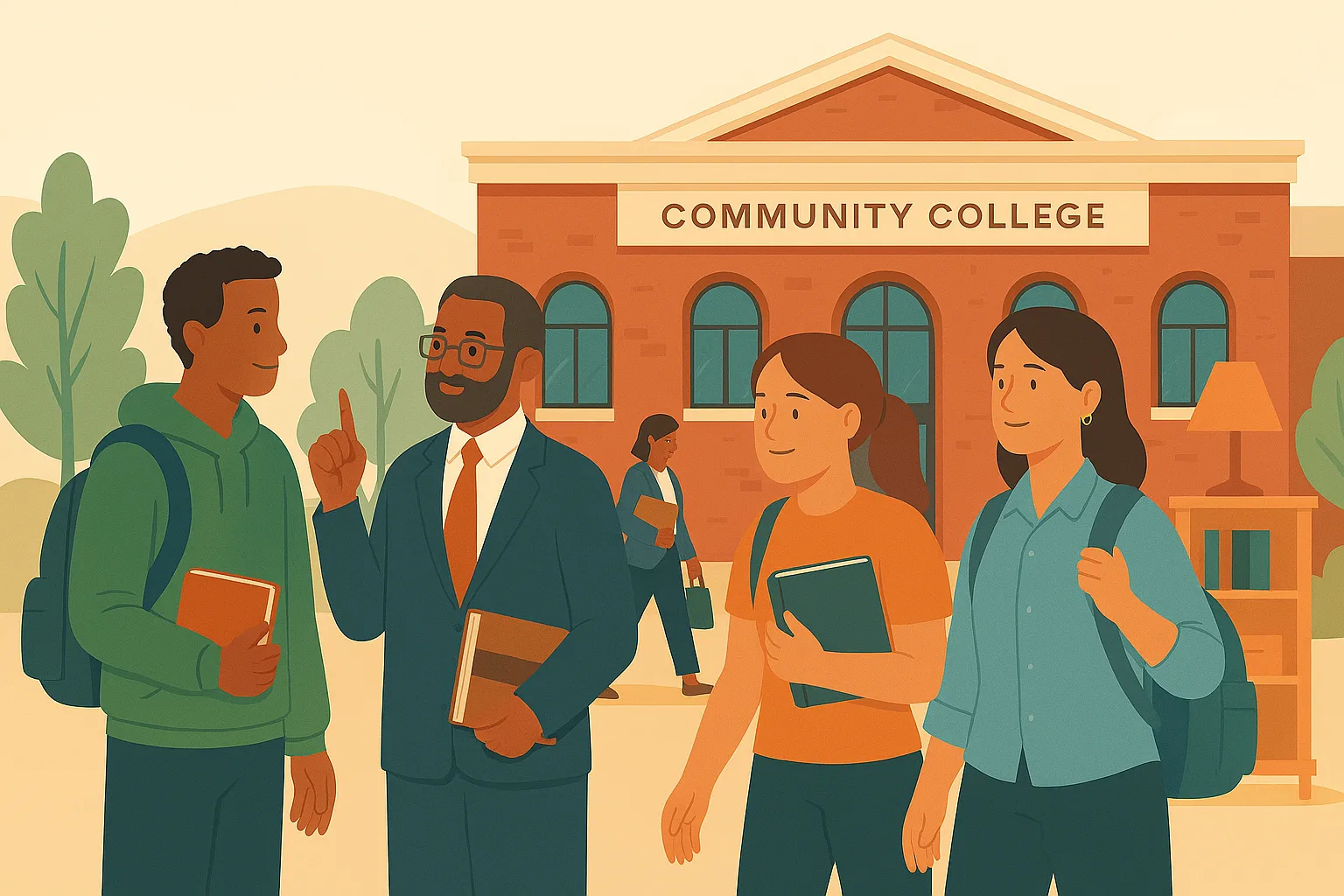
Community colleges offer accessible, affordable, and career-focused education for students of all ages and backgrounds. Whether you're seeking a degree, certificate, or transfer pathway, this guide breaks down what community colleges provide and how to make the most of them.
What Are Community Colleges?
Community colleges are public institutions that offer two-year associate degrees, vocational certificates, and transfer programs to four-year universities. They serve local communities and emphasize affordability, flexibility, and workforce readiness.
Key Benefits
- Lower tuition: Average annual tuition is significantly less than four-year universities.
- Flexible schedules: Evening, weekend, and online classes support working students.
- Open admissions: Most accept all applicants with a high school diploma or GED.
- Smaller class sizes: More personalized instruction and support.
- Local access: Convenient campuses and community-based programs.
Popular Programs
- Associate of Arts (AA): General education for transfer to a four-year university.
- Associate of Science (AS): STEM-focused degrees with transfer potential.
- Associate of Applied Science (AAS): Career-focused degrees for immediate employment.
- Vocational Certificates: Short-term training in fields like HVAC, welding, medical assisting, and IT.
- Dual Enrollment: High school students earn college credit before graduation.
Career Paths and Outcomes
- Healthcare: Nursing, dental hygiene, medical coding, radiologic technology
- Technology: Cybersecurity, software development, network administration
- Trades: Automotive, construction, electrical, HVAC
- Business: Accounting, marketing, entrepreneurship
- Public Service: Criminal justice, fire science, early childhood education
Transfer Pathways
- Articulation agreements: Formal partnerships with universities for credit transfer.
- Dual admission: Enroll in both community college and university simultaneously.
- Guaranteed transfer: Some states guarantee admission to public universities with completed AA/AS degrees.
- HBCU and CSU/UC pathways: California colleges offer direct transfer to Historically Black Colleges and Universities and state universities.
Support Services
- Academic advising and tutoring
- Career counseling and job placement
- Financial aid and scholarships
- Disability and veteran services
- Student clubs and leadership programs
FAQs
Can I get a bachelor’s degree at a community college?
Some states allow select community colleges to offer four-year degrees in high-demand fields like nursing or IT.
Is community college only for recent high school grads?
No. Many students are adults returning to school, career changers, or part-time learners.
Will my credits transfer?
Yes—if you follow a transfer pathway and meet university requirements. Use articulation agreements and advising support.