
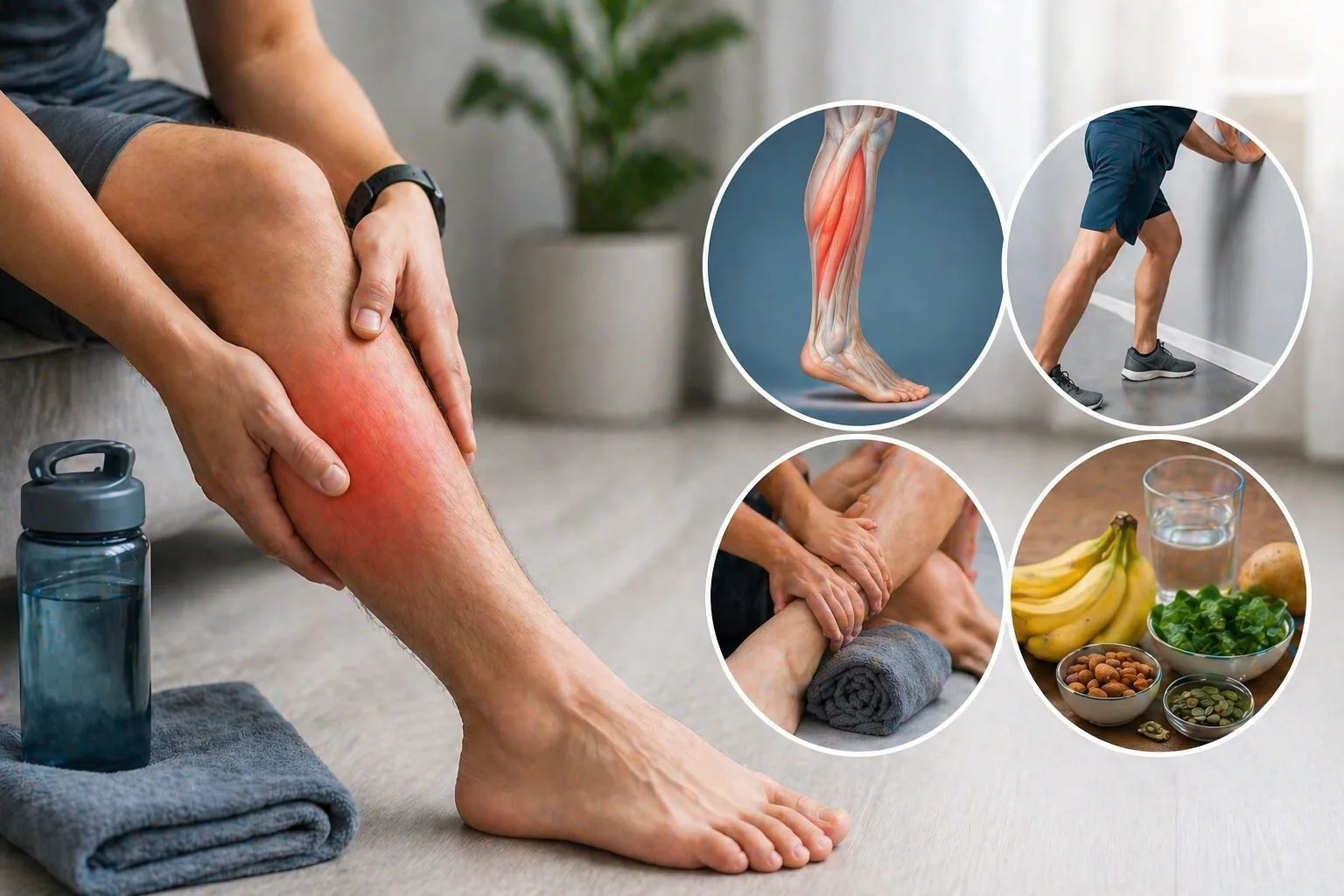
A detailed, informative, helpful, and easy-to-read guide to understanding painful cramps in the calf muscle.
A calf cramp is a sudden, tight, painful contraction of the calf muscle. It can happen during exercise, while walking, while resting, or even while sleeping. Some calf cramps last only a few seconds, while others can last several minutes and leave the muscle sore afterward.
Calf cramps are common and are often harmless, but they can be very painful. They may happen because of dehydration, muscle fatigue, overuse, poor stretching, long periods of sitting or standing, mineral imbalance, certain medicines, or underlying health conditions.
Most calf cramps can be relieved with gentle stretching, massage, hydration, and rest. However, frequent, severe, or unusual cramps should not be ignored.
1. What Does a Calf Cramp Feel Like?
A calf cramp usually feels like the muscle suddenly becomes hard, tight, and painful. Some people describe it as a “charley horse.” The pain can be sharp and intense, and the calf may feel locked for a short time.
Common feelings include:
- Sudden tightness in the calf
- Sharp or squeezing pain
- A hard lump or knot in the muscle
- Temporary difficulty moving the foot or leg
- Soreness after the cramp goes away
2. Common Causes of Calf Cramps
Calf cramps can happen for many reasons. Sometimes there is no clear cause, especially with nighttime leg cramps. However, several common factors can increase the chance of cramps.
Dehydration
Muscles need enough fluid to work properly. Not drinking enough water, sweating heavily, or working in hot weather can make cramps more likely.
Muscle Overuse
Long walking, running, lifting, sports, or physical labor can tire the calf muscles. Overused muscles are more likely to cramp, especially if they are not stretched well.
Not Stretching Enough
Tight calf muscles can cramp more easily. Stretching before and after activity, and sometimes before bed, may help reduce cramps.
Long Sitting or Standing
Staying in one position for a long time can affect circulation and muscle tension. People who sit for many hours or stand all day may experience calf cramps.
Mineral or Electrolyte Imbalance
Sodium, potassium, calcium, and magnesium help muscles contract and relax. Low levels or imbalance may contribute to cramps in some people.
Medication Side Effects
Some medications may increase the chance of leg cramps. These can include some blood pressure medicines, water pills, cholesterol medicines, or other prescriptions. Do not stop a medication without talking to a doctor.
Medical Conditions
In some cases, calf cramps may be linked to nerve problems, circulation issues, kidney disease, diabetes, thyroid problems, pregnancy, or other health conditions.
3. Nighttime Calf Cramps
Many people get calf cramps at night. These are often called nocturnal leg cramps. They can wake a person from sleep and may cause lingering soreness. Night cramps are common and often happen without a clear reason.
Helpful habits may include stretching the calves before bed, staying hydrated during the day, avoiding long periods of pointing the toes downward, and doing gentle movement before sleep.
4. How to Relieve a Calf Cramp Quickly
When a calf cramp happens, the goal is to gently relax and lengthen the muscle.
Try these steps:
- Stop the activity and stay calm.
- Straighten the leg gently.
- Pull the toes upward toward the shin.
- Massage the tight calf muscle slowly.
- Stand carefully and place weight on the leg if you can.
- Apply heat if the muscle feels tight.
- Apply cold if the muscle feels sore afterward.
Avoid forcing the muscle too hard. Gentle stretching is better than aggressive pulling.
5. Simple Calf Stretch
A wall stretch can help loosen the calf muscle.
- Stand facing a wall.
- Place both hands on the wall.
- Step the cramped leg backward.
- Keep the back heel flat on the floor.
- Keep the back knee straight.
- Lean forward slowly until you feel a calf stretch.
- Hold for 20 to 30 seconds.
- Repeat gently several times.
6. How to Prevent Calf Cramps
Prevention depends on the cause, but many people improve with simple habits.
- Drink enough water throughout the day
- Stretch calves regularly
- Warm up before exercise
- Cool down after exercise
- Avoid sudden increases in workout intensity
- Wear supportive shoes
- Take breaks from long sitting or standing
- Eat a balanced diet with minerals
- Limit alcohol if it contributes to dehydration
7. Foods That May Support Muscle Health
Food alone may not stop all cramps, but a balanced diet supports muscle function.
Helpful foods may include:
- Bananas, potatoes, beans, and leafy greens for potassium
- Dairy products or fortified foods for calcium
- Nuts, seeds, whole grains, and legumes for magnesium
- Lean proteins for muscle repair
- Water-rich fruits and vegetables for hydration
8. Calf Cramps During Exercise
Exercise-related cramps may happen when muscles are tired, dehydrated, overheated, or pushed too hard too quickly. They are common in running, cycling, sports, hiking, and physical labor.
To reduce exercise cramps:
- Warm up before intense activity
- Increase exercise gradually
- Drink fluids before, during, and after activity
- Replace electrolytes during long or sweaty activity
- Stretch after workouts
- Rest when the muscle feels overworked
9. When Calf Cramps May Be a Warning Sign
Most calf cramps are not dangerous, but some symptoms may mean something more serious is happening.
Contact a healthcare provider if cramps:
- Happen frequently
- Are very painful
- Last a long time
- Wake you from sleep often
- Do not improve with stretching and hydration
- Come with numbness, weakness, or tingling
- Come with swelling, redness, warmth, or skin color changes
Seek urgent medical help if calf pain is severe, one leg is swollen or warm, you have chest pain, shortness of breath, or the pain started after an injury. These symptoms may need immediate evaluation.
10. What Not to Do
- Do not forcefully pull the leg if it causes sharp pain.
- Do not ignore repeated cramps that keep coming back.
- Do not stop prescription medicine without medical advice.
- Do not exercise hard immediately after heat-related cramps.
- Do not assume all calf pain is only a cramp if swelling, redness, or severe pain is present.
Conclusion
Calf cramps are sudden, painful muscle contractions that can happen during activity, rest, or sleep. They are often related to dehydration, muscle fatigue, tight muscles, long sitting or standing, or exercise. Most cramps improve with gentle stretching, massage, hydration, and rest.
Regular stretching, proper hydration, balanced nutrition, supportive shoes, and smart exercise habits can help reduce the chance of future cramps. However, frequent, severe, or unusual calf cramps should be discussed with a healthcare provider, especially if they come with swelling, numbness, weakness, warmth, redness, or ongoing pain.
Sources
- Mayo Clinic – Muscle cramp symptoms, causes, treatment, and prevention.
- Cleveland Clinic – Leg cramps and muscle cramps guidance.
- NHS – Leg cramps causes, treatment, and prevention.