
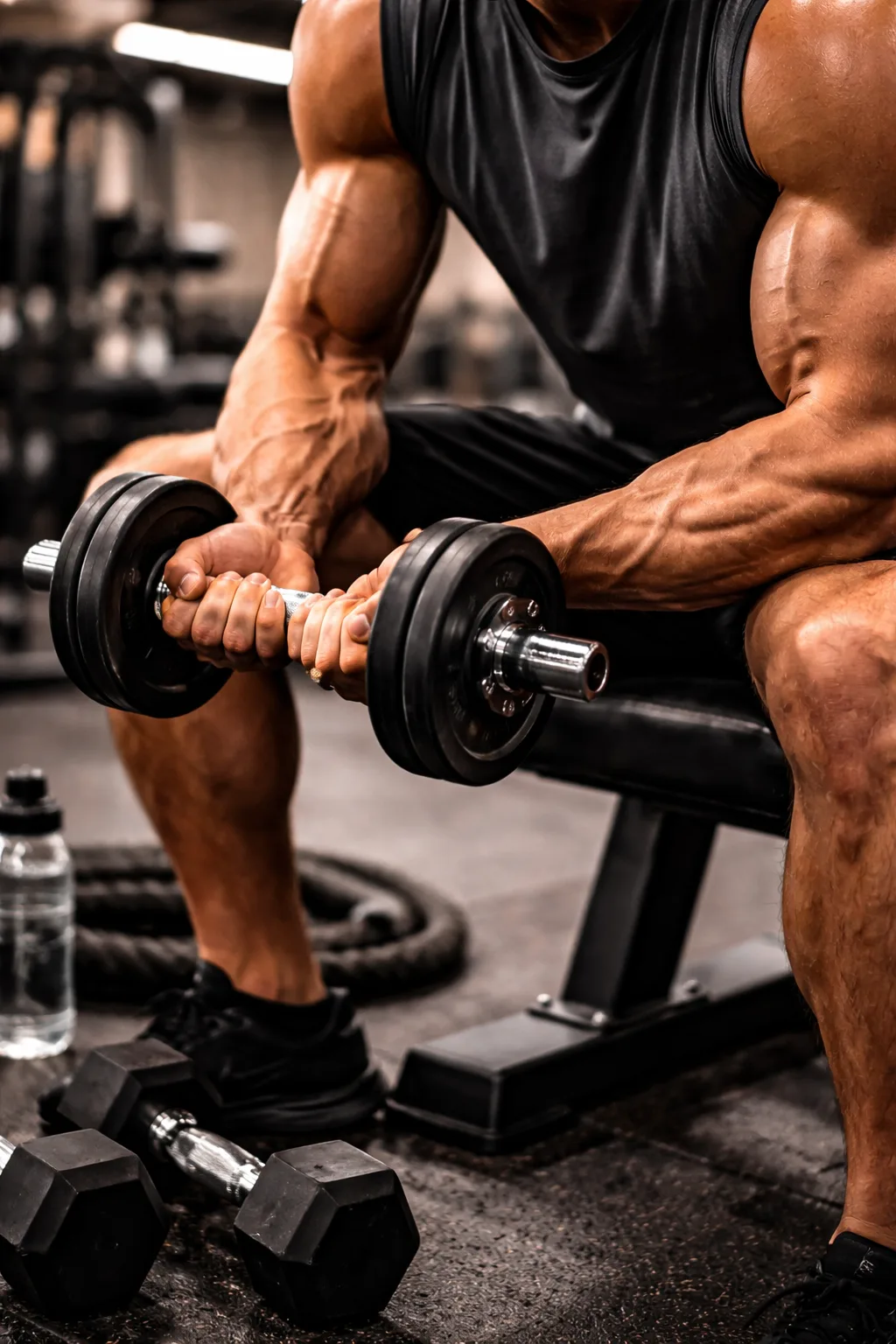
Can You Build Wrist Muscles?
This is one of the most common questions. The short answer:
- You can’t grow the wrist joint itself (it’s mostly bone and tendons).
- You can build the muscles around the wrist — mainly the forearms.
When people say “bigger wrists,” they usually mean:
- Thicker forearms
- Stronger grip
- More stable wrists
Key idea: Train forearms + grip + wrist stability = stronger-looking wrists.
Wrist and Forearm Anatomy (Simple)
Forearm Flexors
Located on the inner forearm. Responsible for gripping and wrist curling (palm facing up).
Forearm Extensors
Outer forearm muscles. Responsible for wrist extension and balance (important for injury prevention).
Brachioradialis
The thick muscle near the elbow. Adds forearm size and helps with hammer curls and grip work.
Tendons & Ligaments
Support the wrist joint. They adapt slower than muscles, so gradual training is important.
Benefits of Stronger Wrists
- Better grip strength for lifting and daily tasks
- Stronger performance in pull-ups, deadlifts, and curls
- Reduced wrist pain and injury risk
- Thicker, more athletic-looking forearms
- Improved control in sports and manual work
This is especially helpful if you lift weights, ride bikes, work with tools, or type a lot.
The 4 Keys to Stronger Wrists
1) Grip Training
Grip strength builds the foundation for wrist and forearm development.
2) Flexion + Extension Balance
Train both inner and outer forearms to avoid imbalances and pain.
3) Time Under Tension
Forearms respond well to longer holds and higher reps.
4) Consistency
Small muscles grow slowly — but they respond well to frequent training.
Best Exercises for Wrist Strength
1. Wrist Curls (Palm Up)
- Targets forearm flexors
- Use dumbbells, barbell, or even water bottles
- Great for thickness
2. Reverse Wrist Curls (Palm Down)
- Targets forearm extensors
- Important for joint balance
- Helps prevent elbow and wrist pain
3. Hammer Curls
- Builds brachioradialis
- Adds forearm width
- Also strengthens grip
4. Farmer Carries
- One of the best overall wrist builders
- Carry heavy dumbbells and walk
- Builds grip + endurance
5. Dead Hangs
- Hang from a pull-up bar
- Simple but extremely effective
- Great for beginners
6. Wrist Rotations (Mobility + Strength)
- Light dumbbell rotations
- Improves stability and control
- Good for injury prevention
Form Tips for Wrist Training
- Use slow, controlled reps — avoid jerking movements.
- Keep forearms supported during curls (bench or thighs).
- Don’t use too much weight too soon.
- Train both directions (flexion + extension).
- Focus on muscle tension, not momentum.
Forearm muscles respond better to control than heavy ego lifting.
How Often Should You Train Wrists?
- Beginners: 2–3 times per week
- Intermediate: 3–4 times per week
- Advanced grip training: small daily sessions
Forearms recover faster than large muscles, but tendons still need rest.
Wrist Workouts You Can Copy
Gym Wrist Workout
- Wrist Curls — 3 sets × 12–20 reps
- Reverse Wrist Curls — 3 sets × 12–20 reps
- Hammer Curls — 3 sets × 8–12 reps
- Farmer Carries — 2 rounds × 30–60 sec
- Dead Hangs — 2 rounds to fatigue
Home Wrist Workout
- Dumbbell Wrist Curls — 3 sets
- Reverse Wrist Curls — 3 sets
- Hammer Curls — 3 sets
- Heavy Bag Carries — 2 rounds
- Towel Hangs or Grip Holds — 2 rounds
You can use backpacks, water bottles, or tools as weights.
Weekly Plan Example
| Day | Focus |
|---|---|
| Mon | Grip + wrist curls |
| Wed | Hammer curls + carries |
| Fri | Full wrist session + hangs |
Each session only needs 10–15 minutes.
Nutrition for Forearm Growth
- Eat enough protein (0.7–1.0g per lb bodyweight)
- Stay hydrated for tendon health
- Don’t cut calories too aggressively if building muscle
- Collagen-rich foods may support joints (optional)
Common Wrist Training Mistakes
- Only training flexors (causes imbalance)
- Using weights that are too heavy
- Ignoring pain signals
- Skipping grip training
- Training inconsistently
How Long Until You See Results?
- 2–4 weeks: stronger grip
- 4–8 weeks: visible forearm thickness
- 3–6 months: noticeable wrist stability and size
Forearms grow slower than chest or legs, but they respond well to consistency.
Quick Beginner Plan
- Train wrists 3x per week
- Do wrist curls + reverse curls each session
- Add farmer carries or hangs
- Use moderate weight and slow reps
- Stay consistent for 8–12 weeks
Small muscles, big patience. Stay consistent and results will come.