
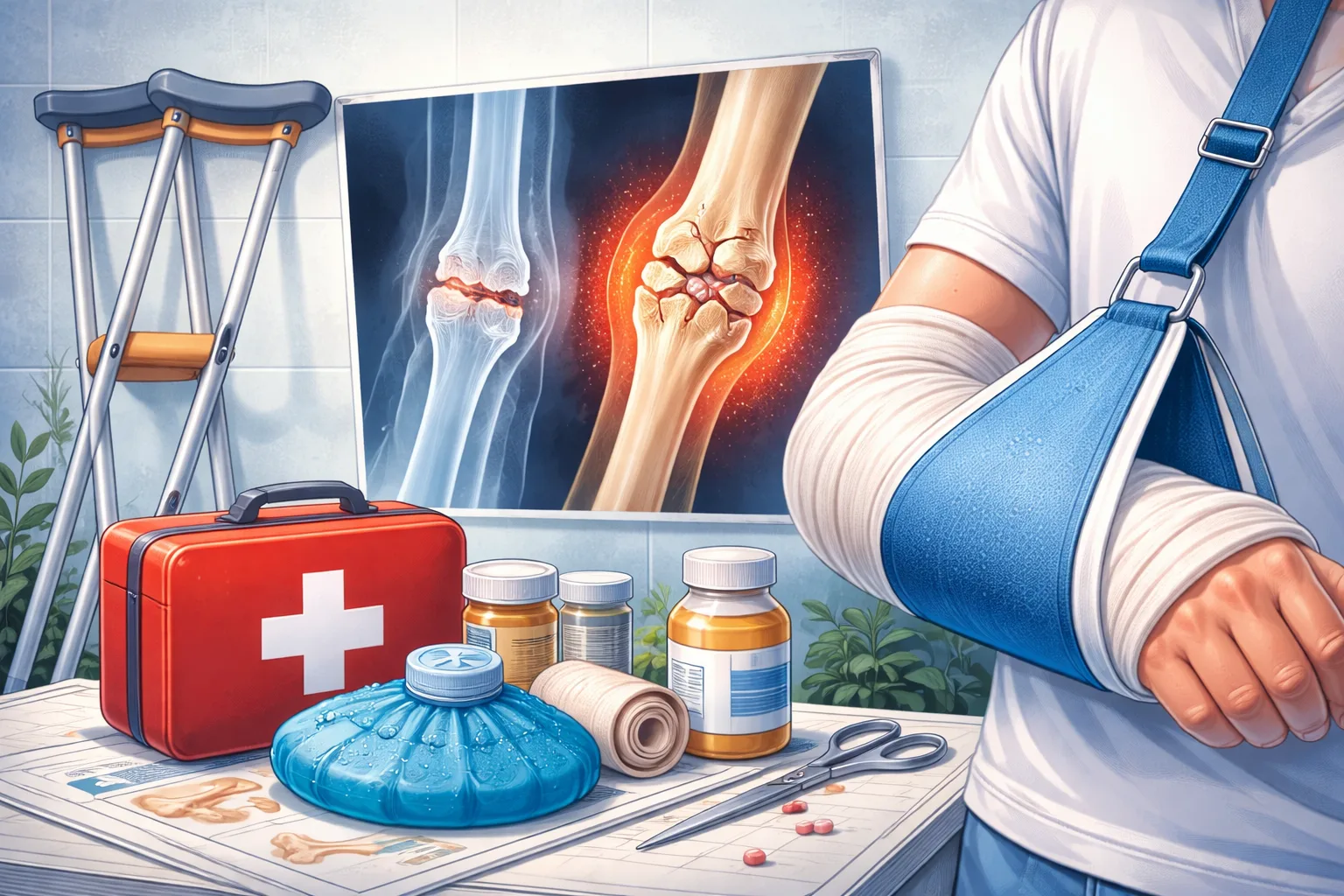
A simple, detailed guide to recognizing a fracture, getting the right care, and healing safely.
Introduction
A broken bone is called a fracture. Fractures can happen from falls, sports injuries, car accidents, or even from weak bones (such as osteoporosis). Some fractures are small cracks that heal with a simple cast, while others are serious injuries that need surgery.
This article explains the types of fractures, common symptoms, first aid, how doctors diagnose and treat broken bones, what healing looks like, and how to reduce the risk of future fractures.
What Is a Fracture?
A fracture is any break in a bone. It can range from a tiny hairline crack to a complete break where the bone separates into pieces. Fractures often injure nearby tissues too, such as muscles, tendons, ligaments, nerves, and blood vessels.
Common Causes of Broken Bones
- Falls: One of the most common causes (especially wrist, hip, and ankle fractures).
- Sports injuries: Contact sports, cycling, running, skating, and extreme sports.
- Car or motorcycle accidents: High-force injuries can cause complex fractures.
- Workplace injuries: Heavy objects, machinery accidents, or falls from height.
- Osteoporosis and bone weakness: Bones break more easily with minor trauma.
- Overuse (stress fractures): Repetitive impact (running, military training, dancing).
Types of Fractures
Doctors describe fractures in several ways. Understanding these terms can help you read medical notes or talk with your care team.
Closed (Simple) vs. Open (Compound)
- Closed fracture: The skin is not broken.
- Open fracture: The bone breaks through the skin (higher infection risk).
Displaced vs. Non-Displaced
- Non-displaced: Bone pieces stay aligned.
- Displaced: Bone pieces shift out of position.
Complete vs. Incomplete
- Complete: Bone breaks all the way through.
- Incomplete: Bone cracks but doesn’t fully separate (more common in children).
Stress Fracture
- Small crack from repeated stress/overuse.
- Often occurs in feet, lower legs, and hips.
Comminuted Fracture
- Bone breaks into multiple pieces.
- Often needs more complex treatment.
Greenstick Fracture (Kids)
- Bone bends and cracks, but doesn’t break completely.
- Common in children because bones are more flexible.
Signs and Symptoms of a Broken Bone
Not every fracture looks dramatic. Some are easy to miss. Common symptoms include:
- Pain: Usually sharp and worse with movement or pressure.
- Swelling and bruising: Often appears quickly.
- Deformity: A limb looks bent, twisted, or shorter than normal.
- Difficulty moving or bearing weight: Especially in legs, ankles, feet.
- Tenderness: Pain when touching a specific spot on the bone.
- Grating or popping feeling: Not always present, but can happen.
- Numbness, tingling, coldness: Can signal nerve or blood vessel injury (urgent).
- Broken skin/bleeding: May indicate an open fracture (urgent).
First Aid: What to Do Right Away
If you think someone has a fracture, focus on safety and preventing further injury:
- Stay calm and limit movement. Do not try to “push the bone back.”
- Immobilize the area. Use a splint (board, rolled newspaper) and support joints above and below the injury.
- Apply a cold pack. 15–20 minutes at a time to reduce swelling (wrap ice in cloth).
- Elevate if possible. Helps swelling, but only if it doesn’t increase pain or risk.
- Control bleeding. If there is an open wound, apply gentle pressure around the wound with clean cloth.
- Seek medical care. Go to urgent care/ER or call emergency services if severe.
How Doctors Diagnose a Fracture
A clinician will ask about the injury, examine the area, and check movement, circulation, and nerve function. Common tests include:
- X-ray: The most common imaging test for fractures.
- CT scan: Gives detailed images for complex fractures or joints.
- MRI: Helpful for stress fractures or soft tissue injuries (ligaments, cartilage).
- Ultrasound: Sometimes used in certain cases (varies by clinic).
Treatment Options
Treatment depends on the bone involved, whether it is displaced, and whether the joint is affected. The main goals are: align the bone, keep it stable, and allow healing.
1) Immobilization (Splint/Cast/Boot)
- Used for many simple, stable fractures.
- Splints allow swelling early; casts provide stronger support later.
- Walking boots are common for some ankle/foot fractures.
2) Reduction (Re-aligning the Bone)
- Closed reduction: The bone is moved back into position without surgery (often with pain control).
- Open reduction: Surgery is used to align the bone when it can’t be corrected externally.
3) Surgery (Fixation)
- May involve plates, screws, rods, pins, or external frames.
- More common for unstable, displaced, open, or joint fractures.
- Often followed by rehab and gradual return to activity.
4) Rehabilitation (Physical Therapy)
- Helps restore range of motion, strength, and balance.
- Important after casts or surgery to prevent stiffness and weakness.
How Long Does a Broken Bone Take to Heal?
Healing time depends on the bone, the type of fracture, your age, and overall health. Many uncomplicated fractures heal in 6–12 weeks, but some take longer.
- Children: Often heal faster than adults.
- Smokers: Healing can be slower because smoking reduces blood flow and bone repair.
- Nutrition: Adequate protein, calcium, and vitamin D support healing.
- Severity and location: Complex fractures or those involving joints may take months.
What to Expect During Recovery
Recovery often happens in stages:
- Early phase: Rest, swelling control, immobilization, pain management.
- Mid phase: Follow-up imaging, adjustment of cast/boot, gradual movement if allowed.
- Rehab phase: Physical therapy, strength building, return to normal motion.
- Return to activity: Gradual increase; sports or heavy work may require clearance.
Possible Complications
Most fractures heal well, but complications can occur. Examples include:
- Infection: Especially with open fractures or after surgery.
- Delayed union or nonunion: Bone heals slowly or doesn’t heal fully.
- Malunion: Bone heals in the wrong position.
- Joint stiffness: Common after casts or long immobilization.
- Nerve or blood vessel injury: May cause numbness, weakness, or circulation problems.
- Compartment syndrome: Rare but serious swelling/pressure problem—an emergency.
How to Help Bones Heal Strong
- Follow weight-bearing rules: If told “no weight,” don’t push it—early stress can disrupt healing.
- Eat for healing: Aim for enough protein, calcium-rich foods, and vitamin D (food + safe sunlight as advised).
- Don’t smoke: Smoking can delay healing and increase complication risk.
- Keep follow-up appointments: X-rays and checks help catch problems early.
- Do rehab exercises: When approved, physical therapy helps regain function.
Prevention Tips
While not every accident is avoidable, you can reduce risk:
- Strength and balance training: Helps prevent falls.
- Protective gear: Helmets, wrist guards, knee pads for cycling, skating, and sports.
- Safe home setup: Remove tripping hazards, use non-slip mats, add good lighting.
- Bone health: Adequate calcium/vitamin D, weight-bearing exercise, and medical evaluation if osteoporosis risk is high.
- Gradual training: Increase exercise intensity slowly to prevent stress fractures.
Quick Summary
- Broken bones range from small cracks to serious, displaced breaks.
- Common signs: pain, swelling, bruising, deformity, and trouble using the limb.
- Immobilize, ice, elevate (if safe), and get medical care.
- Treatment may include casts, reduction, surgery, and rehab.
- Healing often takes weeks, but full recovery can take longer with rehab.