
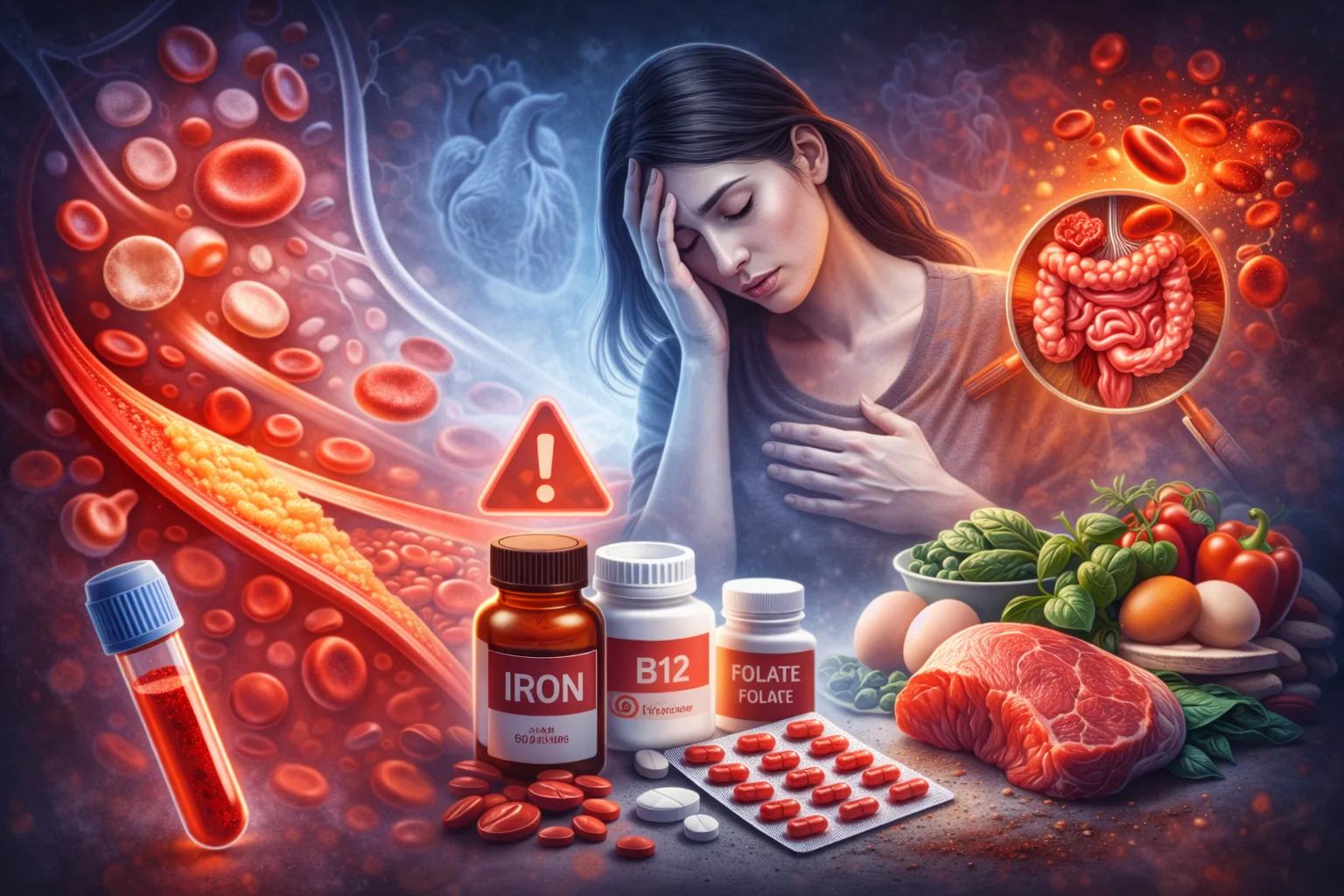
A clear, practical guide to understanding low blood counts and how anemia is diagnosed and treated.
Introduction
Anemia means your blood does not have enough healthy red blood cells (or enough hemoglobin) to carry oxygen effectively to your body. This can lead to tiredness, weakness, dizziness, shortness of breath, and other symptoms—especially during activity.
Anemia is not a single disease. It is a sign that something is affecting red blood cells—such as iron deficiency, vitamin deficiency, blood loss, chronic illness, or a problem in the bone marrow.
What Do Red Blood Cells and Hemoglobin Do?
Red blood cells contain hemoglobin, a protein that carries oxygen from your lungs to your tissues and brings carbon dioxide back to your lungs. If you have too few red blood cells or too little hemoglobin, your organs and muscles may not get the oxygen they need—leading to fatigue and other symptoms.
Common Symptoms of Anemia
Symptoms can be mild at first and worsen over time. Common signs include:
- Fatigue and low energy
- Weakness
- Dizziness or lightheadedness
- Shortness of breath, especially with exertion
- Headaches
- Rapid heartbeat or palpitations
- Pale skin or pale inner eyelids
- Cold hands/feet
- Brain fog or trouble concentrating
Major Types of Anemia (Simple Overview)
Doctors often classify anemia by the size of red blood cells (from a lab value called MCV), and by the underlying cause. Here are common categories:
Iron Deficiency Anemia
The most common type worldwide. Happens when the body doesn’t have enough iron to make hemoglobin.
Common causes: low iron intake, heavy menstrual bleeding, stomach/intestinal bleeding, pregnancy, poor absorption.
Vitamin B12 or Folate Deficiency
These vitamins are needed to make normal red blood cells. Deficiency can cause larger red blood cells and nerve symptoms.
Common causes: low intake, absorption problems, certain medications, autoimmune conditions.
Anemia of Chronic Disease/Inflammation
Chronic inflammation can change how the body uses iron and makes red blood cells.
Common causes: kidney disease, autoimmune disease, chronic infections, some cancers.
Blood Loss Anemia
Can be sudden (injury) or slow and hidden (digestive tract bleeding). Slow blood loss often leads to iron deficiency.
Common causes: ulcers, hemorrhoids, colon polyps/cancer, heavy periods, frequent blood donation.
Hemolytic Anemia
The body destroys red blood cells faster than it can replace them.
Common causes: inherited conditions, autoimmune causes, certain infections or medications.
Bone Marrow Problems
The bone marrow may not produce enough blood cells.
Common causes: marrow disorders, severe nutrient deficiency, some medications, other illnesses.
Iron Deficiency Anemia: Common Clues
Iron deficiency is very common and often treatable. Some additional signs can include:
- Craving non-food items (pica), like ice, clay, or dirt (especially craving ice is a classic clue)
- Hair thinning or brittle nails
- Restless legs symptoms in some people
- Reduced exercise tolerance
How Anemia Is Diagnosed (Common Tests)
Anemia is usually found on a Complete Blood Count (CBC). If anemia is present, clinicians often order additional tests to find the cause.
| Test | What It Tells You |
|---|---|
| Hemoglobin & Hematocrit | How much oxygen-carrying capacity you have and whether anemia is present |
| MCV | Average red blood cell size (helps narrow causes) |
| Iron studies (Ferritin, Iron, TIBC, Transferrin saturation) | Whether you have iron deficiency and how your body is handling iron |
| Vitamin B12 and Folate | Checks vitamin-related anemia |
| Reticulocyte count | Shows whether your bone marrow is producing new red blood cells |
| Kidney/thyroid tests | Some organ problems can contribute to anemia |
| Stool tests / endoscopy / colonoscopy | May be used if bleeding is suspected (depends on age, symptoms, and risk factors) |
Treatment: What Helps Depends on the Cause
The best treatment fixes the root cause. Below are common approaches.
Iron Deficiency
- Iron-rich diet + iron supplements (as advised)
- Treat the cause: bleeding, absorption issues, heavy periods, etc.
- Sometimes IV iron is used if oral iron isn’t tolerated or absorbed
B12/Folate Deficiency
- Replace the missing vitamin (oral or injections depending on cause)
- Address diet and absorption problems
Chronic Disease / Kidney-Related
- Treat the underlying condition
- Sometimes specific medications are used (guided by a clinician)
Blood Loss
- Stop and treat the source of bleeding
- Replenish iron and red blood cells as needed
- Transfusion may be needed in severe cases
Diet Tips: Foods That Support Healthy Blood
Food can help, especially for iron deficiency and certain vitamin deficiencies. But diet alone may not be enough when anemia is moderate/severe or due to bleeding.
Iron-Rich Foods
- Red meat (in moderation), poultry, fish
- Beans, lentils, chickpeas
- Spinach and leafy greens
- Iron-fortified cereals
- Pumpkin seeds
Help Your Body Absorb Iron
- Pair iron foods with vitamin C (citrus, bell peppers, strawberries)
- Avoid tea/coffee right with iron-rich meals (they can reduce absorption)
- Calcium supplements/dairy can interfere for some people when taken at the same time
Vitamin B12 Sources
- Meat, fish, eggs, dairy
- Fortified plant milks and cereals
Folate Sources
- Leafy greens, beans, lentils
- Avocado, asparagus
- Fortified grains
When to Get Checked for Anemia
You should consider medical evaluation if you have:
- Persistent fatigue or weakness
- Shortness of breath with normal activity
- Frequent dizziness or headaches
- Heavy menstrual bleeding or bleeding from any source
- Recent major surgery or injury
- Dietary risk (very low iron intake, strict vegan diet without B12 planning)
- Chronic conditions (kidney disease, inflammatory disorders)
Quick Summary
- Anemia means low red blood cells or low hemoglobin, reducing oxygen delivery in the body.
- Common symptoms include fatigue, weakness, dizziness, and shortness of breath.
- Iron deficiency is common, but anemia has many possible causes—testing helps find the reason.
- Treatment depends on the cause: iron, vitamins, addressing bleeding, or treating chronic conditions.
- Seek urgent care for severe symptoms or signs of major bleeding.