
Careers
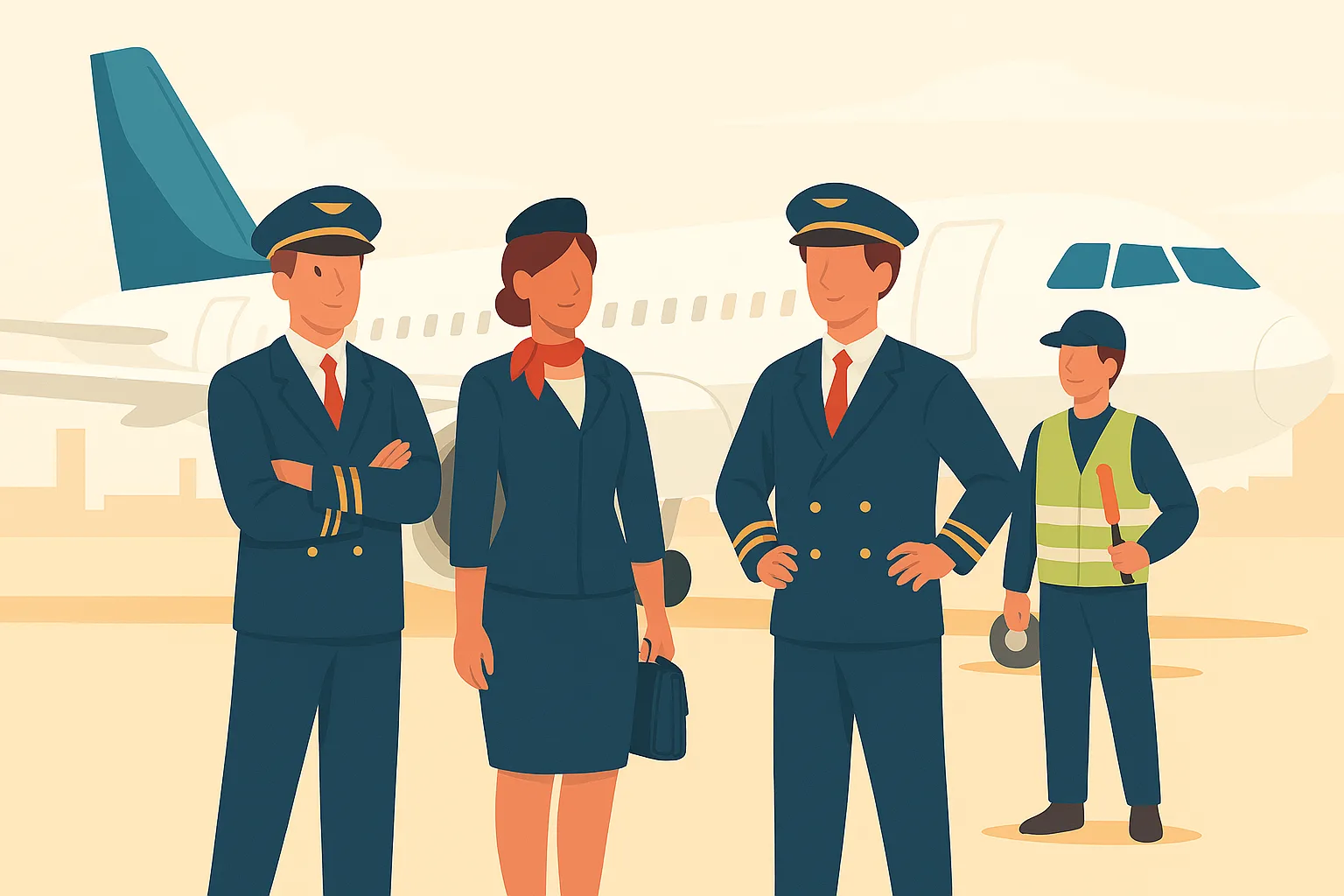
Airlines rely on a wide range of professionals—from pilots and flight attendants to ground crew, mechanics, and corporate staff. This guide breaks down key roles, required skills, training paths, and how to land a job in the aviation industry.
Flight Crew Roles
- Pilot: Operates aircraft, navigates routes, communicates with air traffic control. Requires commercial pilot license and flight hours.
- Co-Pilot / First Officer: Assists captain, handles navigation and systems. Often a stepping stone to captain roles.
- Flight Attendant: Ensures passenger safety and comfort, conducts safety briefings, manages emergencies. Requires training and certification.
Ground Operations
- Ramp Agent: Loads/unloads baggage, guides aircraft, handles cargo and ground equipment.
- Gate Agent: Manages boarding, ticketing, and passenger queries at the gate.
- Dispatcher: Plans flight paths, monitors weather, coordinates with pilots and ATC.
Customer Service and Reservations
- Reservation Agent: Books flights, handles changes, answers customer questions.
- Call Center Representative: Provides remote support for bookings, loyalty programs, and complaints.
- VIP Services: Assists premium passengers with personalized travel arrangements.
Maintenance and Engineering
- Aircraft Mechanic: Inspects, repairs, and maintains aircraft systems. Requires FAA certification (A&P license in the U.S.).
- Avionics Technician: Specializes in electronic systems like navigation, communication, and radar.
- Maintenance Planner: Schedules inspections and ensures regulatory compliance.
Corporate and Administrative Roles
- Operations Manager: Oversees flight schedules, crew assignments, and logistics.
- HR and Recruitment: Manages hiring, training, and employee relations.
- Marketing and Revenue Management: Develops pricing strategies, promotions, and brand campaigns.
- Finance and Accounting: Tracks budgets, audits, and financial planning.
Training and Certifications
- Pilots: FAA or equivalent commercial license, simulator training, recurrent checks.
- Flight Attendants: Airline-specific training, emergency procedures, CPR, and safety drills.
- Mechanics: A&P license (U.S.), EASA Part-66 (Europe), manufacturer-specific training.
Tip: Many airlines offer internal training programs or partner with aviation schools. Entry-level roles often require a high school diploma plus customer service or technical experience.
Career Paths and Growth
- Flight Attendant → Purser → Inflight Manager
- Ramp Agent → Lead → Supervisor → Station Manager
- Mechanic → Lead Tech → Maintenance Manager
- Customer Service → Team Lead → Airport Operations Manager
Hiring Tips
- Highlight teamwork, safety awareness, and customer service in your resume.
- Prepare for scenario-based interviews (e.g., handling delays, emergencies).
- Dress professionally and arrive early for interviews—airlines value punctuality.
- Apply directly on airline career portals or use aviation-specific job boards.
Popular job boards: Airline websites, AviationJobSearch, Indeed, Glassdoor, and LinkedIn.
FAQs
Do airlines hire without experience?
Yes. Entry-level roles like ramp agent, customer service rep, and cabin crew often require only basic education and training.
What are the best-paying airline jobs?
Pilots, aircraft engineers, and airline managers tend to earn the most, depending on experience and airline size.
Can I work for an airline without flying?
Absolutely. Ground operations, maintenance, customer service, and corporate roles are vital and don’t involve flying.